


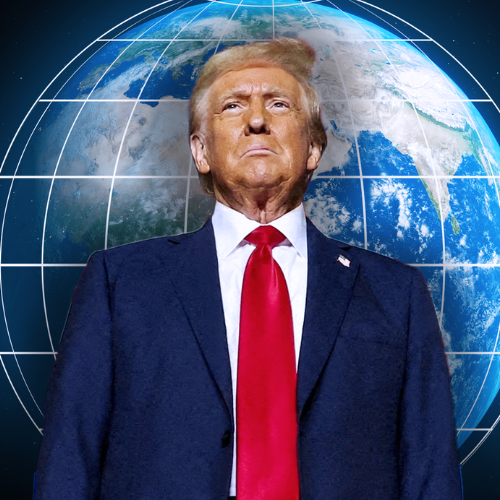
Donald Trump’s push to recast international relations around raw power rather than multilateral cooperation is unsettling allies and rivals alike.
Observers say long-standing assumptions about rules, institutions, and shared commitments are being replaced by a transactional approach in which security
guarantees, trade access, and diplomacy are treated as negotiable
instruments.
Early signals to recast international relations included talk of asserting control over strategic territories such as Greenland and the Panama Canal, proposals that triggered sharp resistance from European partners and revived anxieties
about sovereignty.
Trump has also leaned heavily on tariffs and bilateral bargaining, bypassing broader frameworks that previously anchored Western unity.
In the Middle East, ideas for alternative governance arrangements in Gaza, outside the orbit of the United Nations, have further amplified fears that Washington is attempting to redesign global mechanisms to suit immediate
national priorities.
Critics warn that unpredictability is eroding economic stability and weakening trust in U.S. leadership.
At the World Economic Forum in Davos, Mark Carney described the moment as a rupture and urged middle powers to coordinate more closely.
He argued that countries such as those in Europe and the Indo-Pacific must build enough collective weight to avoid being forced into choices dictated solely by Washington or Beijing.
Whether such coalitions can materialize remains uncertain, but the debate underscores a widening search for balance in a rapidly shifting order.

See What’s Next in Tech With the Fast Forward Newsletter









Tweets From @varindiamag
Nothing to see here - yet
When they Tweet, their Tweets will show up here.