

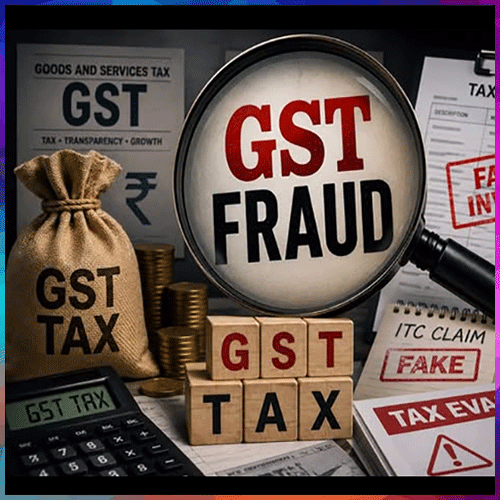
Advanced technologies including artificial intelligence, data analytics and digital verification have enabled tax authorities to uncover record fraudulent GST input tax credit claims, while stricter monitoring and registration checks are strengthening efforts to curb tax evasion.
The Union government has detected fraudulent Goods and Services Tax (GST) input tax credit (ITC) claims amounting to ₹74,782 crore during the financial year 2025-26, reflecting a significant rise in tax enforcement supported by advanced digital technologies. The cases were identified through the growing use of artificial intelligence (AI), data analytics and automated verification systems that are helping authorities strengthen GST compliance.
According to information shared in the Rajya Sabha, tax authorities identified 30,162 cases involving fraudulent ITC claims during the fiscal year. The latest figures indicate a steady increase in enforcement activity compared with previous years, highlighting the government's intensified efforts to combat tax evasion through technology-driven investigations.
Minister of State for Finance Pankaj Chaudhary, in a written reply to Parliament, said the fraud cases span a wide range of industries dealing in both goods and services. These include sectors such as iron and steel, textiles, plastics, paper products, plywood, cement and copper, along with service industries including works contracts, manpower supply and real estate.
AI strengthens tax fraud detection
The Finance Ministry said modern technologies have become central to identifying complex tax fraud schemes. Authorities are increasingly using AI-powered analytics, invoice matching systems and risk-based verification tools to detect suspicious transactions, monitor irregular tax filings and identify fake GST registrations.
These digital capabilities enable investigators to trace fraudulent credit chains more efficiently and uncover shell entities that are created to generate fake invoices without any actual supply of goods or services. Such fraudulent practices allow businesses to claim ineligible input tax credits, resulting in significant revenue losses for the government.
The latest enforcement data also reflects a notable increase over previous years. During FY2024-25, tax officials detected 15,283 fraudulent ITC cases involving ₹58,773 crore, while FY2023-24 recorded 9,190 cases amounting to ₹36,373 crore.
Focus shifts towards prevention
Alongside fraud detection, the government is also reporting progress in curbing fake GST registrations. During FY2025-26, authorities identified 1,517 fraudulent GST registrations created using forged PAN and Aadhaar credentials, a substantial decline from 3,977 such registrations in FY2024-25 and 5,699 in FY2023-24.
These fake registrations were linked to fraudulent ITC claims worth ₹9,940 crore. Enforcement agencies arrested 60 individuals in connection with these cases, while seven accused remain absconding.
The Finance Ministry said the government's strategy is evolving from simply identifying fraudulent claims to preventing them at the source. Enhanced digital scrutiny during GST registration, continuous monitoring of return filings and AI-driven risk assessment are expected to further strengthen compliance while reducing opportunities for tax fraud across the GST ecosystem.

See What’s Next in Tech With the Fast Forward Newsletter









Tweets From @varindiamag
Nothing to see here - yet
When they Tweet, their Tweets will show up here.