

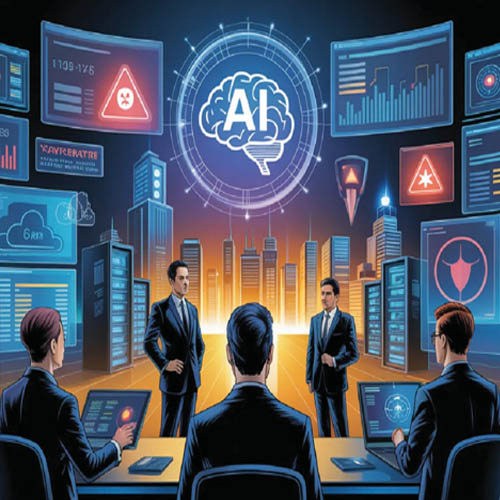
As India steps decisively into an AI-first era in 2026, value-added resellers (VARs) and technology partners find themselves at a pivotal inflection point. Artificial intelligence is no longer confined to pilots or isolated use cases; it is becoming deeply embedded across enterprise operations, cloud platforms, cybersecurity frameworks, and core digital infrastructure. This shift is forcing VARs to reimagine their role—from traditional solution integrators to trusted AI transformation partners capable of delivering secure, scalable, and outcome-driven AI at enterprise scale.
Insights from across the channel ecosystem reveal that readiness in 2026 is less about access to technology and more about execution maturity. While cloud and compute are increasingly available, challenges around data readiness, skills shortages, AI-aware security, and governance remain significant barriers to large-scale adoption. Partners consistently point to rising risks such as deepfakes, identity fraud, and data misuse, underscoring the need for security-by-design, Zero Trust architectures, and privacy-first AI deployments.
Cloud-native and hybrid architectures have emerged as the dominant foundation for enterprise AI, balancing scalability with regulatory compliance, data sovereignty, and cost efficiency. At the same time, alignment with Digital India and IndiaAI is shaping partner strategies around responsible AI, skilling, indigenous innovation, and inclusive adoption. Together, these factors will determine which VARs can move beyond experimentation to deliver trusted, governed, and business-impacting AI in 2026—and which will struggle to keep pace.
----------------------------------------------------------------------------------------------------------------------------------------------
CUSTOMER CLARITY, NOT TECHNOLOGY, WILL DRIVE OUR AI JOURNEY IN 2026
 BIREN SHAH
MD, Adit Microsys Pvt. Ltd.
We are currently at an initial stage of AI solutions and are certainly not at enterprise-scale AI deployment yet. The biggest challenge we see is not skills, security, compliance, or infrastructure, but the lack of clarity among most customers on what direction they want to take for AI deployment. At present, we see only small and often half- hearted attempts at AI deployment, except in cases where there is a clear use case and a solution in sight. Without this clarity, it is difficult for enterprises to move beyond limited pilots toward broader AI adoption.
In addressing risks such as deepfakes, cyber fraud, and data privacy, our approach is to select solution providers who have already considered and addressed these concerns. At a partner level, it becomes critical to choose wisely and deploy solutions carefully to ensure such risks are minimised. AI leads organisations into uncertain zones where risks are inherent, and it is unlikely that any solution provider can fully understand or completely eliminate these risks.
Since most AI initiatives today are still at a pilot stage, cloud-native and hybrid architectures are effectively a given in shaping our AI roadmap. Solutions that are only on-premise are not likely to take off, and we do not expect to focus on such offerings. With regard to initiatives such as Digital India and IndiaAI, it is still too early to foresee their relevance, and our focus will remain on how AI solutions align with the specific problems and goals of customer AI initiatives.
----------------------------------------------------------------------------------------------------------------------------------------------
PREPARED BY STRATEGY, NOT REACTION FOR ENTERPRISE-SCALE AI IN 2026
 GURPREET SINGH
Founder and MD, Arrow PC Network Pvt. Ltd.
We are prepared by strategy, not by reaction. Our AI readiness is anchored in cloud-scale infrastructure, automation- first architectures, and security-led deployment models. The real challenge is not infrastructure, but skills maturity and responsible adoption of AI. That is where we invest heavily, upskilling teams with AI across departments, standardising AI governance, and embedding security and compliance into every AI workload from day one.
AI without trust is a liability. We address risks such as deepfakes, cyber fraud, and data privacy through zero- trust security models, strong identity frameworks, continuous threat monitoring, and data governance aligned with Indian regulations. For deepfakes and fraud, Arrow PC Network integrates AI-driven detection, behavioural analytics, and incident-response automation. Privacy is not an afterthought; it is an architectural principle designed into every AI deployment.
Cloud-native and hybrid architectures are foundational to our AI roadmap. Cloud-native platforms deliver scale, speed, and agility, while hybrid architectures ensure data sovereignty, latency control, and regulatory alignment. Our roadmap blends both, placing intelligence where it delivers the most value, from core data centres to the edge. This approach aligns closely with Digital India and IndiaAI, enabling local data processing, secure digital infrastructure, AI-led efficiency, and responsible innovation that is compliant, scalable, India-ready, inclusive, secure, and sustainable for the nation’s digital future. It supports enterprises building trusted AI systems across industries and public sector environments nationwide securely responsibly.
------------------------------------------------------------------------------------------------------------------------------------
BRIDGING GOVERNANCE, SECURITY GAPS TO SCALE ENTERPRISE AI IN 2026
 DR. MUKUL GUPTA
Director, B M Infotrade Pvt. Ltd.
We at BM Infotrade are well prepared to support enterprise-scale AI adoption in 2026, with our strengths centred on cloud readiness, cybersecurity, and Data & AI empowerment. As AI moves rapidly from experimentation to enterprise-wide implementation, our focus is to help customers deploy AI in a scalable, secure manner aligned with business outcomes. The key challenges are not confined to a single area; skills gaps, security concerns, compliance expectations, infrastructure readiness, and data maturity issues often overlap. Many organisations face fragmented data, inconsistent processes, and unclear governance, which slows AI adoption beyond pilot stages. Our role is to bridge these gaps with a structured, responsible approach.
BM Infotrade follows a security-first approach to AI implementations as threats such as deepfakes, impersonation scams, and AI-driven cyberattacks continue to evolve. Cybersecurity measures are integrated from the outset, including strong identity and access management, secure architectural design, continuous monitoring, and risk mitigation frameworks. We adopt a DevSecOps approach where security controls, policy enforcement, and monitoring are embedded across the delivery lifecycle. For data privacy, we emphasise governance-led deployments with controlled data access, accountability, validation workflows, audit trails, and compliance-aligned data handling.
Cloud-native and hybrid architectures play a critical role in shaping our AI roadmap, as enterprise environments are rarely uniform. Cloud-native platforms enable scalability and rapid adoption, while hybrid architectures remain essential for regulatory, latency, and operational requirements. This flexible approach aligns closely with Digital India and the IndiaAI mission, supporting secure, scalable, inclusive, and outcome-driven AI adoption.
----------------------------------------------------------------------------------------------------------------------------------
VAR READINESS IN 2026 RELIES ON HEART, PERSEVERANCE AND COMMITMENT
 ZAKIR HUSSAIN RANGWALA
CEO, BD Software Distribution Pvt. Ltd.
2026 is not just another year in the channel; it is a year testing every Value Added Reseller (VAR) — in skills and spirit. Beneath dashboards, certifications, KPIs, and quarterly targets are stories of people striving to stay relevant in a world that refuses to slow down. For many VARs, the biggest challenge isn’t technology, but the constant pressure of learning new solutions while serving existing customers, managing growing expectations with limited staff, and speaking confidently about technologies barely known a year ago. Yet every morning, they show up again, driven by dedication and human resilience.
The landscape has shifted. Customers expect VARs to protect them from cyber threats, guide cloud migrations, automate workflows, and advise on AI adoption. They seek strategists, consultants, and counsellors simultaneously. While some partners have resources to scale, many smaller VARs rely on grit, relationships, and experience rather than armies of specialists. Readiness in 2026 is not perfection; it is perseverance — the courage to learn, the humility to seek help, and the commitment to protect customers because relationships matter.
Behind every VAR business is a human being — someone reassuring a customer late at night, training their team after hours, and balancing company growth with employee livelihoods. Vendors who recognize this, treating partners as people rather than pipelines, will see the channel thrive. Readiness in 2026 comes from empathy, collaboration, shared purpose, and above all, heart — the determination to serve customers, no matter how complex the world becomes.
--------------------------------------------------------------------------------------------------------------------------------------
SECURE, GOVERNANCE-LED AI WILL DRIVE ENTERPRISE-SCALE ADOPTION IN 2026
 RADHESH RAMANATHAN
Director - Infra, DigitalTrack Solutions Pvt. Ltd.
DigitalTrack Solutions is well prepared to deliver enterprise-scale AI in 2026, with readiness built across secure infrastructure, skilled teams, strong governance, and partner ecosystems. We design AI solutions that scale across hybrid and multi-cloud environments while embedding security, privacy, and compliance by default. The biggest adoption challenge remains skills and organisational readiness, followed closely by security and trust. Compliance requirements are increasing but manageable with proper governance, while infrastructure challenges can be addressed through right-sized architectures, enabling customers to move confidently from pilots to production at scale.
Here, AI-related risks are addressed through a security-first and responsible AI approach. Deepfake risks are mitigated through strong identity controls, multi-factor authentication, contextual verification, and human-in-the-loop approvals for high-risk use cases. Cyber fraud is managed through secure-by-design architectures, isolated AI environments, access controls, continuous monitoring, and anomaly detection to identify misuse. Data privacy is ensured through strict data minimisation, encryption in transit and at rest, and never using customer data to train shared models without explicit consent, aligned with regulations and enterprise governance.
Cloud-native and hybrid architectures are foundational to our AI roadmap. Cloud-native platforms enable rapid innovation, elastic scalability, and efficient MLOps through containerisation, Kubernetes, and automated pipelines. Hybrid architectures allow sensitive or regulated data to remain on-premises while leveraging cloud AI. This approach aligns with Digital India and IndiaAI by supporting local data residency, DPDP compliance, inclusive adoption, and India’s vision for trusted, ethical, and scalable AI.
--------------------------------------------------------------------------------------------------------------------------------------
VARS MUST DELIVER SECURE, SCALABLE AI WITH MEASURABLE BUSINESS IMPACT IN 2026
 SUDHIR KOTHARI
CEO & MD, Embee Software Pvt. Ltd.
As India enters an AI-first era in 2026, VARs are evaluated not just on technology access but on execution readiness — the ability to deliver AI securely, at scale, and with measurable business outcomes. At Embee Software, our readiness is built on years of helping enterprises modernize cloud platforms, strengthen cybersecurity, and operationalize data and AI responsibly. Enterprise-scale AI adoption is often challenged by fragmented data environments, weak governance, and security gaps. While skills are critical, trusted data, resilient cloud infrastructure, and integrated security are essential to move from AI experimentation to production-grade, outcome-driven deployments aligned with business priorities.
AI amplifies both opportunity and risk. Deepfakes, identity abuse, and AI-assisted cyberattacks are active threats. Embee Software addresses these through a security-by-design approach, combining identity-first protection, Zero Trust architecture, continuous monitoring, and SOC- led response. Our Cyber Defense Centre detects, analyzes, and mitigates threats in real time. Clear data lineage, access controls, and regulatory compliance ensure AI systems operate within ethical and legal boundaries.
Cloud-native and hybrid architectures are central to our AI roadmap, enabling scalable, compliant deployments across on-prem, cloud, and hybrid environments. This flexibility allows enterprises to modernize without disruption and scale AI responsibly across industries like BFSI, healthcare, manufacturing, and the public sector. Aligned with Digital India and IndiaAI initiatives, our services strengthen cybersecurity, unify data, and enable responsible AI adoption, helping enterprises transform with secure, scalable, and purpose-driven technology that delivers sustained business impact.
-----------------------------------------------------------------------------------------------------------------------------------------
EKIN READIES ENTERPRISE-SCALE AI FOR 2026 WITH SECURE, HYBRID-FIRST DEPLOYMENTS
 MINAL BHAGAT
Director, Ensonic Computech Pvt. Ltd.
EKIN is well-prepared to deliver enterprise-scale AI solutions in 2026, backed by in-house manufacturing, solution engineering, and strong execution across education, enterprise, and government sectors. We are already deploying AI-enabled smart classrooms, AI-powered interactive panels, PTZ cameras with auto-tracking and intelligent framing, and hybrid collaboration setups across institutions. The key adoption challenges are skill readiness and responsible AI usage, followed by infrastructure upgrades. We address these through consultative deployments, training support, and solution customization rather than one-size-fits-all approaches, ensuring AI adoption is practical, secure, and outcome-driven.
To mitigate risks such as deepfakes, cyber fraud, and data misuse, EKIN follows a secure-by-design approach. AI classrooms, video conferencing, and recording solutions incorporate encrypted communication, controlled access, and device-level security. For sensitive environments like government departments and universities, on-premise or hybrid AI architectures ensure data privacy, compliance, and ethical AI usage. Users are trained in responsible AI practices, reinforcing trust, accountability, and operational safety while safeguarding institutional and personal data.
Cloud-native and hybrid architectures form the backbone of EKIN’s AI roadmap. Cloud platforms provide scalability, while hybrid models address data sovereignty and regulatory requirements. Hybrid smart classrooms, AI labs, and collaboration systems combine local processing with cloud intelligence, ensuring reliability, performance, and compliance. These initiatives align with Digital India and IndiaAI through Make- in-India manufacturing, indigenous product development, and large-scale digitization, supporting inclusive digital learning, AI skill development, and technology accessibility across urban and semi-urban India.
------------------------------------------------------------------------------------------------------------------------------------------
WE ARE POISED TO DELIVER SECURE, SCALABLE ENTERPRISE AI IN 2026
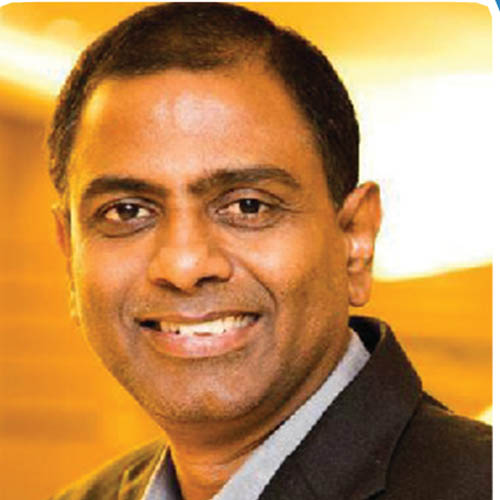 L ASHOK
MD, Futurenet Technologies (India) Pvt. Ltd.
At Futurenet Technologies, we are fully prepared to provide enterprise-scale AI solutions in 2026, especially in infrastructure, whether in the cloud or on-premises. We will have a dedicated team to assist customers with infrastructure needs and are also adopting AI internally to improve operational efficiency. While infrastructure readiness is strong, the biggest challenges lie in security and compliance, which remain critical focus areas for both internal deployment and customer solutions.
At present, AI deployments are mostly customised solutions that continue to evolve. Many risk aspects, including deepfakes, cyber fraud, and data privacy, are primarily handled by customers. Futurenet Technologies ensures its AI offerings are designed to integrate with customer security protocols and governance frameworks, allowing clients to implement safeguards according to their specific requirements. This approach maintains flexibility while gradually embedding more security-conscious practices as solutions mature.
Cloud-native and hybrid architectures are central to Futurenet’s AI roadmap. Stabilising AI products on a proven cloud-native infrastructure first enables a reliable base, which can then be extended into hybrid models to reduce cost per token and optimise performance. This strategy provides customers the best of both models, combining flexibility, controlled costs, and scalability. Futurenet’s AI initiatives also align with Digital India and IndiaAI, supporting inclusive and accessible AI. Projects like the Bhasini translation app exemplify how AI can bridge cultural and linguistic diversity, enabling communities to connect seamlessly while promoting secure, responsible, and practical AI adoption.
--------------------------------------------------------------------------------------------------------------------------------------
SUCCESS IN 2026 WILL COME FROM SECURE, SCALABLE, AND RESPONSIBLE AI ADOPTION
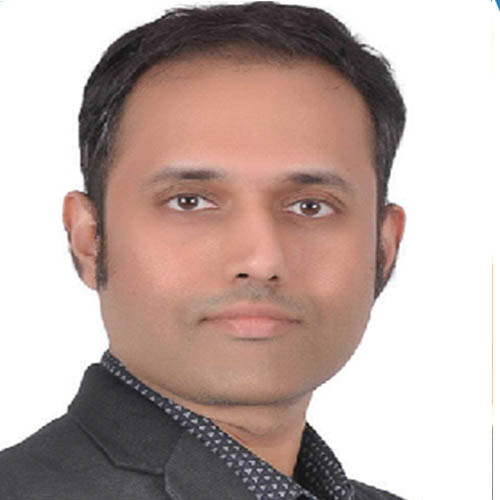 YOGESH AWATE
Chief AI Officer (Business), Galaxy Office Automation Pvt. Ltd.
Galaxy’s preparedness for enterprise-scale AI in 2026 reflects a strategic transition from experimentation to industrialization. AI is embedded as an enterprise intelligence layer within clients’ platforms and decision systems rather than delivered as isolated models. Through a scalable AI factory operating model, we enable business- outcome driven intelligence by systematically combining predictive modelling with autonomous agentic systems. The key challenges in adoption include strategic and financial roadblocks, integration hurdles with legacy systems, security and governance concerns, organizational resistance, and data-related issues such as quality, bias, privacy, and availability.
To address risks like deepfakes, cyber fraud, and data privacy, we follow a “Zero-Trust AI” framework. Deepfakes are mitigated using C2PA cryptographic standards, frequency domain analysis, chromatic reflection analysis, and R-PPG pulse detection. Cyber fraud is countered via behavioral biometrics and agentic anomaly detection. Data privacy is ensured through federated learning, differential privacy, and compliance with the DPDP Act. Hybrid systems balance on-premises, cloud, and edge computing, enabling federated training, secure hybrid bursting, and sub-millisecond inference with data isolation.
Our AI solutions align with Digital India and IndiaAI initiatives by leveraging scalable infrastructure, India-centric multimodal foundation models, indigenous datasets from AIKosh and AI4Bharat, and open-source development. We focus on socio-economic impact through applications, bridge talent gaps in Tier-2/3 cities, support deep-tech startups, and adhere to Safe & Trusted AI guardrails. This holistic approach ensures enterprise AI adoption is secure, scalable, responsible, and aligned with India’s national AI vision.
-----------------------------------------------------------------------------------------------------------------------------------------
SCALING ENTERPRISE AI IN 2026 REQUIRES GOVERNANCE, NOT JUST INNOVATION
 CHETAN JAIN
Co-Founder & MD, Inspira Enterprise
We believe we are well prepared to deliver enterprise-scale AI in 2026, having intentionally moved beyond experimentation and isolated pilots. Our focus has been on making AI deployable, secure, and governable at scale, treating it as a full lifecycle system covering data foundations, model development, deployment, and user interaction. The biggest challenge is not infrastructure, but skills and governance readiness. Many organisations want AI adoption but lack AI-aware security, risk, and compliance capabilities, with limited visibility into where AI is used, what data it consumes, how models behave over time, and who is accountable, creating exposure around data leakage, bias, misuse, and compliance. Our role as a VAR is to bridge innovation and enterprise-grade execution by embedding cybersecurity, data governance, and responsible AI principles into AI design and deployment.
When we deploy AI for customers, risks such as deepfakes, cyber fraud, and data privacy are addressed from day one. We first understand how and where AI is used, what data it touches, and how decisions are made, so safeguards are built early. We focus on strong identity controls, data validation, continuous monitoring, and privacy-by-design, supported by model governance and explainability to maintain visibility, accountability, and trust.
Cloud-native and hybrid architectures shape our AI roadmap, enabling speed, flexibility, and regulatory control, while aligning with Digital India and IndiaAI to support responsible, scalable, compliant enterprise adoption nationwide.
------------------------------------------------------------------------------------------------------------------------------------------
AI AT SCALE IN 2026 DEMANDS SKILLS DEPTH, SECURE ARCHITECTURES, AND GOVERNANCE CLARITY
 SAURABH DHOUNDIYAL
Group Business Manager - VAD, Iris Global Services Pvt. Ltd.
Iris Global is fully prepared to support enterprise-scale AI deployments in 2026 through a strong ecosystem of global OEM alliances, a nationwide channel partner network, and deep integration capabilities across data, cyber security, cloud, and infrastructure platforms. The biggest challenges to AI adoption remain skills readiness, data governance, compliance, and infrastructure modernization. We address these through certified training programs, reference architectures, pre-integrated AI stacks, and regulatory-aligned solution frameworks, enabling partners to confidently execute complex AI deployments across government, PSU, BFSI, manufacturing, and critical infrastructure sectors.
To mitigate risks such as deep fakes, cyber fraud, and data privacy, Iris Global leverages an advanced OEM portfolio that includes AI-driven deep fake detection, fraud analytics, identity security, endpoint protection, and data loss prevention solutions. All deployments follow privacy- by-design and zero-trust security frameworks, ensuring compliance with Indian data protection laws and sectoral regulations while maintaining enterprise-grade security and trust.
Cloud-native and hybrid architectures are central to Iris Global’s AI roadmap, enabling secure on-premises, cloud, and hybrid AI environments that meet scalability, latency, and data sovereignty requirements. Our pre-validated platforms reduce deployment risks and improve speed and reliability in complex enterprise environments. Aligned with Digital India and India AI, we deliver secure, responsible, and scalable AI frameworks. AI is becoming critical for power generation, grid monitoring, energy forecasting, and asset lifecycle management, supported by our expanding portfolio of edge compute, intelligent power systems, cyber security, and monitoring platforms.
------------------------------------------------------------------------------------------------------------------------------------------
LDS INFOTECH POSITIONS TRUST, GOVERNANCE AT THE CORE OF AI READINESS
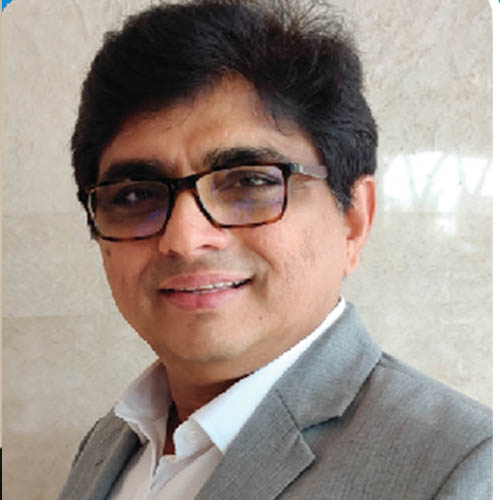 AMARNATH SHETTY
MD, LDS Infotech Pvt. Ltd.
At LDS Infotech, our readiness for enterprise-scale AI in 2026 is strong and execution-focused, particularly for regulated and hybrid environments. We are not pursuing generic AI deployments; instead, we are building enterprise AI capabilities anchored in cloud foundations, cybersecurity, data governance, and compliance-by-design. The biggest challenge to AI adoption is not infrastructure but data readiness and governance. Poor data quality, unclear ownership, and weak lifecycle controls directly undermine AI accuracy, trust, and regulatory acceptance. This is further compounded by shortages in practical AI skills across MLOps, AI security, and model governance, rising compliance expectations, and the complexity of hybrid environments where legacy, OT, and cloud-native platforms must coexist securely.
As AI adoption accelerates, risks such as deepfakes, cyber fraud, identity compromise, and data privacy violations become material business risks. Our approach is security-first and governance-led, embedding controls across the AI lifecycle through Zero Trust architectures for AI workloads, AI-aware threat detection, strong data governance aligned with India’s DPDP framework, and explainable, auditable, policy-bound AI models. In enterprise and regulated environments, AI will scale only where trust, transparency, and compliance are engineered by design.
Cloud-native and hybrid architectures are foundational to our AI roadmap, enabling performance, compliance, and cost balance across environments. We design architectures that unify identity, security, governance, and lifecycle management, allowing AI to scale from pilots to enterprise deployments. This approach aligns closely with Digital India and IndiaAI, focusing on responsible AI, skilling, data sovereignty, and scalable adoption.
-----------------------------------------------------------------------------------------------------------------------------------------
ENTERPRISE AI IN 2026 WILL BE DRIVEN BY STRONG FOUNDATIONS, NOT RUSHED EXPERIMENTATION
 SAIRAMAN MUDALIAR
Co-Founder & Director, Pentagon System & Services Pvt. Ltd.
Pentagon has been preparing for enterprise-scale AI by strengthening the foundations required for scalable deployment, including modern infrastructure, hybrid cloud readiness, cybersecurity, and data visibility. We work closely with enterprises to ensure their compute, storage, networking, and observability layers are AI-ready before introducing advanced workloads. The biggest challenges we see are data readiness and security governance, as many organisations underestimate the complexity of managing data quality, regulatory compliance, and model lifecycle management. Our focus is on enabling secure, resilient platforms and guiding customers through phased adoption rather than rushed experimentation.
Security and governance are embedded into every AI engagement we deliver. We follow a zero-trust approach with strong identity controls, continuous monitoring, and data classification frameworks to mitigate risks such as deepfakes, cyber fraud, and misuse. For sensitive workloads, we design architectures that ensure data sovereignty and compliance with evolving regulations. We also educate customers on responsible AI usage, access controls, and auditability to minimise operational and reputational risks.
Hybrid and cloud-native architectures are central to our AI strategy. Enterprises need flexibility to run workloads across on-premises, private cloud, and public cloud environments while maintaining performance, security, and cost efficiency. Hybrid models support data locality, latency- sensitive processing, and regulatory alignment while leveraging cloud innovation. This approach aligns with Digital India and IndiaAI by enabling secure digital infrastructure, cloud adoption, and responsible AI deployment, contributing to India’s long-term digital and AI maturity.
-----------------------------------------------------------------------------------------------------------------------------------------
BUILDING TRUSTED ENTERPRISE-SCALE AI IN 2026 WITH SECURITY AND GOVERNANCE
 KAMAL ZUTSHI
CTO, Progressive TechServe
Progressive is well prepared to deliver enterprise-scale AI in 2026. We anticipated AI’s impact during the COVID period, when enterprises were rethinking scale and resilience, and launched the beta version of Workelevate, our Agentic AI- and NLP-driven platform for self-service and self-healing IT support. Workelevate went globally in 2022 and continues to evolve. Beyond it, AIOps is embedded across SOC, NOC, and managed services, enabling predictive detection, intelligent correlation, and automated remediation. While security and compliance are often cited as challenges, we have addressed these through ISO 9001:2015, ISO 27001:2022, SOC 2, and GDPR compliance. The primary challenge remains closing the AI skills gap to enable effective human–AI collaboration.
To manage risks like deepfakes, cyber fraud, and data privacy, we focus on building a Human Firewall. Regular training and phishing simulations help teams identify attacks that bypass traditional filters. Privacy is ensured through privacy-by-design architectures, DLP controls, secured environments, strict access policies, continuous monitoring, and leakage prevention, safeguarding data across AI, IT, and security workflows while maintaining compliance and trust.
Cloud-native and hybrid architectures underpin our AI roadmap. Cloud-native platforms deliver scale and real-time inference, while hybrid models allow clients in regulated sectors to retain sensitive data on-premise. Hosting Workelevate in India aligns with Digital India and IndiaAI, ensuring data sovereignty, compliance, and secure, scalable, automated digital operations for the nation’s growing digital economy.
----------------------------------------------------------------------------------------------------------------------------------------
QUADRA IS READY TO DELIVER SCALABLE, SECURE AI IN INDIA BY 2026
 PRASHANTH SUBRAMANIAN
Co-Founder & Director, Quadrasystems.net (India) Pvt. Ltd.
Quadra is prepared for 2026, built on a 25-year foundation in enterprise architecture, holding AWS Premier Partner status, and 20 consecutive years of Microsoft global recognition. Our dedicated Centers of Excellence focus on Applied AI and Generative AI frameworks to drive enterprise deployments. The primary challenge remains the skills gap, with India needing nearly one million AI professionals by 2026. Enterprises also face complex legacy estates, alongside growing requirements for DPDPA compliance and security resilience as AI adoption expands.
Emerging risks such as deepfakes, cyber fraud, and data privacy are addressed through a unified security fabric that replaces fragmented tools with cohesive defense platforms. Using the BluForge platform, Quadra integrates technologies from leading security vendors and open-source frameworks for real-time anomaly detection and incident response. For privacy, DPDPA-driven compliance is ensured through workshops, data discovery, and impact assessments, embedding security and privacy controls into cloud architecture from the start.
Hybrid architecture is the default approach for 2026. Cloud-native platforms provide scalability, while data gravity and sovereignty require critical workloads to remain close to the source. The roadmap focuses on AI Factories, where a thin control plane manages global policies and a thick data plane supports high-volume local processing. This ensures high-performance inference, reduced latency, and avoids vendor lock-in, while aligning with IndiaAI’s pillars of Application Development and FutureSkills, supporting India’s transition from AI consumer to global AI leader.
-------------------------------------------------------------------------------------------------------------------------------------------
ENABLING THE INFRASTRUCTURE BACKBONE FOR ENTERPRISE-SCALE AI IN INDIA BY 2026
 RAJESH GOENKA
CEO, Rashi Peripherals
As India moves into an AI-first era, Rashi Peripherals’ readiness for enterprise-scale AI in 2026 lies in enabling the foundational infrastructure required at scale. The company focuses on ensuring timely availability of high- performance servers, GPUs, advanced storage, and networking that form the backbone of AI data centers. From an ecosystem and execution standpoint, Rashi Peripherals is well prepared, backed by long-standing OEM relationships, strong supply chain capabilities, and experience in large-scale deployments, including executing one of India’s largest AI data center hardware orders in 2024.
The biggest challenges to AI adoption remain infrastructure-led rather than conceptual. Component shortages, storage constraints, shipment delays, and the need for reliable power, cooling, and network readiness continue to be key friction points at the data center level. To address risks while deploying AI infrastructure, Rashi Peripherals enables customers with enterprise-grade hardware that supports secure workloads, data integrity, and scalability, complemented by pre-sales solution design and techno-commercial assistance aligned with regulatory, data residency, and enterprise security requirements.
Cloud-native and hybrid architectures are central to AI deployments across India, with demand for hybrid models integrating on-premise workloads with cloud platforms. Rashi Peripherals supports this shift through cloud-ready hardware, high-speed networking, and scalable storage. Aligned with Digital India and IndiaAI, the company strengthens supply chains and last-mile availability to help enterprises build sovereign, AI-ready infrastructure at scale.
--------------------------------------------------------------------------------------------------------------------------------------------
AI-INTEGRATED CYBERSECURITY IS A NATURAL PROGRESSION FOR SECURING DIGITAL INDIA IN 2026
 NK MEHTA
CEO & MD, Secure Network Solutions India Pvt. Ltd.
It has been a natural progression for SNS to deliver AI-integrated cybersecurity solutions, and we have been doing so for the past couple of years. Our team has undergone intensive training to design, deploy, manage, and deliver AI-integrated security solutions, and we continue to upskill as the technology evolves. The key challenges we see are security—fully trusting AI for threat detection and prevention—followed by skills, particularly AI-aware security professionals, compliance in explaining AI decisions to regulators and auditors, and finally infrastructure readiness.
To address risks such as deepfakes, cyber fraud, and data privacy, cybersecurity solutions integrated with AI are trained using techniques implemented by OEMs, commonly known as adversarial training, which strengthens AI models and minimises risk. In terms of data privacy, OEMs have implemented controls such as data minimisation, data anonymisation, on-premise deployments, data localisation, regulatory compliance, and certifications to demonstrate privacy safeguards. These measures collectively help reduce privacy concerns while deploying AI-driven security solutions for customers.
Cybersecurity design for cloud-native and hybrid architectures is shaped by scalability, privacy, multi-tenancy, continuously learning AI, and performance, requiring different approaches, skills, and deployment mechanisms. SNS continuously focuses on skill-building through an in- house learning management platform and dedicated teams for cloud security services. As Digital India accelerates digitisation across identity, payments, healthcare, education, and public services, AI-integrated cybersecurity becomes critical. SNS continues to safeguard such initiatives through strong OEM partnerships and in-house trained cybersecurity specialists.
------------------------------------------------------------------------------------------------------------------------------------------
DRIVING RESPONSIBLE, SCALABLE ENTERPRISE AI ADOPTION IN 2026
 ANIRUDH SHROTRIYA
MD, Shro Systems Pvt. Ltd.
At Shro Systems, we are well prepared to deliver enterprise-scale AI in 2026, but we approach it pragmatically rather than chasing hype. Our readiness rests on two fundamentals: strong infrastructure foundations—including modern data centres, hybrid cloud, and AI-ready compute through partners like HPE—and a use-case–driven approach focused on measurable business outcomes. Leveraging our ISV ecosystem, we provide industry-specific solutions with platforms and LLMs built to work seamlessly with customers’ data. The biggest challenges to AI adoption are skills, data readiness, and governance. While compute and cloud are increasingly accessible, organisations struggle with AI talent, operationalising models, and ensuring security, compliance, and responsible AI practices. Our aim is to bridge this gap—moving enterprises from pilots to production with confidence, trust, and measurable business impact.
Cloud-native and hybrid architectures are central to our AI roadmap and enterprise deployments. AI succeeds only when it runs close to data, meets latency and compliance requirements, and scales without disruption. Our hybrid-by-design approach combines cloud-native platforms for rapid innovation with on-prem and private cloud environments for performance, data sovereignty, and regulatory control. This ensures AI platforms remain flexible, portable, and secure while avoiding vendor lock-in.
Through deep partnerships across infrastructure, cloud, and cybersecurity, we help customers build AI systems that are governed, resilient, and scalable. By aligning enterprise AI execution with measurable outcomes, we ensure innovation translates into real business value while maintaining trust, compliance, and operational excellence across industries and use cases.
-------------------------------------------------------------------------------------------------------------------------------------------
VARS MUST EVOLVE AS TRUSTED AI TRANSFORMATION PARTNERS IN 2026
 DEBRAJ DAM
Co-Founder and Chief - VAD Venture, Supertron Electronics (SEPL)
We are fully prepared to deliver enterprise-scale AI solutions in 2026, having transitioned from traditional system integration to outcome-driven AI and data services. We have invested aggressively in upskilling across AI engineering, MLOps, cybersecurity, and cloud architecture, enabling us to design, deploy, and operationalise AI at scale. The primary challenges are not technology limitations but organisational readiness—specifically skills availability, data maturity, and governance frameworks. Security and compliance are no longer blockers; they are design principles embedded from day one.
We approach AI security with a zero-trust, security-by-design mindset across all deployments. Our solutions integrate robust identity controls, data lineage, encryption, and continuous monitoring to manage risk proactively. To counter emerging threats such as deepfakes, cyber fraud, data leakage, and model misuse, we combine AI-powered threat detection with strong human oversight, auditability, and accountability. Responsible AI is not optional; it is foundational to trust, regulatory confidence, and long-term enterprise adoption.
Cloud-native and hybrid architectures are central to our AI roadmap, balancing hyperscale cloud agility with regulatory control and data sovereignty. Our platform-agnostic strategy avoids vendor lock-in while enabling secure, scalable innovation across industries. This approach aligns closely with Digital India and IndiaAI, supporting digital public infrastructure, indigenous innovation, data localisation, and responsible AI adoption. In 2026, VARs must evolve into trusted AI transformation partners—and we have made that choice with clear accountability and measurable outcomes.
------------------------------------------------------------------------------------------------------------------------------------------
ENTERPRISE AI READINESS IN 2026 HINGES ON SKILLS, COMPLIANCE, AND SECURITY
 VIJAYAKUMAR VAIDYANATHAN
COO, Symmetrix Computer Systems Pvt. Ltd.
Considering data foundation as a major pillar of AI, our readiness for enterprise-scale AI in 2026 is around 40 percent. Other pillars such as strategy and leadership, security, infrastructure, and skills or change management are closer to 20 percent. The biggest challenge is the availability of skilled manpower, and this gap is expected to persist due to high demand versus availability. Compliance is another key challenge for SMBs, as many operate with basic or intermediate IT security while large organisations mandate compliance for suppliers and partners, creating budget and resource constraints.
Security is the next major concern, as emerging risks will require organisations to invest additional effort and time to remain vigilant. To address risks such as deepfakes, cyber fraud, and data privacy, particularly in the SMB segment, we adopt hybrid systems balancing automation with human-in-the-loop processes. Media generated through workflows is manually verified before publishing, standard templates with watermarking are used to maintain authenticity, and teams are periodically trained on data security.
Audit trails are maintained and reviewed to strengthen data protection, supported by privacy-by-design and continuous monitoring to ensure compliance and tamper resistance. Cloud-native platforms are becoming the foundation of the current IT era, while SMBs largely operate in hybrid architectures focused on compliance, security, and on-premises integration. Our AI solutions align with Digital India and IndiaAI, emphasizing data security, India-specific compliance, and responsible AI usage frameworks.
----------------------------------------------------------------------------------------------------------------------------------------
AI SUCCESS IN 2026 WILL BE DRIVEN BY ADOPTION MINDSET, NOT JUST TECHNOLOGY
 SURESH RAMANI
CEO, TECHGYAN
As India enters an AI-first era, the biggest challenge is not technology but mindset and adoption. Most SMBs still view AI as an IT implementation rather than a business transformation opportunity. At Techgyan, we have been all in on AI for over a year through workshops, blogs, podcasts, solution assessments, and a structured AI & Copilot Advisory Framework. Our deep internal adoption of Copilot, Agentic AI, and Microsoft Fabric gives us a practitioner’s edge. We are prepared to deliver enterprise-scale AI through our core AI Framework, hands- on adoption workshops, and repeatable transformation playbooks. However, the real barriers are low business readiness for AI-driven process redesign, lack of structured adoption programs, poor data governance maturity, and limited focus on AI plus security.
AI cannot scale without AI-specific security. Techgyan has built a Baseline AI Security Checklist for SMBs centred on Microsoft Defender, Purview, and Entra. We focus on protection against AI-generated fraud and deepfakes, data governance and safe prompt engineering, identity- first security with strong access controls, and continuous monitoring of AI activity. AI misuse is the new cyber-attack surface, and we treat it as such.
Our approach is Hybrid by Design, combining Azure cloud-native AI, hybrid deployments for regulated or latency-sensitive workloads, Copilot extensibility, Agentic AI for business workflows, and Microsoft Fabric for unified data and analytics. This aligns with Digital India and IndiaAI by enabling responsible AI, skilling at scale, secure cloud adoption, and adoption-led business outcomes.
-----------------------------------------------------------------------------------------------------------------------------------------
EXECUTION, NOT EXPERIMENTATION, WILL DEFINE ENTERPRISE AI READINESS IN 2026
 PRASHANTH G J
CEO, TechnoBind Solutions
As we move into 2026, readiness for enterprise-scale AI is no longer about experimentation; it is about execution at scale. At TechnoBind, our preparedness is anchored in building deep capabilities across our partner ecosystem rather than treating AI as a standalone technology. We have invested significantly in enablement programs that help VARs move from reselling tools to delivering outcome-driven AI solutions across data, cloud, security, and applications. The biggest challenge is not infrastructure, as cloud maturity in India has improved rapidly, but gaps in skills and governance, especially operationalising responsible AI aligned with compliance.
AI-driven threats such as deepfakes, identity fraud, and data misuse are becoming more sophisticated, and addressing them requires a security- first approach to AI adoption. The focus is on helping partners embed security, privacy, and trust into AI deployments from day one through strong data governance, secure access controls, continuous monitoring, and AI-aware security frameworks. Equally important is educating customers on responsible AI usage, including model transparency, auditability, and compliance with evolving data protection norms, as trust will be a competitive differentiator in 2026.
Cloud-native and hybrid architectures are central to the AI roadmap as enterprises operate across on-premises systems, private clouds, and public clouds. Hybrid and multi-cloud models enable flexibility, data sovereignty, and performance optimisation for AI workloads. This approach supports portable, resilient AI solutions aligned with where data resides and aligns with Digital India and IndiaAI through localisation, skill development, and responsible adoption for India’s digital economy sustainable.
-----------------------------------------------------------------------------------------------------------------------------------
UNIFIED DATA-TECH SOLUTIONS READIES SECURE, SCALABLE ENTERPRISE AI FOR 2026
 PRANAV PARIKH
CTO, Unified Data-Tech Solutions Ltd.
Unified Data-Tech Solutions is progressively capable of delivering enterprise-scale AI from pilots to production, thanks to our mature partnerships with major infrastructure and cloud providers. Access to GPU-accelerated compute, container platforms, cloud-native AI services, and zero-trust security platforms helps us deliver scalable compute, modernized data platforms, and secure production environments. While skills gaps, poor data foundations, and infrastructure remain significant barriers, embedding risk controls and security against data privacy threats and specialized attacks—such as manipulating inputs, model theft, and others—remains the top blocker for responsible and trustworthy AI deployments.
The rise of AI has introduced sophisticated threats, including deepfakes, AI-generated illegitimate business documents, and unauthorized model access and exfiltration. Traditional security measures alone are insufficient. Our partnerships with MSSPs and leading security vendors provide 24/7 threat monitoring, alerting, and rapid response, with integrated behavioral analysis and anomaly detection to mitigate AI-based fraud, automated impersonation, and contextual spoofing. Identity and Access Management, Multi-Factor Authentication, device-bound cryptographic passkeys, and Data Loss Prevention ensure only authorized developers and data scientists access sensitive AI environments, safeguarding confidential training data, including PII.
Cloud-native and hybrid architectures are both enablers and transformative in shaping our AI roadmap. Cloud-native environments enable rapid experimentation, elastic scaling, and dynamic GPU/TPU provisioning for model training and GenAI innovation, while hybrid setups retain sensitive data on-premises to meet regulatory obligations. Aligned with Digital India and IndiaAI initiatives, our solutions enhance secure digital interactions, offer passkey-based authentication, and add intelligent human-authenticity and fraud-detection layers, protecting regulated institutions from AI-driven threats while advancing scalable, indigenous AI technologies.
---------------------------------------------------------------------------------------------------------------------------------------
SKILLS, SECURITY, AND GOVERNANCE WILL SHAPE ENTERPRISE AI READINESS IN 2026
 SHARATH NAYAK
Director, Viroka Technology Pvt. Ltd.
Viroka Technology is strategically positioned to deliver enterprise-scale AI by 2026 through a pragmatic and risk- aware adoption model. We see four primary challenges—skills availability, security, compliance, and infrastructure readiness. The immediate challenge is the skills gap, particularly in applied AI engineering and responsible AI deployment. To address this, we prioritise GenAI consumption, prompt engineering, model fine-tuning, and system integration rather than building large foundational models. Leveraging platforms such as IBM SkillsBuild and Microsoft Learn enables scalable, cost-effective AI expertise across roles, delivering faster time-to-value aligned with enterprise use cases.
Security and compliance are treated as first-order constraints. We follow strict security-by-design principles, ensuring sensitive data is never unnecessarily exposed. Secrets are stored in secure key vaults with least-privilege access, supported by continuous testing, runtime monitoring, and Zero Trust controls. Risks such as deepfakes, cyber fraud, and data privacy are mitigated through layered detection, AI-driven fraud analytics, DLP mechanisms, and privacy-by-design architectures with automated PII detection, masking, and lifecycle governance. Governance platforms provide centralised policy management, audit trails, and regulatory readiness.
Cloud-native and hybrid architectures are central to our AI roadmap. We follow a ‘train in the cloud, deploy on-premises’ model using elastic GPUs for training and containerised, Kubernetes-based inference for sensitive workloads. This ensures scalability, low latency, portability, and compliance. Aligned with Digital India and IndiaAI, we enable sovereign infrastructure, DPDP compliance, multilingual AI, and responsible adoption focused on trust, inclusion, and sustainable innovation.
------------------------------------------------------------------------------------------------------------------------------------------
SECURITY AND SKILLS WILL DEFINE ENTERPRISE-SCALE AI READINESS IN 2026
 RAJESH MATHKAR
Director, Wysetek Systems Technologists Pvt. Ltd.
Wysetek is highly prepared to deliver enterprise-scale AI through its Next-Gen Cyber Defense Centre (CDC), which already leverages AI and Machine Learning engines within SIEM and SOAR platforms for real-time threat detection and automated response. While infrastructure scalability is addressed through hybrid cloud models, the primary challenges remain security and skills. The growing cybersecurity skills shortage, combined with increasingly sophisticated and state-sponsored cyberattacks, creates a perfect storm that demands deep domain expertise, which Wysetek addresses through its team of over 250 certified professionals.
Advanced risks such as deepfakes and cyber fraud are mitigated through a multi-layered defense strategy, including Brand Protection and Deep and Dark Web Monitoring to detect impersonation and credential leaks before exploitation. Data privacy is safeguarded through strong Data Governance, Encryption, and Tokenization frameworks, along with adherence to international standards such as ISO 27001:2022 and SOC 2 Type II, ensuring security and compliance across the AI deployment lifecycle.
Cloud-native and hybrid architectures are central to Wysetek’s roadmap, with the CDC designed as an Inverted Cognitive SOC integrating data from enterprise systems, private clouds, and public cloud workloads including AWS, Azure, and Google Cloud. This hybrid approach provides flexible, scalable security with single-pane-of-glass visibility and consistent policy enforcement. Aligned with Digital India and IndiaAI, Wysetek supports India-scale cybersecurity resilience through presence in over 50 locations, sector-specific use cases for banking, and compliance with regulators such as RBI and SEBI, enabling a secure foundation for India’s AI-driven digital transformation.

See What’s Next in Tech With the Fast Forward Newsletter







Tweets From @varindiamag
Nothing to see here - yet
When they Tweet, their Tweets will show up here.