


Breaking News
ISRO’s PSLV may have failed for second consecutive launch, agency investigating deviations
2026-01-12
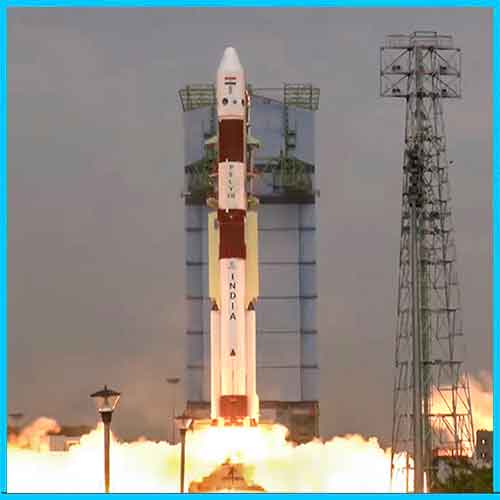
India’s workhorse rocket, the PSLV, appears to have failed for the second time in a row, as deviations were noted during Monday’s launch of the PSLV-C62 mission, Indian Space Research Organisation (ISRO) officials said. The rocket, carrying 15 satellites including the earth observation satellite Theos-2, did not reach its intended orbit.
The main payload, Theos-2, was developed jointly by Thailand and the United Kingdom, while the mission also carried 14 co-passenger satellites, including a technology demonstration by Nepal and India and a re-entry capsule from a Spanish startup. Eight of the satellites belonged to foreign customers. All payloads were reportedly lost.
Deviation Noted During Third Stage
The launch took place at 10:17 am from the First Launch Pad at Satish Dhawan Space Centre, Sriharikota. ISRO said the vehicle deviated from its planned trajectory around nine minutes after lift-off during the coasting phase of the third stage, a period between two engine burns. ISRO chairperson V Narayanan, said, “Close to the end of the third stage, we observed a disturbance in the vehicle roll rates, leading to a deviation in the flight path. We are analysing the data and will report back at the earliest”.
This follows the PSLV-C61 mission in May 2025, which also failed during the third stage while carrying another earth observation satellite, EOS-09. PSLV, which has been operational for over three decades, is considered one of ISRO’s most reliable launch vehicles, having failed only four times in 64 missions before this consecutive streak.
Investigation Underway
ISRO has constituted a Failure Analysis Committee (FAC) to investigate the cause of Monday’s launch failure. While the exact reason for the deviation remains unknown, last year’s FAC found that an unexpected drop in pressure in the rocket’s pressure chamber caused the PSLV-C61 failure.
The PSLV uses a combination of two solid-fuel stages and two liquid-fuel stages, and it has historically been a dependable vehicle for launching satellites into orbit. This is the second consecutive year that ISRO’s first launch of the year has faced failure, following a GSLV mission in January 2025 that failed during orbit-raising maneuvers.
Monday’s PSLV-C62 mission highlights the challenges in maintaining consistency in launch success, and the findings of the current FAC will be critical for ISRO’s upcoming missions, including both domestic and international satellite deployments.

See What’s Next in Tech With the Fast Forward Newsletter








Tweets From @varindiamag
Nothing to see here - yet
When they Tweet, their Tweets will show up here.