Ignore the optimistic projections around data center expansion—electrical power is fast emerging as the biggest bottleneck. Grid infrastructure and power generation capacity are simply not being added at a pace that can support the scale of growth many forecasts assume, raising serious doubts about industry expectations.
According to Uptime Institute’s latest report, Five Predictions for 2026, power availability will become the defining constraint on data center growth from 2026 onward. While new server farms are being announced at breakneck speed, the supporting grid and generation capacity required to run them cannot keep up.
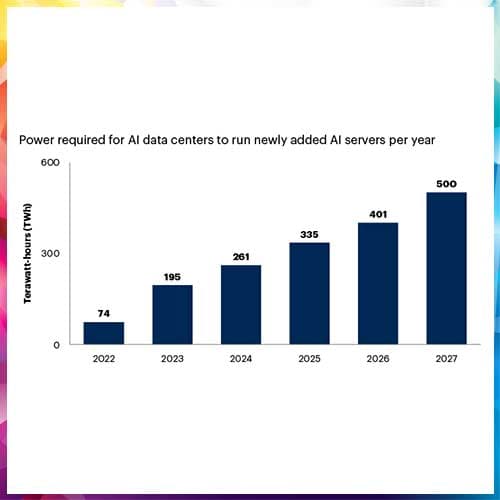
The AI-driven infrastructure surge began in earnest after the launch of ChatGPT in late 2022, but power constraints were already evident earlier. Cities such as Amsterdam, Dublin, and Singapore imposed moratoriums on new data center developments due to electricity shortages. Since then, global build-out rates have doubled, with AI-related data center demand alone expected to reach 10 GW by the end of 2026.
A major challenge lies in the mismatch between construction timelines. Hyperscale AI facilities can be built in three years, but renewable energy projects take much longer—five years for large solar farms, six for wind or gas turbine plants, and more than a decade for nuclear capacity. As data center projects now scale into hundreds of megawatts or even gigawatts, sourcing power quickly has become extremely difficult.
Early strategies included on-site gas turbines or repurposing power infrastructure from cryptocurrency mining sites. However, gas turbine equipment now faces three- to four-year wait times and sharply rising costs, while suitable former crypto sites are rapidly disappearing.
Uptime’s conclusion is blunt: sustaining current growth projections may not be feasible. Even if expansion slows, emissions remain a pressing issue. With 75–125 GW of additional power demand projected by 2030—largely met by natural gas—operators may increasingly turn to carbon capture and storage. Yet only one CCS technology is commercially viable today, leaving sustainability commitments under growing strain.