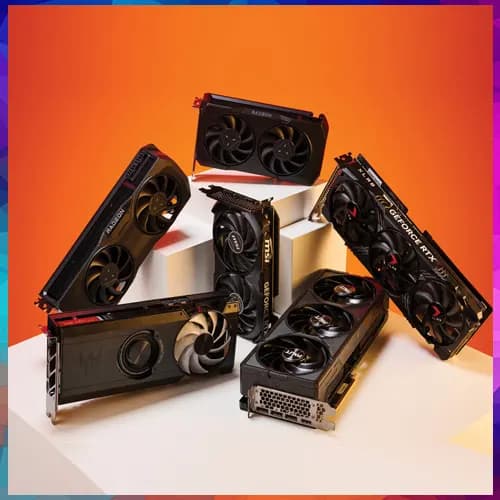
MSI has become the newest NVIDIA add-in board (AIB) partner to raise graphics card prices due to ongoing DRAM shortage.
At the end of July, consumers in China witnessed substantial price hikes across multiple graphics card brands, and several AIB partners have since confirmed additional increases for August.
ASUS and Gigabyte were among the first graphics card manufacturers to notify distribution partners of revised pricing. MSI has now officially confirmed that prices across its graphics card portfolio will rise by more than 20% due to ongoing memory shortages.
According to information shared by Board Channels, the price revision impacts a wide range of products, including the GeForce RTX 50 and RTX 30 series. While MSI does not officially list the RTX 5090 D V2 (24GB), other models are seeing notable increases. The GeForce RTX 5080 will reportedly become up to 2,100 RMB (over US$300) more expensive, while the RTX 5070 Ti could rise by as much as 1,350 RMB (around US$200). Also, RTX 5060 Ti 8GB and RTX 5060 expected to increase by approximately US$90–100, and the RTX 5050 by up to US$80.
Statements issued by ASUS, Gigabyte, and MSI indicate that the August pricing revisions apply across nearly all graphics card models, with increases broadly aligned with NVIDIA's reported guidance of around 20% or more compared to July pricing.
The rising costs reflect a broader industry challenge. Major memory manufacturers have already cautioned that DRAM shortages are likely to intensify through 2027 and 2028.
The impact extends beyond the latest GPU generations. Older graphics cards, including NVIDIA's RTX 30 series and AMD's Radeon RX 7000 series, are also experiencing price increases. Industry reports further suggest that some retailers are stockpiling graphics cards in anticipation of additional price hikes, a trend expected to continue as supply constraints persist.
To make matters worse, research analysts have already warned of 50% price bumps in DRAM prices in Q3 2026, followed by another 40% bump in Q4 2026.
The price escalation is affecting not only next-generation memory products but also older DRAM standards. As component costs continue to rise, the broader PC industry is facing declining shipment volumes, with the graphics card market expected to remain under significant pressure in the months ahead.