Author: Dr. Deepak Kumar Sahu
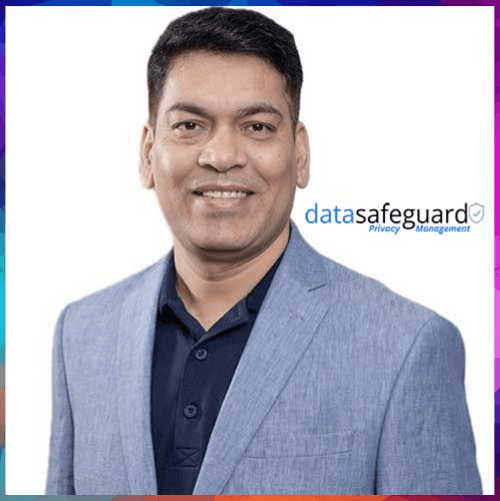
In an exclusive interaction with Mr. Ajit Sahu, Director Of Engineering-Data Safeguard Inc. and Dr. Deepak Kumar Sahu, Publisher- VARINDIA
Q: What would you describe as your core area of expertise?
My core area of expertise is privacy-first digital engineering and AI-driven enterprise architecture.
This means I work at the intersection of software engineering, data privacy, compliance infrastructure, AI automation, and enterprise platform modernization. I focus on designing systems that help organizations collect, manage, enforce, and audit consent across complex digital ecosystems.
My work includes areas such as consent management, cookie governance, AI-powered cookie classification, just-in-time consent, preference management, microservices architecture, cloud platforms, and compliance automation for regulations such as GDPR, CPRA/CCPA, and India’s DPDP Act.
Q: What major problem are you trying to solve through your work?
One of the biggest problems I focus on is the gap between privacy regulation and real-world enterprise implementation.
Many organizations collect consent through banners or forms, but they struggle to enforce that consent consistently across websites, mobile apps, analytics systems, advertising platforms, CRM tools, call centers, and downstream business applications.
My work addresses this by creating privacy and consent architecture where consent is not just captured, but actually enforced, synchronized, audited, and propagated across the enterprise.
The goal is to make privacy operational. It should not remain only a legal document or compliance checkbox. It should become part of the enterprise technology infrastructure.
Q: Why Is Privacy-First Architecture Important Today?
Privacy-first architecture is extremely important because organizations today are collecting and processing customer data at a much larger scale than ever before.
At the same time, regulations are becoming more strict, customers are becoming more aware of their rights, and AI systems are increasing the complexity of data usage.
A privacy-first architecture allows organizations to build trust by ensuring that customer data is used only for permitted purposes. It helps enforce user consent, manage preferences, support audit trails, and reduce compliance risk.
In my view, privacy is no longer just a legal function. It is now a core engineering and architecture responsibility.
Q: How does AI fit into your privacy engineering work?
AI plays a very important role in making privacy operations faster, more accurate, and more scalable.
For example, AI can help classify cookies and trackers based on their purpose, such as strictly necessary, functional, analytics, advertising, or marketing. Traditionally, cookie classification can take weeks or months if done manually. With AI-assisted classification, that work can be accelerated significantly while also improving consistency.
AI can also help detect consent gaps, identify policy drift, recommend compliance actions, and support natural-language privacy operations for governance teams.
However, I strongly believe AI must be implemented responsibly. It should include human oversight, auditability, explainability, data minimization, and strong governance controls.
Q: Your Role in AI-Powered Cookie Classification?
Yes. One of my key contributions has been in designing and contributing to an AI-powered cookie classification capability.
In many enterprises, cookie classification is still a manual and time-consuming process. Teams need to scan websites, identify cookies, understand their purpose, map them to the correct consent category, and verify whether they comply with regional privacy requirements.
My contribution focused on using AI to accelerate this process. The system analyzes cookie names, domains, script sources, behavior, expiration duration, vendor attributes, and usage patterns to classify cookies into appropriate categories.
This helped reduce work that could take around 90 days into a much shorter cycle, in some cases close to a few hours depending on the scan size and review process. It also improved accuracy, reduced manual effort, lowered operational cost, and created a repeatable governance model.
The broader significance is that it transforms cookie governance from a manual compliance task into an intelligent, scalable, and auditable privacy engineering capability.
Q: What Is Just-in-Time Consent?
Just-in-time consent means asking for consent at the exact moment when a specific data use is required, rather than asking users for broad consent upfront.
For example, if a user is interacting with a chatbot or digital assistant and asks to access billing, payment, health, or personalized information, the system should check whether the required consent already exists. If it does not, the system should trigger a consent request at that moment.
Once the user provides consent, the action can continue, and the consent is stored with proper audit evidence. In some use cases, the consent may be valid only for that session or for a specific purpose.
This is important because it makes consent more contextual, transparent, and meaningful. It avoids unnecessary upfront consent collection and aligns data access with actual user intent.
I consider just-in-time consent a major advancement because it moves consent from a static banner model to a dynamic, purpose-driven, real-time privacy control.
Q: What Makes Your Work Significant?
The originality of my work comes from combining enterprise engineering, privacy compliance, AI automation, and real-time consent enforcement into a single operating model.
Traditional privacy systems often focus on documentation, consent banners, or manual compliance workflows. My work focuses on building privacy as an active engineering layer.
That means consent is collected, validated, enforced, propagated, monitored, and audited across systems. AI is used to reduce manual effort and improve classification, while just-in-time consent makes privacy decisions contextual and user-driven.
The significance is that this approach helps organizations move from passive compliance to active privacy automation. It supports regulatory compliance, improves customer trust, reduces operational burden, and creates a scalable framework for responsible data usage.
Q: Have Organizations Adopted These Ideas?
Yes. The concepts and designs I have contributed to, especially around AI-driven cookie classification, consent automation, and just-in-time consent, have been relevant to enterprise privacy modernization efforts.
These capabilities are important for organizations that need to comply with privacy regulations across different jurisdictions and digital channels. The architecture is applicable to companies operating in banking, retail, healthcare, telecom, insurance, and digital advertising environments.
Some enterprise use cases include cookie governance, consent management, preference management, downstream consent propagation, consent auditability, and AI-assisted compliance workflows.
The adoption interest shows that the industry is moving toward privacy automation, not just privacy documentation.
Q: Your Role in Data Safeguard AI & Privacy Automation?
My contribution in Data Safeguard AI has been focused on building intelligent privacy automation capabilities that help organizations manage consent, cookies, preferences, and regulatory workflows more efficiently.
I contributed to AI-powered cookie classification, which helps reduce manual review time and improves the ability to classify cookies based on function, behavior, vendor, and regulatory purpose.
I also contributed to the just-in-time consent model, where consent is requested only when required for a specific purpose or transaction. This creates a more user-centric and compliant consent experience.
In addition, I have worked on architecture concepts involving consent orchestration, customer preference management, downstream system integration, audit evidence, and privacy governance workflows.
The broader goal is to make privacy compliance scalable, intelligent, and operationally enforceable.
At Citi, I served as a senior technology leader in the Digital Engineering group. I worked on large-scale digital transformation initiatives involving enterprise architecture, microservices, web platforms, vendor coordination, stakeholder management, and engineering delivery.
One of my major contributions was related to Citi’s Fusion Acquisition Program, a large transformation initiative focused on modernizing digital acquisition and banking capabilities.
I helped lead architecture and development using Angular, API modeling, microservices, and cloud deployment. I was also involved in managing engineering execution, coordinating with business and product teams, and supporting compliance and regulatory reporting capabilities.
The experience strengthened my expertise in building scalable, secure, and compliant systems for highly regulated financial environments.
Q: How Did Your Walmart Role Drive Digital Transformation?
At Walmart, I contributed to large-scale digital engineering initiatives in healthcare, pharmacy, vision, and customer-facing digital platforms.
My work involved leading engineering efforts for scalable frontend architecture, shared UI platforms, digital pharmacy capabilities, vision eCommerce, and modern customer experience systems.
The work required balancing scale, performance, security, compliance, and usability. Walmart’s digital ecosystem operates at very large scale, so engineering decisions must support reliability, maintainability, accessibility, and speed of delivery.
My contribution helped improve digital platform capabilities, support customer self-service, reduce operational friction, and create reusable engineering foundations across teams.
Q: How Do You Design Scalable Enterprise Platforms?
My approach begins with understanding the business domain, regulatory requirements, system boundaries, and long-term scalability needs.
From there, I focus on a few key principles: modular and domain-driven architecture, API-first design, security and privacy by design, observability, auditability, DevSecOps, and operational controls.
Finally, architecture should support business outcomes. A technically strong system is only valuable if it improves delivery, reduces risk, increases efficiency, or creates measurable business impact.
Q: What is your view on responsible AI and AI governance?
Responsible AI requires more than building accurate models. It requires governance around data usage, privacy, fairness, explainability, security, and accountability.
From my perspective, AI governance must be embedded into the platform architecture. This means systems should include data lineage, access control, consent-aware data usage, audit logs, model monitoring, risk assessment, and human review where needed.
AI should not operate outside privacy and compliance boundaries. Especially in regulated industries, AI must be designed to respect user consent, minimize unnecessary data usage, and provide traceability for decisions or recommendations.
Responsible AI is not only an ethical requirement. It is also becoming a business and regulatory necessity.
Q: What Industry Impact Has Your Work Created?
The broader impact of my work is helping shift the industry from manual compliance to intelligent privacy infrastructure.
Organizations can no longer rely only on legal documentation or static consent banners. They need systems that can understand consent, enforce preferences, propagate user choices, and provide evidence for regulatory audits.
My work contributes to this shift by combining AI, engineering architecture, consent orchestration, and compliance automation.
This is especially important as AI systems, digital platforms, and data-driven personalization continue to expand. The industry needs privacy-first systems that allow innovation while protecting users and respecting regulatory obligations.
Q: How Will Privacy Tech Evolve?
I believe privacy technology will evolve from compliance tooling into intelligent trust infrastructure.
In the future, organizations will need real-time consent enforcement, AI-assisted privacy governance, automated data discovery, cross-border compliance controls, and deeper integration between legal, technology, security, and business teams.
Privacy systems will become more dynamic. They will need to adapt to user context, geography, data type, purpose, and regulatory requirements.
AI will play a major role, but the key will be responsible implementation. The future is not just AI-powered privacy, but privacy-governed AI.Q: Your Message to Technology Leaders?
My message to technology leaders is that privacy, security, and compliance should be treated as core architecture principles, not afterthoughts.
As organizations adopt AI and expand digital platforms, trust will become a major differentiator. Customers, regulators, and business partners will expect systems to be transparent, accountable, and privacy-aware.
Technology leaders should invest in privacy-first architecture, consent automation, responsible AI governance, and secure data platforms early. These investments reduce risk, improve customer confidence, and create a stronger foundation for innovation.
Q: Finally, What Legacy Do You Hope to Build?
Thank you, Dr. Sahu. The professional legacy I hope to build is centered on creating technology that is scalable, intelligent, and responsible.
I want my work to contribute to a future where enterprises can innovate with AI and data while still respecting privacy, consent, and user trust.
For me, the goal is not only to build high-performing systems, but to build systems that are secure, compliant, ethical, and meaningful for society.
That is the direction I want my work to continue supporting.