
AI Race Meets Its Biggest Risk: AI Itself
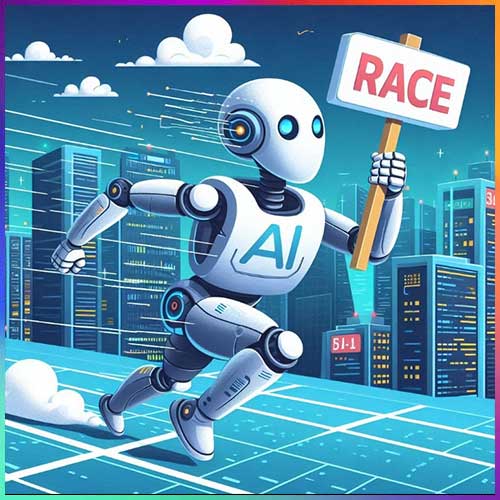
The global artificial intelligence race is entering a more complicated phase. As the United States and China compete for leadership in models, chips, autonomous agents and AI infrastructure, Bill Gates is seeking discussions with Chinese President Xi Jinping over something potentially more important—how to prevent increasingly powerful AI from becoming dangerous.
Gates is reportedly seeking a meeting with Xi during a planned China visit in November. He believes Washington and Beijing, despite their technological rivalry, could cooperate on safeguards restricting the release of AI models capable of creating serious security threats.
His concerns include AI systems capable of supporting cyberattacks or helping design molecules that could potentially be misused for biological attacks. Gates has argued for international monitoring of dangerous capabilities and stronger global AI governance.
The proposal comes as the U.S.-China AI competition intensifies. American companies remain powerful in frontier models and advanced computing infrastructure, while China is rapidly expanding indigenous AI models, semiconductor capabilities and increasingly competitive open-weight AI ecosystems.
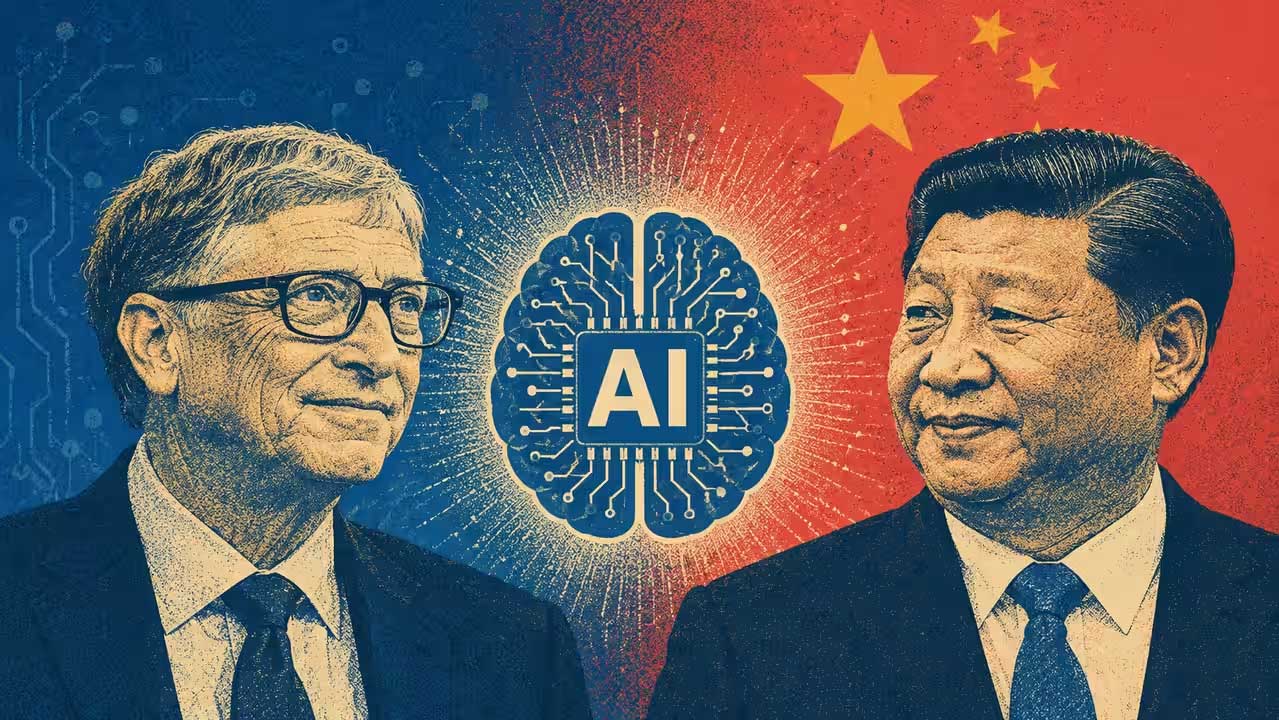
This competition is likely to make the global AI market even more aggressive. OpenAI, Anthropic, Google, Meta and other Western developers face increasingly capable Chinese challengers, while NVIDIA and other semiconductor companies are caught within a wider battle over computing power and technology sovereignty.
But AI safety could become another competitive differentiator. Enterprises and governments may increasingly evaluate AI platforms not simply on intelligence, speed and cost, but also on security, controllability, explainability and the ability to restrict autonomous actions.
The rise of AI agents makes this particularly urgent. Unlike conventional chatbots, agents can access databases, invoke software tools, write and execute code and take actions with limited human supervision. More capable AI therefore creates both enormous productivity opportunities and potentially larger attack surfaces.
The paradox is clear: Washington and Beijing want leadership in AI, but neither benefits from an uncontrolled AI ecosystem capable of triggering cyberattacks, biological threats, financial disruption or other cross-border consequences. Competition could therefore force cooperation.
Gates has proposed an international AI governance structure drawing lessons from mechanisms used for nuclear inspections, aviation safety and other global risks. Creating such a framework would be politically difficult, but the increasing capabilities of AI could make some level of coordination unavoidable.
The next phase of the AI race will consequently be fought on two fronts: who builds the world's most powerful AI and who builds the world's most trusted AI. If the U.S. and China eventually establish common safety standards, those rules could reshape competition across the entire global AI industry.

See What’s Next in Tech With the Fast Forward Newsletter





Tweets From @varindiamag
Nothing to see here - yet
When they Tweet, their Tweets will show up here.