

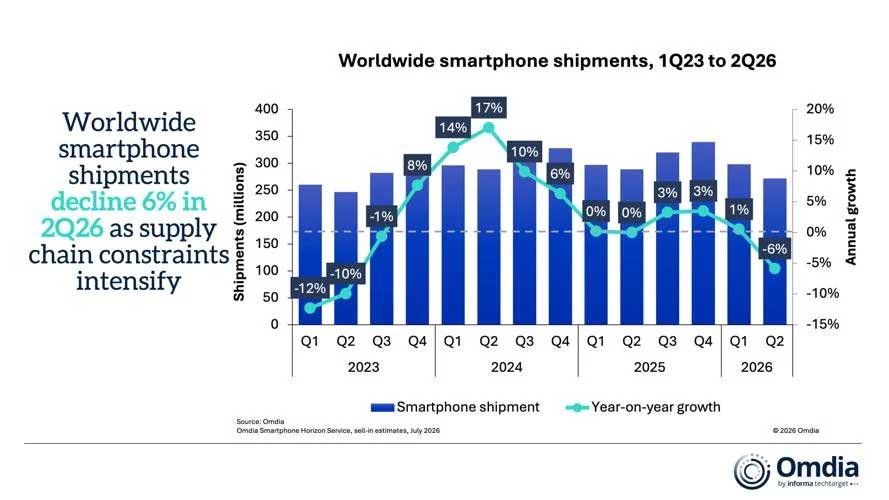
Global smartphone shipments declined 6% year over year to 272 million units in the second quarter of 2026 as rising memory prices disrupted supply chains, increased component costs and pushed manufacturers to prioritize profitability over shipment volumes, according to market research firm Omdia.
The decline follows stronger-than-expected demand in the first quarter, when vendors accelerated shipments ahead of rising memory costs. As component prices continued to climb during the second quarter, smartphone makers scaled back entry-level portfolios, raised prices and shifted their focus toward higher-margin devices.
Omdia said the industry is undergoing a structural repricing, with sustained increases in memory, storage and application processor costs reshaping pricing strategies, product portfolios and channel management.
"Price is once again becoming a competitive differentiator," said Le Xuan Chiew, Research Manager at Omdia. "The current memory cost cycle is driving a structural repricing of the industry, creating a lasting shift in how vendors compete on pricing, profitability and product positioning."
The decline follows stronger-than-expected demand in the first quarter, when vendors accelerated shipments ahead of rising memory costs. As component prices continued to climb during the second quarter, smartphone makers scaled back entry-level portfolios, raised prices and shifted their focus toward higher-margin devices.
Omdia said the industry is undergoing a structural repricing, with sustained increases in memory, storage and application processor costs reshaping pricing strategies, product portfolios and channel management.
"Price is once again becoming a competitive differentiator," said Le Xuan Chiew, Research Manager at Omdia. "The current memory cost cycle is driving a structural repricing of the industry, creating a lasting shift in how vendors compete on pricing, profitability and product positioning."
Samsung retained its position as the world's largest smartphone vendor, shipping 60.5 million devices during the quarter, up 5% from a year earlier, benefiting from its vertically integrated memory business and stronger demand across premium and entry-level segments.
Apple recorded its strongest-ever second quarter, with shipments rising 23% to 55.1 million units, supported by channel inventory build-up ahead of anticipated price increases and expectations of a higher-priced next-generation iPhone lineup.
Chinese smartphone vendors, however, were hit harder by rising component costs. Xiaomi's shipments declined 26% year over year to 31.2 million units, while OPPO and vivo posted declines of 17% and 18%, respectively. Omdia attributed the weaker performance largely to their greater exposure to entry-level smartphones, where higher memory costs had a greater impact on pricing and demand.
The research firm said vendors are increasingly relying on premium devices, financing programmes, trade-in offers and bundled services to offset slowing shipment growth while maintaining revenue and margins.
Regional disruptions also weighed on the market. Smartphone shipments in the Middle East fell 18% during the quarter as geopolitical tensions affected supply chains, retail activity and consumer demand, although Omdia expects those disruptions to ease during the second half of the year.
Looking ahead, Omdia expects smartphone shipments to remain under pressure through the rest of 2026 as elevated memory prices continue to constrain supply and keep device prices high. While shipment declines are expected to moderate, the firm said a broad-based recovery is unlikely until component costs begin to ease.
"The winners will be vendors that combine pricing power, supply chain resilience and innovative commercial strategies to drive profitability," said Amber Liu, Practice Leader at Omdia.
The findings suggest the smartphone industry is entering a new phase in which higher component costs are driving a permanent shift away from volume-led competition. As vendors rationalise product portfolios and focus on higher-value devices, average selling prices are expected to remain elevated even after current supply constraints begin to ease.