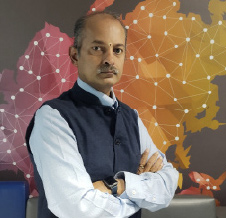


As India accelerates its digital transformation, building resilient software and hardware systems capable of withstanding cyberattacks has become a national priority, according to S. Krishnan, Secretary, Ministry of Electronics and Information Technology (MeitY). Speaking at the launch of the Digital Threat Report 2025–26: From Frontline Intelligence to Collective Foresight, Krishnan emphasized that cybersecurity and operational resilience must form the foundation of India's digital governance framework, including Artificial Intelligence (AI).
He said India's digital ecosystem must be designed to continue functioning even in the face of sophisticated cyber threats. "We have to ensure that digital governance, including AI governance, gives due importance to cybersecurity and operational resilience. Our software and hardware systems must remain operational despite cyberattacks because that is fundamental to both ease of living and ease of doing business," he said.
Krishnan highlighted that digitisation has transformed the way citizens and businesses operate by making transactions faster, reducing friction, and improving access to services. However, these benefits have also expanded the country's cyber risk landscape, making cybersecurity a strategic national concern.
He explained that cyber threats now operate across three distinct levels. At the individual level, cybercrime can lead to financial losses, identity theft, and reputational damage. At the organizational level, ransomware and other attacks can disrupt critical business operations and compromise sensitive data. At the national level, cyberattacks targeting government systems and critical infrastructure can threaten national security and increasingly resemble acts of cyber warfare.
Krishnan outlined the government's coordinated approach to addressing these challenges. While the Ministry of Home Affairs (MHA) focuses primarily on cybercrime affecting citizens, the protection of government infrastructure and national digital assets involves multiple agencies, with MeitY and the Indian Computer Emergency Response Team (CERT-In) playing central roles in coordinating cybersecurity preparedness and incident response.
The MeitY Secretary also highlighted the dual role of Artificial Intelligence in cybersecurity. While AI is creating new attack vectors, including AI-powered phishing, deepfakes, automated malware, and sophisticated cyber deception, it is also equipping defenders with advanced capabilities for threat detection, real-time analysis, automated response, and predictive security. He stressed that organizations must adopt AI proactively to stay ahead of increasingly intelligent cyber adversaries.
Awareness and continuous vigilance, he noted, remain the most critical elements of an effective cybersecurity strategy. Organizations and individuals alike must recognize that cybersecurity is not a one-time exercise but an ongoing process requiring constant monitoring, employee awareness, and proactive risk management.
Krishnan further emphasized the need to strengthen identity and access management (IAM) as a core pillar of cyber resilience. As identity-based attacks continue to replace traditional exploits, protecting digital identities, enforcing strong authentication, and implementing robust access controls have become essential for securing enterprise systems.
He also called for building domestic capabilities in AI, cybersecurity, digital infrastructure, and data ecosystems. According to Krishnan, India must invest in indigenous technologies, AI models, skilled talent, and secure digital infrastructure to reduce dependence on external technologies and strengthen national cyber resilience. "In this space, there is no alternative to building domestic capacity," he said.
Congratulating the contributors to the Digital Threat Report 2025–26, Krishnan said the report provides valuable intelligence for enterprises, policymakers, and public institutions. He encouraged organizations to study its findings, understand the threats most relevant to their sectors, and strengthen their cyber resilience so business operations can continue uninterrupted despite an evolving threat landscape.
Krishnan's remarks reinforce a significant shift in India's cybersecurity strategy-from focusing primarily on prevention to building operational resilience. As AI, cloud computing, digital payments, and connected infrastructure become central to India's economy, the objective is no longer merely preventing cyberattacks but ensuring that critical systems remain available, secure, and recover quickly when attacks occur.
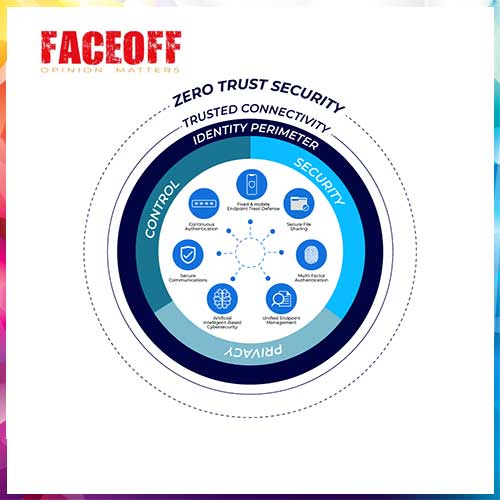
His emphasis on resilient software, secure hardware, AI governance, identity security, and indigenous technology aligns closely with India's broader vision of digital sovereignty. As cyber threats become increasingly AI-driven and identity-centric, organizations will need to invest in Zero Trust architectures, continuous authentication, AI-powered threat detection, post-quantum security, and resilient infrastructure to safeguard the country's rapidly expanding digital economy.

See What’s Next in Tech With the Fast Forward Newsletter







Tweets From @varindiamag
Nothing to see here - yet
When they Tweet, their Tweets will show up here.