
Breaking News
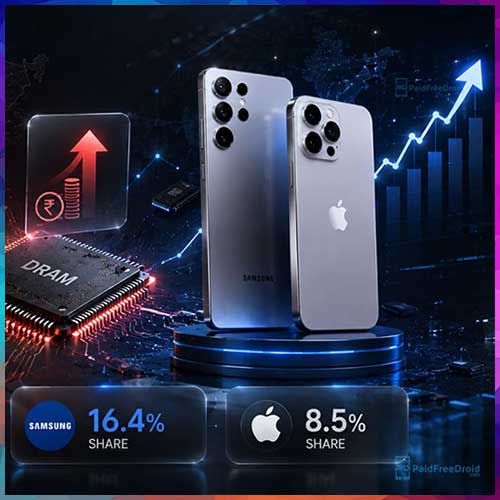
India's smartphone shipments fell 11.1% year over year to 33.2 million units in the second quarter of 2026, according to IDC's Worldwide Quarterly Mobile Phone Tracker, as an ongoing global memory chip shortage kept component costs elevated and squeezed affordability across price bands.
First-half 2026 shipments totaled 64.2 million units, down 7.9% year over year and the lowest first-half volume in five years, IDC said, even as overall market value grew 3.6% year over year. Average selling prices climbed 14.4% year over year to a record $315, the firm said, as vendors pulled back on discounts to protect margins.
Scale and premium portfolios cushion the decline
Vivo held the top spot in India's smartphone market with an 18.4% unit share in the quarter, though its shipments fell 13.9% year over year, according to IDC. Samsung ranked second with 16.4% share, one of only two brands in the top 10 to grow shipments, up 0.4% year over year. OPPO, Xiaomi, and Realme rounded out the top five, each posting double-digit shipment declines.
Apple's shipments held largely flat despite supply constraints on the iPhone 15, 16, and 17, IDC said, with the iPhone 17 remaining India's top-shipped device for a second consecutive quarter. iQOO recorded the steepest decline among major brands, with shipments down 61% year over year.
The pattern wasn't evenly distributed, IDC said. Apple and Samsung's diversified portfolios and greater scale let them absorb rising costs without sacrificing volume or margins, while Chinese brands built around low-end and mass-budget positioning faced the sharpest exposure. Those manufacturers were shifting toward higher-margin models and cutting costs, according to IDC, but faced the harder challenge of convincing price-sensitive buyers to accept meaningfully higher price tags.
Entry-level tier becomes "commercially unviable"
Shipments in the sub-$100 segment fell 74.3% year over year in the quarter, IDC said, with its share of the market shrinking from 15.6% to 4.5%. Sustaining profitability in that tier became increasingly untenable under current cost conditions, the firm said, leading brands to launch fewer models and pull back channel support.
The affordability pressure also revived demand for 4G devices, according to IDC, as entry-level 5G models grew steadily costlier. IDC said several brands reintroduced or extended 4G lineups to hold ground in the segment, lifting 4G's overall share to 11.1%, though it characterized the shift as a temporary, supply-led cushion rather than a lasting fix.
Buyers priced out of the entry-level tier moved decisively into the mid-premium band, IDC said: the $400–600 segment grew 60.3% year over year and nearly doubled its market share, from 4.8% to 8.6%. The $100–200 mass-budget segment, the market's largest at 46.8% share, held comparatively steady, cementing its position as the primary value anchor for cost-conscious buyers, according to the firm. Premium bands above $600 also proved more resilient than the market overall, IDC said, reflecting sustained demand among upgrade-led and aspirational buyers less exposed to affordability pressure at the bottom of the market.
Online discounting pulls back sharply
Online channel shipments fell 19.8% year over year, with their share of the market slipping from 46.4% to 41.9%, IDC said, as e-tailer discounts and offers grew scarcer than a year earlier. The firm said the pullback hit hardest as entry-level models eroded from the online mix and flagship devices saw no upfront discounting to drive volume. Offline channel shipments declined a comparatively modest 3.6% year over year, as brands leaned on physical stores to manage pricing pressure, according to IDC.
"Q2 2026 saw average selling prices climb 14.4% year over year to a record US$315, with memory driven cost pressure showing up across the product lineup," said Aditya Rampal, senior research analyst for devices research at IDC Asia Pacific. He said the quarter marked a sharp reversal from a year earlier, when early festive discounts drove momentum ahead of the season, adding that thinning margins have left brands and channels little room to use price as a demand lever heading into the current festive period. Financing options and product differentiation in the mid-premium segment will be key to sustaining consumer demand through the rest of the year, Rampal said.
First-half 2026 shipments totaled 64.2 million units, down 7.9% year over year and the lowest first-half volume in five years, IDC said, even as overall market value grew 3.6% year over year. Average selling prices climbed 14.4% year over year to a record $315, the firm said, as vendors pulled back on discounts to protect margins.
Scale and premium portfolios cushion the decline
Vivo held the top spot in India's smartphone market with an 18.4% unit share in the quarter, though its shipments fell 13.9% year over year, according to IDC. Samsung ranked second with 16.4% share, one of only two brands in the top 10 to grow shipments, up 0.4% year over year. OPPO, Xiaomi, and Realme rounded out the top five, each posting double-digit shipment declines.
Apple's shipments held largely flat despite supply constraints on the iPhone 15, 16, and 17, IDC said, with the iPhone 17 remaining India's top-shipped device for a second consecutive quarter. iQOO recorded the steepest decline among major brands, with shipments down 61% year over year.
The pattern wasn't evenly distributed, IDC said. Apple and Samsung's diversified portfolios and greater scale let them absorb rising costs without sacrificing volume or margins, while Chinese brands built around low-end and mass-budget positioning faced the sharpest exposure. Those manufacturers were shifting toward higher-margin models and cutting costs, according to IDC, but faced the harder challenge of convincing price-sensitive buyers to accept meaningfully higher price tags.
Entry-level tier becomes "commercially unviable"
Shipments in the sub-$100 segment fell 74.3% year over year in the quarter, IDC said, with its share of the market shrinking from 15.6% to 4.5%. Sustaining profitability in that tier became increasingly untenable under current cost conditions, the firm said, leading brands to launch fewer models and pull back channel support.
The affordability pressure also revived demand for 4G devices, according to IDC, as entry-level 5G models grew steadily costlier. IDC said several brands reintroduced or extended 4G lineups to hold ground in the segment, lifting 4G's overall share to 11.1%, though it characterized the shift as a temporary, supply-led cushion rather than a lasting fix.
Buyers priced out of the entry-level tier moved decisively into the mid-premium band, IDC said: the $400–600 segment grew 60.3% year over year and nearly doubled its market share, from 4.8% to 8.6%. The $100–200 mass-budget segment, the market's largest at 46.8% share, held comparatively steady, cementing its position as the primary value anchor for cost-conscious buyers, according to the firm. Premium bands above $600 also proved more resilient than the market overall, IDC said, reflecting sustained demand among upgrade-led and aspirational buyers less exposed to affordability pressure at the bottom of the market.
Online discounting pulls back sharply
Online channel shipments fell 19.8% year over year, with their share of the market slipping from 46.4% to 41.9%, IDC said, as e-tailer discounts and offers grew scarcer than a year earlier. The firm said the pullback hit hardest as entry-level models eroded from the online mix and flagship devices saw no upfront discounting to drive volume. Offline channel shipments declined a comparatively modest 3.6% year over year, as brands leaned on physical stores to manage pricing pressure, according to IDC.
"Q2 2026 saw average selling prices climb 14.4% year over year to a record US$315, with memory driven cost pressure showing up across the product lineup," said Aditya Rampal, senior research analyst for devices research at IDC Asia Pacific. He said the quarter marked a sharp reversal from a year earlier, when early festive discounts drove momentum ahead of the season, adding that thinning margins have left brands and channels little room to use price as a demand lever heading into the current festive period. Financing options and product differentiation in the mid-premium segment will be key to sustaining consumer demand through the rest of the year, Rampal said.

See What’s Next in Tech With the Fast Forward Newsletter


SOFTWARE






Tweets From @varindiamag
Nothing to see here - yet
When they Tweet, their Tweets will show up here.