

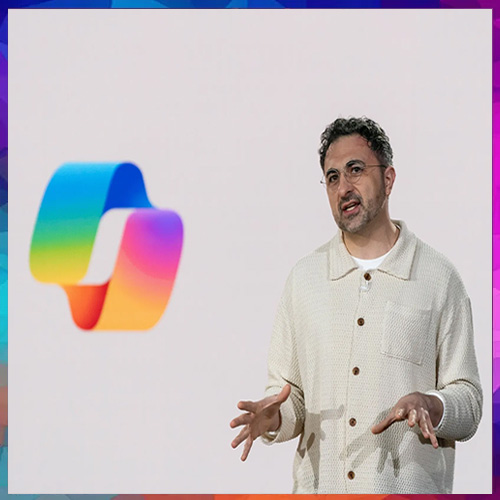
Microsoft’s AI chief Mustafa Suleyman has unveiled a new strategy to develop in-house superintelligent systems, signalling a gradual move away from OpenAI and a commitment to building safe, high-performance AI that avoids human-like simulation
Microsoft is embarking on a bold new chapter in artificial intelligence, as Chief AI Officer Mustafa Suleyman outlined plans to develop the company’s own superintelligent systems. The announcement marks a shift from Microsoft’s longstanding dependence on OpenAI, its closest AI collaborator and investment partner.
In a blog post and interview, Suleyman said Microsoft’s newly formed MAI Superintelligence Team will focus on building AI models capable of surpassing human performance in reasoning, science, and engineering. Unlike conventional chatbots, however, these systems will not attempt to mimic human emotion or consciousness. “We want AI that is powerful, helpful, and safe — not one that pretends to be human,” he stated.
Prioritising safety over sentience
Suleyman, a co-founder of DeepMind, emphasised that Microsoft will reject efforts to humanise AI, warning that emotionally responsive systems could mislead users and lead to harmful dependencies. His remarks come after reports of users forming unhealthy attachments to conversational AI systems.
The MAI team — comprising engineers, researchers, and several DeepMind veterans — will prioritise safety infrastructure and containment testing. These protocols are designed to ensure that advanced AI models remain under human control, communicate transparently, and avoid generating illusions of awareness or selfhood.
Medicine to lead superintelligence deployment
Microsoft is initially targeting healthcare as a key proving ground for its next-generation AI. The company has already integrated diagnostic features into Copilot and partnered with Harvard Health to improve AI-driven medical guidance. Suleyman said some of these systems have outperformed groups of clinicians in early trials and are nearing readiness for clinical use.
A race for the AI frontier
While Microsoft and OpenAI continue to collaborate under an agreement lasting until 2032, their ambitions are diverging. As OpenAI broadens its alliances with other cloud providers, Microsoft is accelerating its own model development for Copilot, Windows, and enterprise tools.
By building internal superintelligence capabilities, Microsoft aims to reduce its reliance on OpenAI and cement its place among the leaders in next-generation AI — one defined not by imitation of human thought, but by safe, scalable intelligence built on its own terms.

See What’s Next in Tech With the Fast Forward Newsletter







Tweets From @varindiamag
Nothing to see here - yet
When they Tweet, their Tweets will show up here.