
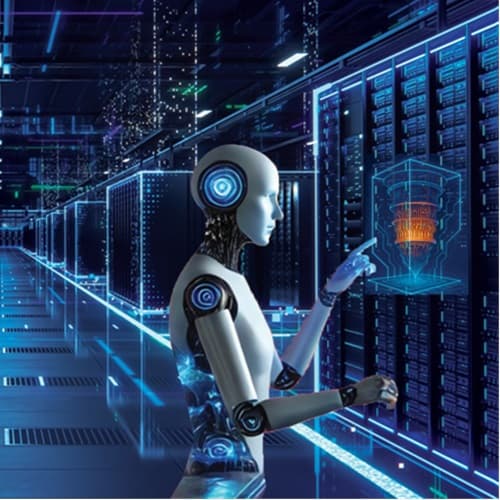
The global data center industry has become the engine of the AI economy, powering everything from cloud computing, fintech, and gaming to generative AI and quantum research. Today, there are over 11,800 data centers worldwide. The U.S. leads with more than 5,381—almost half the global total— followed by Asia’s major hubs in China, Japan, India, Singapore, and Hong Kong, and Europe’s strongholds in Germany, France, the U.K., and the Netherlands. The single largest facility, however, is not American but the China Telecom Inner Mongolia Information Park. Meanwhile, the Middle East is emerging as a new AI powerhouse, with Saudi Arabia investing billions into AI- ready data campuses like NEOM’s Oxagon DataVolt. This global race underscores one truth: whoever controls compute power controls the future of innovation.
INDIA’S DATA CENTER BOOM: THE DIGITAL BACKBONE OF GROWTH
India’s data center industry is entering a hyper-growth phase, projected to double its capacity by FY27. This surge is driven by rapid digitalization, 5G rollout, AI adoption, data localization laws, and blockchain-driven industries. The Indian data center market is expected to rise from USD 4.5 billion in 2023 to USD 11.6 billion by 2032, growing at a CAGR of 10.98%.
Despite contributing 20% of the world’s data, India currently accounts for only 3% of global data center capacity—a gap that signals both urgency and opportunity. With around 150 operational data centers and heavyweights like AWS, Microsoft Azure, Google Cloud, Yotta, CtrlS, and Sify leading the charge, India is positioning itself as a global digital hub.
WHY AI-READY DATA CENTERS MATTER
Artificial Intelligence—especially Generative AI, Large Language Models (LLMs), and high-performance computing (HPC)—requires infrastructure that can handle extreme power density and scalability. Traditional facilities, designed for 8–17 kW per rack, cannot support AI racks consuming 50–100 kW.
The next phase of India’s digital economy depends on AI-ready data centers—facilities designed to handle dense GPU clusters, advanced cooling, and rack integration without downtime. Without this, scaling AI workloads will choke legacy infrastructure.
TO ADDRESS THESE CHALLENGES, INDIAN OPERATORS ARE EMBRACING:
• Seamless rack-and-stack integration for high-density GPU workloads.
• Liquid cooling & RDHx systems that reduce power consumption by up to 40%.
• Modular architectures for flexible scaling
of AI workloads.
• AI-driven automation to optimize workload distribution and reduce costs.
QUANTUM-READY DATA CENTERS: INDIA’S NEXT LEAP
While AI dominates today, quantum computing is fast approaching. India, through initiatives like the National Quantum Mission and startups such as QpiAI, is preparing for quantum-ready data centers capable of handling ultra-low temperature environments, advanced cryptography, and exponential computing power.
Quantum systems promise breakthroughs in drug discovery, cryptography, logistics, and national defense, but they demand specialized infrastructure far beyond legacy capabilities. Quantum-ready facilities, therefore, represent a strategic investment in ensuring India remains at the forefront of next-gen computing.
POWERING 5G, EDGE, GENERATIVE AI, AND BLOCKCHAIN
Next-generation data centers are not just about scale but also about location and latency.
5G + Edge Computing: Real-time applications such as autonomous vehicles, IoT, telemedicine, and smart cities require edge-ready data centers located in Tier-2 and Tier-3 cities. Providers like AdaniConneX and Sify are investing in distributed networks across Ahmedabad, Jaipur, and Vizag.
Generative AI: Expected to contribute USD 400 billion to India’s economy by 2030, GenAI requires massive compute power, scalable GPU clusters, and efficient storage—making AI-optimized data centers indispensable.
Blockchain & Fintech: From digital payments to supply chain transparency, blockchain demands secure, high- performance, and tamper-proof infrastructure.
Hybrid & Multi-cloud Ecosystems: Enterprises increasingly rely on interconnected, carrier-neutral data centers that support AWS, Azure, Google Cloud, and private cloud deployments simultaneously.
SUSTAINABILITY CHALLENGE: GREENER GROWTH
By 2030, India’s data centers could account for 6% of the nation’s electricity consumption. This poses a sustainability challenge, as the sector’s carbon footprint is comparable to that of the aviation industry.
To address this, operators are integrating:
• Solar and renewable energy corridors (e.g., CtrlS’s solar-powered campuses).
• Liquid cooling systems to cut energy use by 40%.
• AI-based energy optimization for predictive cooling and dynamic workload management.
• Green data center parks supported by state governments in Maharashtra, Tamil Nadu, and Telangana.
India’s strategic advantages—cost-effective land, a skilled workforce, government incentives, and its sheer scale of internet users—make it an attractive investment destination for hyperscalers.
KEY DEVELOPMENTS INCLUDE:
India is rapidly emerging as a global hub for AI-ready data centers and cloud infrastructure, with Reliance Jio, Adani, and Bharti Airtel investing billions in hyperscale campuses. Global tech giants Google, AWS, and Microsoft are also expanding multi- billion-dollar campuses across Mumbai, Hyderabad, and Chennai. Analysts estimate that by 2027, investments could surpass USD 100 billion, positioning India as a global AI and cloud leader. Government incentives— classifying data centers as essential services— are ensuring reliable power, faster land acquisition, and robust fiber rollout, further accelerating growth.
In parallel, Capgemini has announced the acquisition of Cloud4C, a managed services provider specializing in automation-driven, AI-ready, and sovereign cloud platforms.
Cloud4C, with 1,600 professionals, brings expertise in hybrid cloud, cybersecurity, automation, disaster recovery, and compliance. This move strengthens Capgemini’s cloud strategy while giving enterprises a trusted partner to modernize IT operations.
Together, these developments reflect India’s accelerating digital transformation, AI adoption, and cloud-first economy, with massive opportunities for innovation and sustainable growth.
THE ROAD AHEAD
India’s data center story is no longer about catching up—it’s about leading the next wave of global compute infrastructure. With strong government support, rising private investments, and a focus on sustainable innovation, India is well-positioned to emerge as a top global hub for AI workloads, a leader in quantum-ready infrastructure, and a regional powerhouse in edge and 5G-enabled computing. However, the race is highly time-sensitive, and timely execution will determine whether India can secure its place at the forefront of the global digital economy. With this backdrop, VARINDIA spoke to various industry players to share their insights on the same. Below are the excerpts...
----------------------------------------------------------------------------------------------------------------------------------------
Beyond Limits: Data Centers are Evolving for AI, 5G, and Quantum Computing
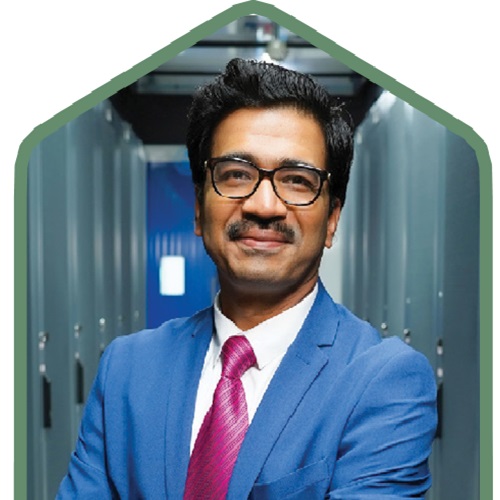 SUNIL GUPTA
CO-FOUNDER, MANAGING DIRECTOR & CEO, YOTTA DATA SERVICES
In today’s digital-first economy, data centers have become strategic imperatives for enterprises, enabling always-on operations and high-performance computing. At the heart of modern upgrades lies seamless rack-and-stack integration, where precise deployment of servers, storage, and networking ensures efficiency, uptime, and scalability. By avoiding errors in cabling, airflow, and power distribution, organizations reduce downtime, control costs, and prepare for effortless scalability. For Yotta, this integration is more than a deployment step—it is the foundation of resilient, future-ready infrastructure.
Effective integration minimizes risks such as installation errors and delays, while automation and standardized frameworks accelerate rollouts with predictable performance. Optimizing legacy infrastructure remains equally vital—extending hardware lifecycles, consolidating workloads, and adopting modular, scalable upgrades that align investment with real capacity requirements, avoiding costly overhauls.
Energy efficiency plays a critical role in sustainable modernization. Advanced cooling technologies, efficient airflow management, and high-performance power systems lower operating costs and reduce downtime, while intelligent monitoring and automation further enhance reliability. This dual focus on CAPEX and OPEX ensures both cost savings and operational resilience. The rise of AI and Gen AI has reshaped infrastructure needs, with workloads demanding up to 100 kW per rack compared to legacy limits of 8–10 kW. Traditional air cooling and bandwidth constraints fall short, creating performance bottlenecks. Next-generation data centers must therefore be modular, convergent, and GPU-optimized— featuring immersion cooling, NVMe-first storage, and scalable megawatt power feeds to effectively support AI, blockchain, and 5G ecosystems.
Looking ahead, quantum computing is poised to redefine industries from finance to pharmaceuticals. Though full-scale adoption may be years away, India’s National Quantum Mission and its thriving AI ecosystem make a strong case for early investment in quantum- ready, hybrid infrastructures. These will integrate classical HPC with quantum systems, positioning early adopters to lead in the global digital economy.
By focusing on seamless integration, energy efficiency, AI-readiness, and quantum compatibility, data centers will evolve into high-performance engines powering the next era of digital transformation.
------------------------------------------------------------------------------------------------------------------------------------
AI Workloads Demand Purpose-Built Infrastructure
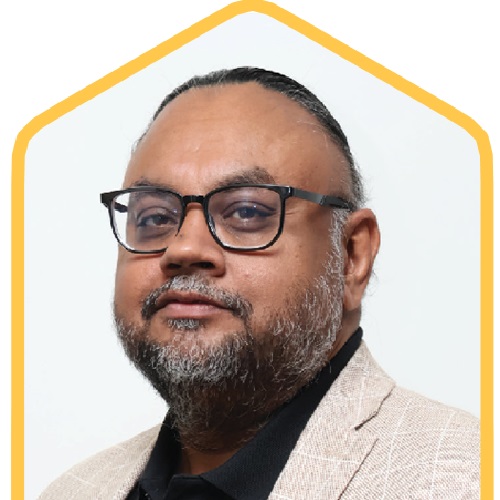 JATINDER SINGH PABLA
CHIEF SALES & MARKETING OFFICER, STT GDC INDIA
As enterprises embrace artificial intelligence (AI), generative AI, 5G, and soon quantum computing, the role of data centres is undergoing a historic transformation. No longer just storage hubs, modern facilities are becoming the very engines of digital innovation—purpose- built to deliver scalability, speed, and sustainability.
Traditional data centres are ill-equipped to manage the intense power and cooling needs of AI workloads. With racks now engineered to support over 100 KW of power and weighing more than 2,000 KG, legacy setups often lack the flexibility and efficiency required. STT GDC India is addressing this challenge by developing mega campuses designed specifically for high-performance computing, AI clusters, and hybrid edge workloads. These facilities integrate advanced cooling technologies, direct-to-chip liquid cooling, and scalable designs that can seamlessly adapt to future demand.
Next-generation facilities are being built on four pillars: modular expansion, robust power infrastructure, liquid cooling for dense GPU-driven AI workloads, and edge-ready solutions that minimize latency. For 5G and blockchain, these features enable secure, low-latency, and scalable environments that can support real-time applications—from autonomous vehicles to financial trading. For AI and GenAI, they provide massive compute power and optimized energy use for model training and inference at scale. These data centres are not just keeping pace—they are setting the stage for new breakthroughs in digital connectivity and computation.
With 30 operational data centres across 10 Indian cities and a capacity of ~400 MW, STT GDC India is building for the future. Mega campuses in Pune, Mumbai, Chennai, and Delhi NCR are being designed to deliver up to 400 MW of IT power capacity, ensuring enterprises have the scale to run complex AI workloads. Edge-ready centres in Tier 2 cities like Jaipur and Ahmedabad bring compute closer to users, enabling low-latency performance for IoT, smart cities, and real-time analytics.
Looking ahead, the rise of quantum computing will amplify these demands further. STT’s robust infrastructure, sustainable design, and future-ready campuses position it at the forefront of India’s digital transformation—empowering industries to unlock new frontiers of innovation.
----------------------------------------------------------------------------------------------------------------------------------------------
Traditional data centers were not designed with the demands of AI causing limitations
 PIYUSH SOMANI
FOUNDER, MD AND CHAIRMAN, ESDS SOFTWARE SOLUTION LIMITED
Today we live in a hyperconnected world, where data centers have become the backbone of digital innovation, powering everything from online banking to AI-driven breakthroughs. Their success hinges on seamless rack-and-stack integration—the precise placement, cabling, and powering of servers, storage, and networking gear. Done right, this process reduces downtime, prevents costly inefficiencies, and lays the foundation for scalable, future-ready infrastructure that keeps businesses running without disruption.
Optimizing legacy data centers is equally critical. Instead of costly overhauls, enterprises are embracing phased expansion through modular design, virtualization for maximum hardware utilization, and structured cabling with high-density racks to cut costs. Recycling feasible infrastructure components further supports sustainability while ensuring modernization aligns with real-time customer workloads. This balance of modernization and cost discipline creates data centers that are both scalable and energy-efficient, reducing operating expenses while preparing for future digital demands.
The AI revolution has brought unique challenges. Legacy centers, often capped at 8–10 kW per rack, cannot support the 100 kW densities needed for GPU-heavy AI clusters. Cooling and power constraints hinder performance, making advanced solutions like immersion cooling and modular expansions essential. Similarly, next-generation data centers are being designed to support 5G, GenAI, and blockchain, with edge-ready architectures, GPU-optimized environments, and lightning-fast interconnects enabling real-time processing and secure, large-scale transactions.
Looking ahead, quantum computing will redefine what’s possible in sectors like finance, healthcare, and cybersecurity. While widespread adoption may be years away, India’s National Quantum Mission and strong AI ecosystem are laying the groundwork for quantum-ready infrastructures. Enterprises investing now in modular, hybrid models will be best placed to harness these breakthroughs.
In short, the future of data centers lies in seamless integration, smart cost optimization, AI-readiness, and quantum compatibility, enabling them to evolve as the true engines of tomorrow’s digital transformation.
-----------------------------------------------------------------------------------------------------------------------------------------
Enterprises Turn to Third-Party Data Centers to Power Next-Gen AI
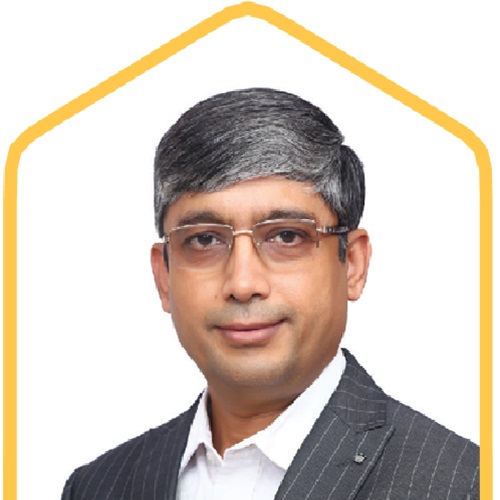 MANOJ PAUL
MD, EQUINIX INDIA
Enterprises today are under increasing pressure to modernize their IT infrastructure while keeping costs under control. For organizations with in-house legacy data centers, one of the most effective cost-cutting strategies during refresh cycles is moving to multi-tenant colocation facilities. This shift eliminates the need for heavy upfront capital expenditure on infrastructure, while giving companies access to pre-optimized environments with flexible power, cooling, security, and interconnection.
Cost efficiency is further enabled by modular design, which allows phased, just-in- time expansions aligned with business demand, preventing unnecessary overprovisioning. Additionally, colocation providers adopt energy-efficient cooling systems, automation, and interconnection solutions like Equinix Fabric, which reduce operational expenses and improve performance. Shared infrastructure combined with smart deployment strategies and operational optimization delivers long-term savings and scalability.
However, legacy on-premises data centers often fall short when it comes to supporting emerging workloads, particularly artificial intelligence. AI requires massive compute power to process vast amounts of data quickly and securely, along with adherence to strict compliance and privacy standards. Traditional facilities were not designed for these needs, driving enterprises to explore high-performance third-party data centers as scalable, resilient platforms for their AI journey.
Next-generation data centers go beyond AI—they are purpose-built to support technologies such as 5G, Gen AI, and blockchain. Equipped with high-density compute for GPU clusters, scalable storage, and edge-ready architecture, they provide low-latency access and seamless multi-cloud integration. This ecosystem ensures the reliable deployment of advanced applications, from blockchain nodes to AI model training at scale.
Looking ahead, India is steadily preparing for the quantum era. While quantum- powered data centers remain in early stages, the nation is investing in scalable, secure, and interconnection-rich infrastructure to be future-ready. Global leaders like Equinix are bringing expertise from APAC, US, and EMEA to India, ensuring the market is well-positioned to support upcoming quantum computing demands.
---------------------------------------------------------------------------------------------------------------------------------------
The Evolution of Data Centers: From Legacy Challenges to Quantum-Ready Futures
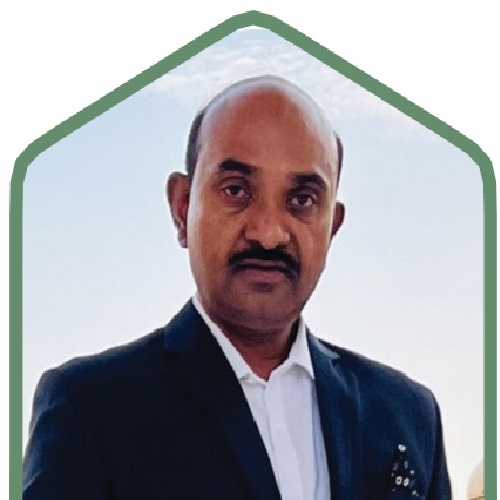 KALYAN MUPPANENI
FOUNDER & CEO, PI DATACENTERS
The journey of modern data centers begins with optimizing existing infrastructure. Success lies in evaluating what can be reused and what has reached end-of-life, from HVAC systems and cabling to UPS units and generators. True cost optimization is not about cutting corners but about building smarter, flexible, and energy-conscious facilities that maximize ROI while preparing enterprises for future demands.
Current challenges are shaped by the rise of AI and GPU-intensive workloads, which push legacy facilities beyond their original design. To meet these demands, data centers must enhance power capacity, deploy high-density racks, and adopt advanced cooling methods such as immersion or direct-to-chip cooling. These strategies reduce operating expenses, improve energy efficiency, and enable existing facilities to scale without complete rebuilds.
Equally critical is seamless rack-and-stack integration. While often seen as purely technical, this process underpins performance, reliability, and cost-efficiency. A structured, error-free integration ensures smooth deployment, minimizes downtime, and prevents costly inefficiencies—vital in today’s digital-first economy where even minutes of outage can cause heavy losses.
Looking ahead, next-generation data centers are purpose-built to support AI, GenAI, blockchain, and 5G. With modular designs, intelligent automation, and sustainable operations at their core, these facilities deliver GPU-optimized performance, ultra-low latency, and cloud- native integration for hybrid and multi-cloud environments. They represent the resilience and agility enterprises need to unlock the full potential of transformative technologies.
The future will also be defined by quantum computing. While still nascent, quantum promises breakthroughs in cryptography, healthcare, finance, and advanced simulations. In India, the National Quantum Mission and a thriving AI ecosystem signal growing demand for quantum-ready infrastructure. Although widespread adoption may be at least five years away, early investments in modular, quantum-prepared data centers will ensure organizations are ready to embrace the next wave of digital transformation.
----------------------------------------------------------------------------------------------------------------------------------------
India Backs Quantum Innovation with Bold National Mission
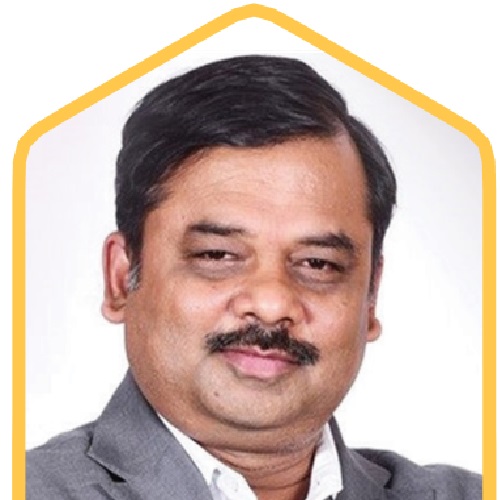 ANIL NAMA
CIO, CTRLS DATACENTERS
Today, data centers are the backbone of every business. Whether it’s powering cloud services, enabling AI models, or supporting financial transactions, the efficiency of a data center can make or break operations. As India rapidly modernizes its digital infrastructure, enterprises are rethinking how data centers are built, upgraded, and managed. From seamless rack-and-stack integration to cost-efficient upgrades and the promise of quantum-powered facilities, the landscape is evolving faster than ever. A poorly executed Rack-and-Stack can cause delays, downtime, and high costs. On the other hand, a seamless process ensures precise deployment, minimizes risks, improves airflow and power distribution, and makes future scalability much easier.
At a strategic level, automation, standardized processes, and collaboration between vendors and IT teams are making Rack-and-Stack faster and error-free. This not only improves efficiency but also prepares data centers for new-age demands like hybrid cloud and edge computing.
Upgrading old data centers doesn’t have to mean massive spending. Companies in India are adopting smarter approaches such as phased upgrades, hybrid-cloud integration, and virtualization. Instead of replacing everything at once, they prioritize high-impact improvements—like energy-efficient servers and modern cooling systems.
Colocation facilities are also becoming popular because they allow enterprises to use ready-made infrastructure with flexible power, cooling, and interconnection—without heavy upfront costs. Energy audits, intelligent automation, and modular designs further help reduce both capital and operating expenses.
Looking ahead, India is gearing up for the next big shift: quantum computing. With government support through initiatives like the National Quantum Mission, the country is laying the foundation for quantum-ready data centers. While fully quantum-powered facilities are still a few years away, hybrid models that integrate classical and quantum systems will be the first step.
For India’s digital economy, this evolution is more than just technology—it’s about competitiveness. Early movers investing in scalable, secure, and future-ready infrastructure will be best positioned to power AI, blockchain, and eventually, quantum workloads.
----------------------------------------------------------------------------------------------------------------------------------------------
Large-scale deployment of Quantum Technology in data centers is several years away!
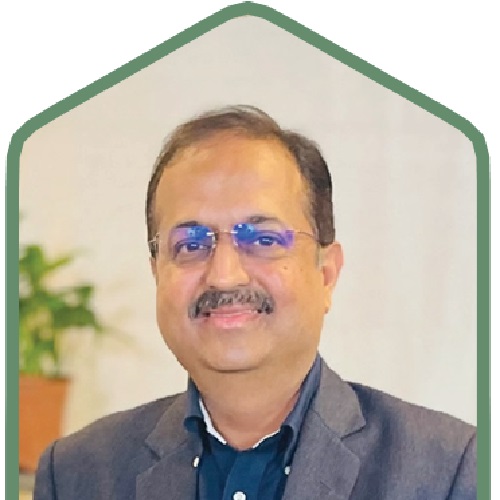 PRATAP MANE
COUNTRY HEAD- INDIA, COLT DCS
India’s data center ecosystem is undergoing a significant transformation, driven by rapid digital adoption, 5G rollout, and the exponential growth of artificial intelligence (AI) and blockchain applications. While the sector has expanded considerably in the past five years, legacy data centers—especially those originally built by enterprises for internal use—face critical limitations when handling AI workloads.
One of the primary challenges is power capacity. AI clusters, depending on size, can demand anywhere from 1MW to 10MW of IT power, often exceeding the limits of traditional facilities. Retrofitting these sites is difficult, as additional utility power requires more backup generators, which are constrained by strict emissions regulations and space availability. Cooling is another challenge. With AI racks consuming far higher power densities, conventional air cooling is proving insufficient. Operators are turning toward liquid and hybrid cooling solutions, but such retrofits are expensive and space-intensive, particularly in urban environments.
Next-generation data centers, however, are being designed specifically for AI, GenAI, blockchain, and 5G workloads. Hyperscale cloud providers and operators like Colt DCS are building mega facilities of 30MW or more, often grouped into regional availability zones to ensure resilience. These sites feature reinforced structures to handle racks weighing up to 1,800 kg, dense fiber networking for ultra-low latency, and modular designs to accommodate high-density AI workloads. Edge data centers are also emerging in city hubs to support real- time 5G applications, smart cities, and IoT ecosystems.
When it comes to blockchain workloads such as cryptocurrency mining, the requirements differ. Here, cost efficiency outweighs reliability, leading to simplified designs without the redundancy demanded by AI or financial services.
Looking forward, quantum computing is poised to play a transformative role, though its mainstream integration into data centers is still several years away. For now, quantum systems remain concentrated in national labs and R&D. In the future, quantum will likely complement, rather than replace, existing GPU and CPU-based infrastructures. India, with its growing investments and research base, is well-positioned to harness this frontier, ensuring that its data centers evolve into AI-ready and quantum-capable ecosystems.
----------------------------------------------------------------------------------------------------------------------------------------