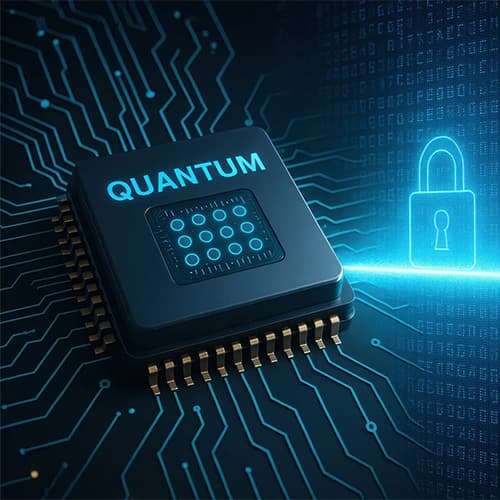
Quantum computing is accelerating faster than traditional security models can adapt. Cryptographic systems like RSA and ECC—built on hard mathematical problems—are at risk as quantum algorithms such as Shor’s can break them once large-scale quantum machines arrive.
This creates vulnerabilities across banking, government, and identity systems that rely on public key infrastructure.
Organizations are now evaluating Quantum Neuro-Cryptography, which combines Quantum Key Distribution (QKD) with neural cryptography. QKD detects interception attempts using quantum physics, while neural cryptography uses synchronized neural networks to generate continuously evolving shared secrets. Together, they create adaptive, self-learning key exchanges that update cryptographic parameters in real time.
However, post-quantum algorithms alone are not enough. Hardware Security Modules (HSMs) are essential as they provide tamper-resistant environments for key generation, storage, and cryptographic operations. When paired with lattice-based, multivariate, and hash-based algorithms, HSMs ensure private keys never leave trusted hardware. They also enforce secure boot, attestation, role-based access, and automated key rotation—critical for large-scale deployments.
Indian based Start-up, Faceoff strengthens this architecture by adding a secure identity layer. Its adaptive biometric fusion, neural liveness detection, and secure enclave processing ensure that only verified users interact with protected systems. Faceoff’s assertions can also be signed within HSMs using post-quantum signatures, preventing forgery.
Together, HSM-anchored post-quantum cryptography and Faceoff’s advanced identity verification deliver a complete quantum-ready security stack—protecting both keys and the humans accessing them.