
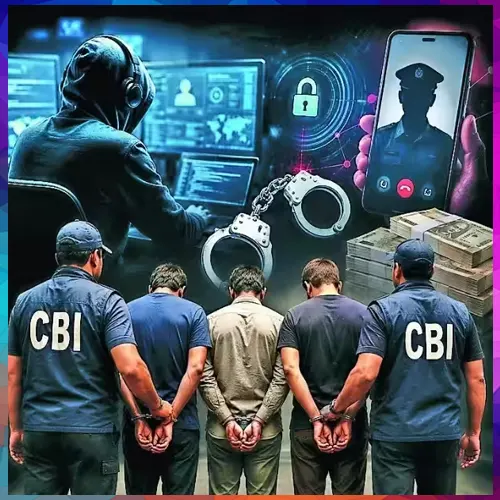
Pimpri Chinchwad cyber police have arrested a government civil contractor from Rajasthan in connection with a digital arrest case in which a retired private company officer lost Rs. 2.14 crore to cybercriminals.
The accused, Rajendra Nagar (32), a resident of Bundi district in Rajasthan, allegedly provided his bank account to the fraudsters to receive money siphoned from victims. Police found that transactions worth Rs.1.5 crore were routed through his account. A Pimpri Chinchwad cyber police team led by senior police inspector Ravikiran Nale took Nagar into custody from Rajasthan last week.
In October last year, cybercriminals posing as officials from the Nashik and Mumbai police duped a 70-year-old retired assistant general manager of a private company out of Rs. 2.14 crore in a digital arrest scam. The fraudsters told the complainant that his wife had earned a commission from a terror organization by allowing it to use her bank account, falsely claiming she was involved in money laundering, and threatened to arrest the couple.
The scammers instructed the man to transfer his entire savings to a bank account for "verification," promising to return the funds within three days. When the money never came back, the senior citizen realized he had been defrauded and filed a police complaint.
Assistant police inspector Pravin Swami of the Pimpri Chinchwad cyber police said the investigation revealed that six bank accounts were used to funnel the complainant's money. Of this, Rs.49 lakh was transferred to a construction firm's bank account, and Rs.38 lakh was withdrawn via cheque from that same account — which belonged to Nagar.
Police confirmed Nagar's involvement after reviewing the bank's CCTV footage, which showed him withdrawing the funds. Investigators then laid a trap in Rajasthan and, with the assistance of local police, took him into custody. Police say they are now searching for his accomplice.
This case fits a pattern we've discussed before: "digital arrest" scams work by combining psychological pressure (impersonating police, threatening arrest) with a network of "mule" bank accounts — often belonging to people with no direct connection to the original fraud — to launder stolen money quickly across multiple accounts before it can be traced or frozen. The reliance on CCTV footage and account-holder tracing here also underscores why cybercrime units increasingly push for real-time transaction monitoring and stronger KYC/account-opening verification, since by the time funds are withdrawn in cash, recovery becomes far harder.

See What’s Next in Tech With the Fast Forward Newsletter









Tweets From @varindiamag
Nothing to see here - yet
When they Tweet, their Tweets will show up here.