


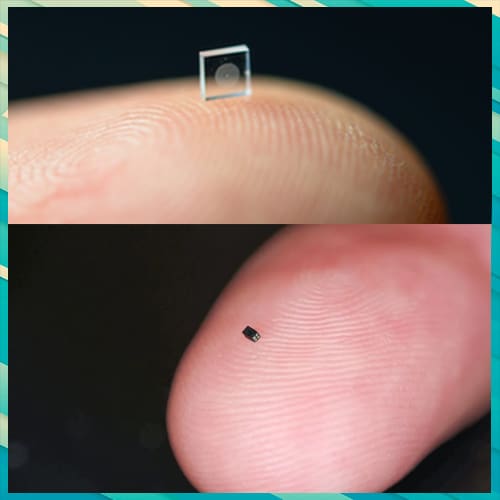
Researchers from the University of Princeton and the University of Washington have developed a high-resolution camera in the size of a grain of salt.
The new system can produce crisp, full-color images on par with a conventional compound camera lens 500,000 times larger in volume. The new optical system relies on a technology called a metasurface, which can be produced much like a computer chip.
The metasurface is studded with 1.6 million cylindrical posts, each roughly the size of the human immunodeficiency virus. These unique cylinders combine with machine learning algorithms that interpret how light hits each and combine the data together to produce high-quality images.
The researchers are now working to add more computational abilities to the camera, and beyond improving the image quality they would like to add the capability for object detection and sensing that would be relevant in medicine and robotics.

See What’s Next in Tech With the Fast Forward Newsletter









Tweets From @varindiamag
Nothing to see here - yet
When they Tweet, their Tweets will show up here.