
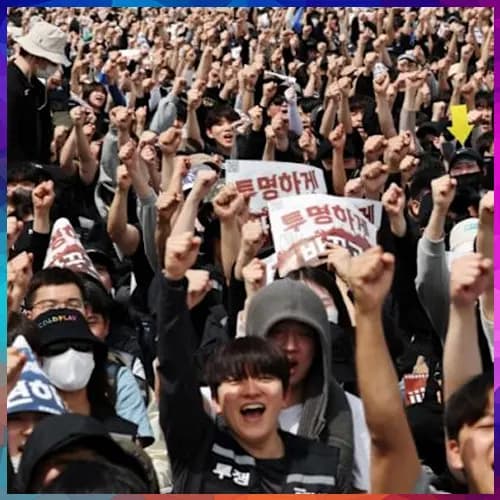
Samsung Electronics has reached a tentative agreement with its labour union, helping the company avoid a major strike at the world’s largest memory chipmaker.
In a statement the company said that “labour and management have reached a tentative agreement on wages and the collective bargaining agreement.” The development follows several days of negotiations and prevents potential disruptions to Samsung’s chip production operations, as well as its efforts to speed up development of next-generation semiconductors.
Samsung’s union notified members that they would participate in a vote on the tentative 2026 wage agreement from 9 a.m. on May 23 to 10 a.m. on May 28.
Any disruption to production at Samsung Electronics could have had far-reaching consequences for the global technology supply chain. The suspension of the planned strike has therefore eased concerns about a potential decline in output from the world’s largest supplier of memory chips used in products ranging from data centre servers and smartphones to electric vehicles.
The negotiations also highlighted growing tensions in the country as workers seek a larger share of the profits generated by companies such as Samsung and SK hynix amid the global AI infrastructure boom.
The union had earlier demanded that Samsung remove its existing bonus cap, dedicate 15% of operating profit to employee bonuses, and formally include those terms in employment contracts. Labour representatives cited SK hynix as an example, noting that the company had agreed last year to allocate 10% of its annual operating profit to a performance bonus pool.
Samsung had proposed allocating 10% of operating profit to bonuses, along with a one-time special compensation package that exceeds industry standards. Company executives argued that the union’s demands would be difficult to sustain over the long term.
“There are mounting concerns that any significant production disruptions or operational uncertainty at Samsung Electronics could place additional strain on the global memory semiconductor market, potentially worsening supply bottlenecks, price volatility, procurement uncertainty and broader supply chain instability,” the American Chamber of Commerce in Korea said in a statement this month.