

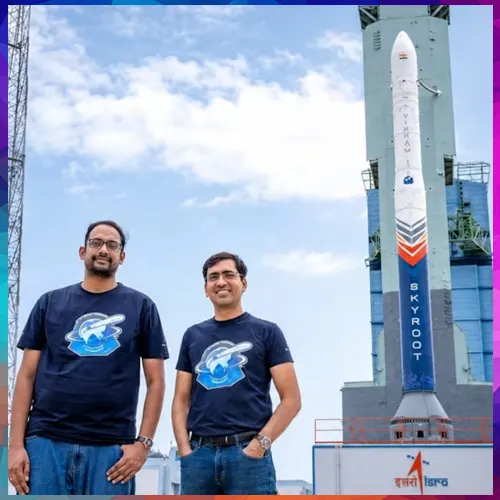
Following the successful orbital debut of Vikram-1, Skyroot Aerospace is advancing plans for dedicated launch infrastructure to support a higher launch cadence, strengthen operational independence and enhance its position in the rapidly growing global small satellite market.
India's private space sector is set for another significant milestone as Skyroot Aerospace has announced plans to establish its own launch pad, a move aimed at supporting a higher frequency of satellite launches and strengthening its long-term commercial capabilities. The announcement follows the successful orbital mission of the company's Vikram-1 launch vehicle, which marked a historic achievement by becoming the first privately developed Indian rocket to place payloads into orbit.
Skyroot Aerospace Co-founder and CEO Pawan Chandana reportedly said the company will continue to use the Indian Space Research Organisation's (ISRO) launch infrastructure for its initial missions while simultaneously working towards developing an independent launch complex.
According to Chandana, the company has built a strong partnership with ISRO over the years and intends to leverage its facilities in the near term. However, as Skyroot prepares to scale up its launch programme, establishing dedicated infrastructure has become a strategic priority.
Dedicated infrastructure to support higher launch cadence
While confirming the plans, Chandana refrained from revealing the proposed location of the launch facility or specifying when construction would begin. He said the company is not yet in a position to disclose additional details but indicated that work on the project is progressing.
He also noted that a firm timeline for commissioning the launch pad has not been finalised. However, with the company targeting a greater number of launches from next year onward, the objective is to make the facility operational as early as possible.
The development comes shortly after Skyroot's Vikram-1 'Aagaman' mission successfully deployed multiple payloads into orbit, demonstrating the capabilities of India's emerging private launch industry. The achievement has been widely viewed as a major step in the country's efforts to build a competitive commercial space ecosystem.
Strengthening India's commercial space ecosystem
Owning a dedicated launch complex would provide Skyroot with greater control over mission planning and execution by reducing dependence on shared launch infrastructure at ISRO's Satish Dhawan Space Centre in Sriharikota. Independent launch facilities would also enable the company to schedule missions more efficiently as customer demand increases.
The proposed infrastructure reflects the growing maturity of India's private space industry following policy reforms that opened the sector to greater private participation. Start-ups are increasingly investing in end-to-end capabilities, from launch vehicle development to mission operations, to serve domestic and international customers.
As Skyroot advances future Vikram missions and expands its commercial launch services, a dedicated launch pad is expected to play a key role in supporting sustained growth. The investment would enhance operational flexibility, improve launch readiness and strengthen the company's competitiveness in the rapidly expanding global market for small satellite launches, where demand for reliable and frequent access to space continues to rise.

See What’s Next in Tech With the Fast Forward Newsletter








Tweets From @varindiamag
Nothing to see here - yet
When they Tweet, their Tweets will show up here.