
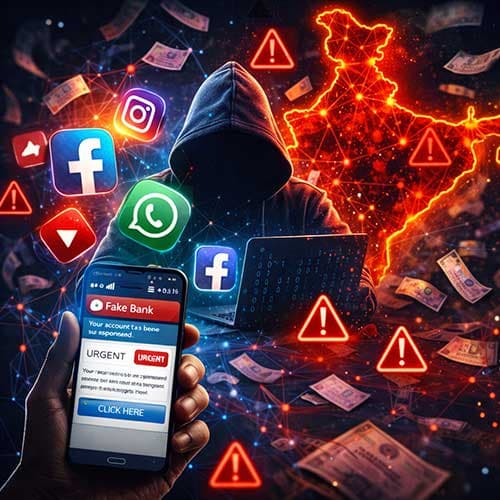
Quick Heal Technologies forecasts a sharp rise in social media-led cyber fraud across India in 2026, with scammers using AI-driven deception on popular platforms to target users in metros and rapidly digitising Tier-2 and Tier-3 regions.
As digital adoption deepens across India’s Tier-2, Tier-3 cities and smaller towns, social media platforms are expected to become the primary battleground for cybercrime in 2026, according to a new forecast by Quick Heal Technologies Limited.
The prediction, based on telemetry data from researchers at Seqrite Labs, India’s largest malware analysis facility, points to platforms such as Snapchat, Instagram, WhatsApp and Telegram being increasingly exploited by cybercriminals. By leveraging speed, familiarity and disappearing messages, scammers are expected to intensify identity theft, financial fraud and personal data breaches, impacting families, students and professionals alike.
Platform-specific scams and rising use of AI
Seqrite Labs researchers note that fraudsters are refining platform-specific tactics to deceive users. On Snapchat, attackers impersonate contacts or send fake bonus alerts to steal passwords and one-time passcodes. Instagram has emerged as a hub for fraudulent giveaways, romance scams and fake investment schemes delivered through polished direct messages.
WhatsApp and Telegram are being used to circulate shortened links disguised as courier updates, tax refunds or job offers, redirecting users to phishing websites or prompting them to install spyware posing as legitimate apps. The growing use of AI-generated fake profiles, deepfake videos and highly realistic phishing pages is making these scams increasingly difficult to distinguish from genuine interactions.
Social engineering dominates India’s threat landscape
Seqrite’s India Cyber Threat Report 2026 reveals that social engineering now accounts for 65% of all malware incidents detected, with Trojans, file infectors and potentially unwanted applications being the most common tools used by attackers. Gen Z users and senior citizens face heightened risk, driven by frequent oversharing on social media and lower levels of cyber awareness, respectively.
Quick Heal has urged users to strengthen digital hygiene by enabling two-factor authentication, keeping social media profiles private, filtering unknown messages and avoiding apps downloaded outside official stores. It also emphasised the importance of promptly reporting suspicious activity through platform tools and India’s national cybercrime portal to limit the spread of fraud.
The company added that advanced security solutions powered by AI are becoming critical as social media scams grow more sophisticated, underscoring the need for proactive protection in an increasingly connected digital environment.