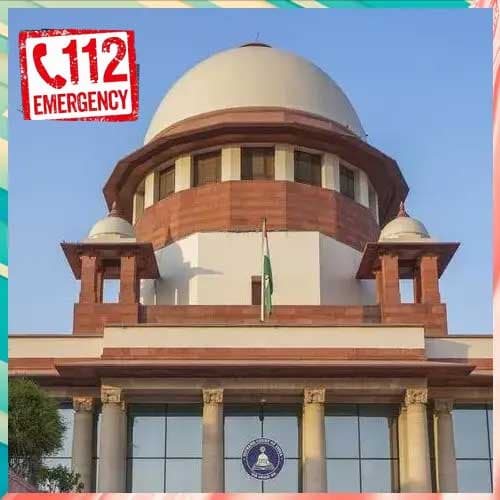
A landmark Supreme Court order now could fundamentally change how emergency assistance works across the country, with India’s single emergency response number 112 set for a major overhaul. In a significant judgment, the Supreme Court directed all states and Union Territories to integrate multiple emergency helplines such as 100 (police), 101 (fire), 102 and 108 (ambulance), 1033 (highway emergency) and 1091 (women’s helpline) into the unified 112 emergency response system within three months. The court also linked emergency medical response directly to the constitutional right to life under Article 21.
The ruling came in a petition filed by SaveLIFE Foundation, an organisation that has long pushed for stronger road safety laws and trauma care reforms in India.
What is the 112 helpline?
The 112 helpline is India’s integrated emergency response number, designed to function like the United States’ 911 or Europe’s 112 system. It was introduced under the Emergency Response Support System (ERSS) project by the Union Home Ministry to create a single, nationwide number for all emergencies. Instead of remembering separate numbers for police, ambulance, fire services or women’s safety, citizens can dial just 112 from anywhere in India.
The system is already operational in many states and is connected to police control rooms, ambulance services, disaster response teams and other emergency agencies. Users can also access it through the ERSS mobile app and panic button integration on smartphones.
However, implementation has remained uneven across India. In many states, traditional numbers such as 100 and 108 continue to operate separately, often causing confusion, delays and fragmented responses during emergencies.
But this is all going to change now.
The biggest change will be the integration of all major emergency helplines into 112. This means citizens may no longer need to separately remember numbers like 100, 101 or 108. Instead, a single emergency command-and-control system is expected to route calls to the appropriate service instantly.
The Supreme Court has directed states and UTs to complete the technical and operational integration within three months.