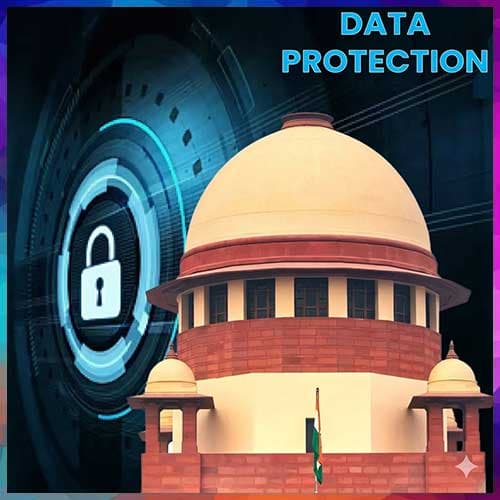
The Supreme Court said that the determination of what constitutes “public data” and “private data” is crucial to decide the validity of the Digital Personal Data Protection (DPDP) Act, 2023 and the corresponding Rules of 2025, while agreeing to examine a petition challenging the law along with a batch of similar petitions listed later this month. The court was dealing with a petition filed which raised concerns of state surveillance, exemptions granted to state agencies for gathering private data, compensation for cases of wrongful or illegal access.
A bench headed by Chief Justice of India (CJI) Surya Kant said, “Ultimately the question to be determined is what is public data and what is private data.”
The court issued notice on the petition and posted it along with a batch of petitions challenging the DPDP Act listed on March 23.
Senior advocate Indira Jaising appearing for the two petitioners along with advocate Paras Nath Singh said that the law poses a serious difficulty for journalists who rely on obtaining information about public functionaries. The law introduces a blanket ban on disclosure of any personal information under section 8(1)(j) of the Right to Information (RTI) Act.
Jaising added, “The Act does not define what is public and what is private data and this needs judicial intervention.”
The bench, also comprising justices Joymalya Bagchi and Vipul M Pancholi said, “A person so long as he or she holds public office ..., can information relating to such a person be termed as private data. We want you to suggest hypothetical situations where this issue can occur.”