

Breaking News
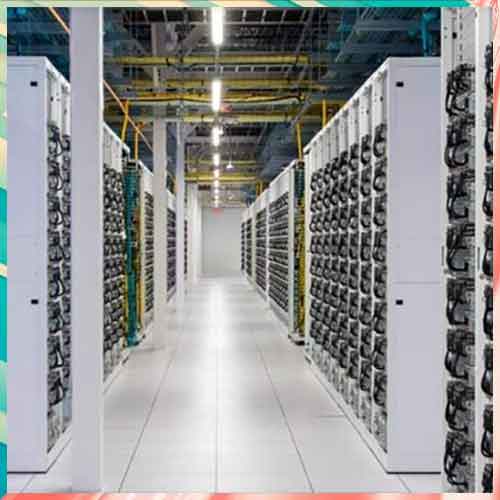
West and South India together accounted for over 89% of the country's server demand and 77% of storage revenues in the third quarter of 2025, driven by continued investments from hyperscalers and domestic data center providers, according to IDC's India Quarterly City-Level Server Tracker and India Quarterly City-Level Storage Tracker.
At the same time, rising adoption of cloud, AI, and edge computing is accelerating infrastructure deployments beyond major metros into Tier II and Tier III cities, signaling a shift toward more distributed, regionally deployed digital infrastructure across India.
While infrastructure demand remains concentrated in a handful of large metro markets, enterprise activity across manufacturing, banking and financial services, healthcare, e-commerce, media, education, and government sectors is steadily expanding into Tier II and Tier III cities. As workloads become more data-intensive and latency-sensitive, enterprises are increasingly deploying regional and edge infrastructure to support digital services closer to end users.
This shift is prompting data center providers and technology vendors to reassess city-level deployment strategies and accelerate investments beyond traditional Tier I hubs.
Rising investments from manufacturing, non-banking financial companies, healthcare, e-commerce, over-the-top platforms, education, and government in Tier II and III cities are forcing edge buildouts. These sectors now require regional data hosting as applications become more data-intensive, requiring processing to move closer to users to reduce latency and improve performance.
Both central and state governments are actively promoting data center expansion beyond Tier I cities through tax incentives, faster approvals, lower real estate costs, and dedicated data center zones. The upcoming National Data Center Policy is expected to further accelerate Tier II and III investments by offering stronger incentives and improved financing support.
However, building data centers in smaller cities comes with infrastructure gaps, including inconsistent power availability and network connectivity. The local vendor ecosystem is also still maturing, leading to longer procurement timelines, limited access to specialized expertise, and slower maintenance response cycles.
Additionally, smaller cities face talent and market readiness challenges, with a smaller pool of skilled data center professionals and slower adoption of advanced digital technologies among local enterprises, largely due to low levels of technology awareness, inadequate exposure to modern IT architecture, and capability gaps.
"India's Tier II and Tier III cities are emerging as the next growth frontier for enterprise infrastructure, driven by enterprise expansion, government policy, digital adoption, and cost-quality advantages over metros," said Dileep Nadimpalli, senior research manager, IDC Asia Pacific. "However, sustaining long-term growth will require technology providers to invest in customer education, workforce training, and building robust security and compliance capabilities."

See What’s Next in Tech With the Fast Forward Newsletter








Tweets From @varindiamag
Nothing to see here - yet
When they Tweet, their Tweets will show up here.