
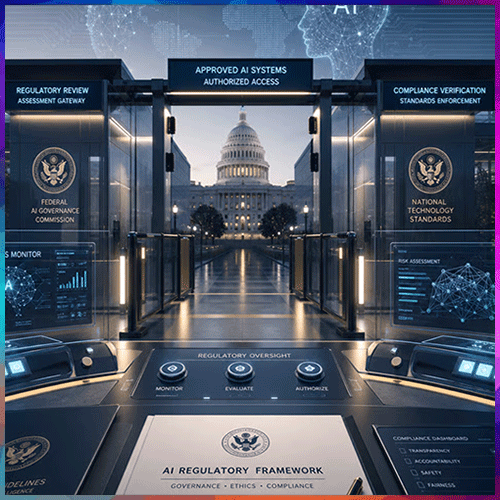
The U.S. government is taking a more active role in controlling access to the world's most advanced AI models, signaling a major shift in the balance of power between Washington and leading AI companies. According to reports, the Trump administration is increasingly influencing which organizations can access frontier AI models, a decision that was previously managed by developers such as Anthropic and OpenAI through initiatives like Project Glasswing and Daybreak.
The move follows a series of national security actions, including the temporary suspension of Anthropic's Mythos 5 and Fable 5 models before access was later restored. OpenAI has also restricted access to its latest GPT-5.6 model to a limited group of "trusted partners" in response to government requests. While the White House maintains that AI companies voluntarily determine the timing and scope of model releases, it is expanding collaboration with frontier AI labs to strengthen cybersecurity and safeguard critical technologies.
The administration has further reinforced its oversight by launching Gold Eagle, a new AI cybersecurity clearinghouse designed to coordinate vulnerability testing between the government and private sector. Industry sources suggest the initiative could eventually give the White House a central role in determining which organizations receive early access to advanced AI models, raising questions about the future of company-led programs such as Anthropic's Project Glasswing and OpenAI's Daybreak.
The policy shift comes amid intensifying global AI competition, particularly from China. Chinese startup Moonshot AI recently introduced its Kimi K3 model, which reportedly rivals leading U.S. frontier models and outperformed them on certain independent benchmarks. The rapid progress of Chinese AI has fueled concerns in Washington over maintaining U.S. technological leadership while balancing national security with innovation.
The evolving approach highlights a new era in AI governance, where access to frontier AI models is increasingly viewed as a strategic national security issue rather than solely a commercial decision. The challenge for policymakers will be to protect critical AI capabilities without slowing innovation or weakening the competitiveness of American AI companies.