


AI Agents Gain Skills Without Learning
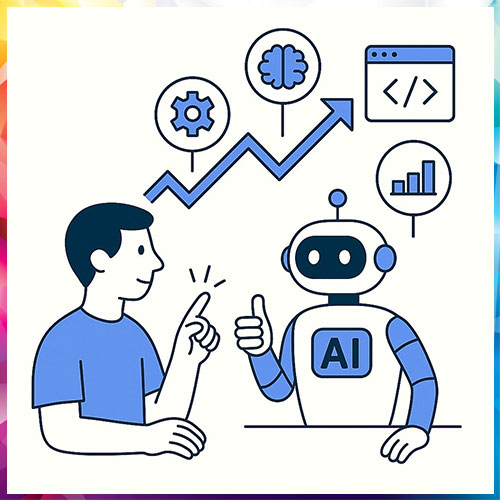
AI agents may not learn like humans, yet they are rapidly expanding what they can do. Instead of traditional training or long cycles of model updates, developers are relying on clever engineering workarounds that allow systems to behave as if they have acquired new abilities.
The trick lies in orchestration rather than cognition. Engineers connect large language models to tools, databases, APIs, and memory layers. With the right prompts and structured workflows, an agent can search the web, run code, retrieve company policies, or complete transactions. To users, it looks like learning. In reality, it is coordination.
This approach has become popular because retraining frontier models is expensive, slow, and often inaccessible to most enterprises. Wrappers, plug-ins, and retrieval pipelines, by contrast, can be built quickly and tuned continuously. Companies can upgrade performance in days rather than months.
The strategy is also reshaping enterprise AI economics. Businesses are discovering they can unlock new value from existing models simply by improving context, permissions, and verification steps. The intelligence comes less from the neural network itself and more from the surrounding system design.
Critics warn that the method can create fragility. If prompts break, APIs change, or data quality slips, the illusion of competence collapses. Supporters counter that this modularity is the very reason innovation is accelerating.
AI agents, it turns out, don’t always need to learn new tricks. Sometimes they just need better instructions.

See What’s Next in Tech With the Fast Forward Newsletter







Tweets From @varindiamag
Nothing to see here - yet
When they Tweet, their Tweets will show up here.