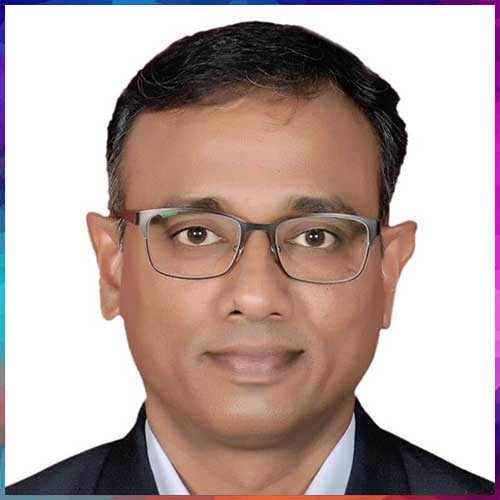

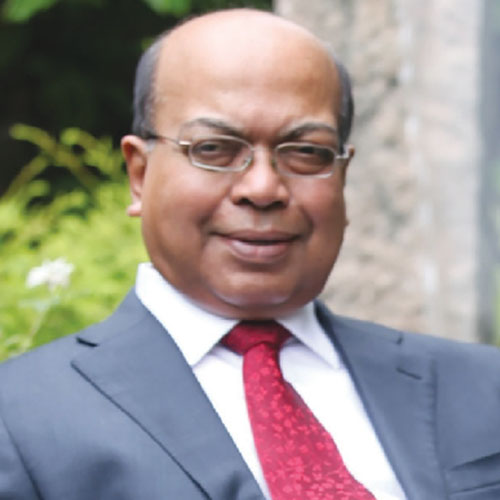
DR. ASOKE K. LAHA
Chairman-Emeritus and Founder, InterraIT
Let me narrate a story told to me, a sordid but one that can happen to anyone in our country, where people are obsessed with owning a house, an abode over the head. It is a security for several generations starting from the original owner up to generations who will stay in that property. The incident is taking place in Delhi, one of the largest metropolis of India, where millions consider owning house in any part of the still growing city is a boon and a source of immense social security.
My friend took a membership in a co- operative society floated in one of the satellite cities of Delhi. To cut down the waiting time and possible inordinate delays involved in construction and later fine tuning of interior of the apartments bereft of furnishing etc, he selected a housing complex which was fully constructed including white washing, landscaping etc. Though he was with a limited means, he managed to pay off to the society the initial amount of Rs, 100,000 by cheque and the membership amount of Rs 110. While handing over the amount, the secretary of the society secretly told him to pay up another Rs 400,000 in liquid cash as admission fee, which is collected from every member, before they become the member. That was a painful surprise to my friend, who had gone under the impression that the total cost of the housing unit would be slightly above Rs 17 lakh, which he was sure to mobilize partly from banks and the deficit either by borrowing from friends and relatives or selling small quantity of gold that his wife owned given by her parents at the time of marriage.
An additional Rs 4 lakh was a jolt from blue and he started working back on his finances. It forced him to identify sources from where he could mobilize funds. Yet, the hope of owning a housing unit in a relatively well known area kept him moving despite the vissicitudes. But that hope lasted only for a few days. The secretary of the housing complex laced his second demand by telling him to make sure the payment be made by cash since no receipt will be issued for this amount. How he would mobilize such a large amount of money from informal sources? If he approached any other person from the family to lend money, they have to take loans or liquidate their FDs from bank, which would be bankrolled and accounted. Somehow he managed to mobilize that money and paid to the secretary of the society in time. Meanwhile, he also got the loan applied from a private bank that covered lion’s share of the cost of the flat.
My friend was circumspect about the deal and tried to do some due diligence about the housing project, which was monitored by a wing of the Government of NCT. Though he did not get any information or any type of misdeeds involved in the project, he got an assurance informally, the project is genuine and the project was due for clearance for draw of lot. He kept quiet and started focusing on his office works under the bliss that everything went well and soon he would own a flat of his own in a middle class colony which might not be well - connected at that time; but has potential to be one since the Master Plan of Delhi made provisions for Metro and other connectvities.
That bliss did not last for long. He never got a call from the Secretary later, which he thought he would for draw of lot. Immediately after the draw of lot, the Secretary called him and issued all relevant documents for occupation of the flat. Upon checking up the documents, he realized that all papers are intact and he took the possession of the flat and started living there with his family, which is a fairly large housing unit, going by urban standards.
But that blissful state did not last long. He was informed by other owners of the housing units that document can be complete only when the RCS enters the name of the occupant in its list and forward that to the DDA for regularization. The Management of the Society did not send his name to the RCS and instead sent the name of the earlier person from whom he supposed to have bought the flat. There are certain other details to be explained to throw light on the exact nature of the deal, which I am overlooking since it is not relevant to the present context.
Let me also state that it is not the first time such cases happen across Delhi and other places. It is happening every now and then; some of them are reported, others go unheard and unheeded. Yet, these things are happening when we boast ourselves as a country with a high level of digitization. There are some states in India digitization is carried out to some extent about the land rights, tenancy, sale and purchase etc. States like Kerala insists on encumbrance certificate is a must to trace the history of the property. There will be entries about its owners, sale, mortgage etc. for a sufficiently long time say 30 years into the past. That gives the buyer the correct picture of the title of the property in question and can steer away from buying disputed properties. More interesting is that one can retrieve such valuable data about any property provided one knows that title number of the property in question at a very negligible fee. If one is comfortable in navigating the digital journey through net, it can be downloaded, then and there. Otherwise, there are state agencies and digital kiosks that provide such services at a minimal cost.
I feel this model is ideally suited to be implemented across the country. It has many spin-offs. Stakeholders of digital economy widens. The common man gets to know the advantages of the digital economy and will start reposing more faith in the system. Two, the model brings more transparency in the system addressing the widespread frauds and manipulations by land mafia and other vested interests. Thirdly, it helps plug the digital divide and can make public direct beneficiary of the digitization. Fourth and more importantly, it can reduce considerably high level pendency of cases in courts since a good number of cases are pertaining to land and related disputes.
Yes, right from the time I started writing this column, I have been a votary of digitization and benefits it can give to the society at large. I strongly feel digitization particularly AI in judiciary initially to streamline the procedure and it should be calibrated to expand to other realms including adjudicating the cases within no time to cut short the decades-long wait for justice. It aligns with the basic tenet of jurisprudence that justice delayed is justice denied.

See What’s Next in Tech With the Fast Forward Newsletter









Tweets From @varindiamag
Nothing to see here - yet
When they Tweet, their Tweets will show up here.