
Software
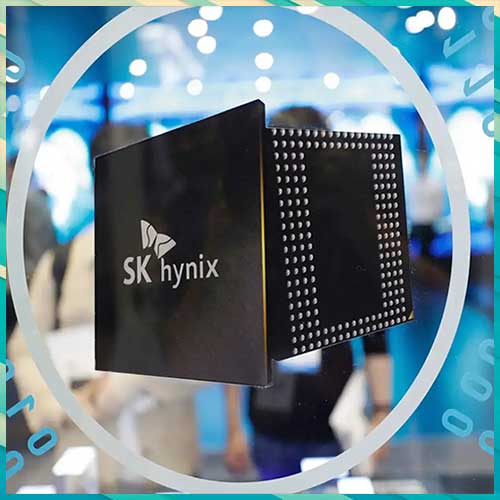
SK Hynix expects the global memory industry to face its most severe supply shortage in 2027, warning that surging demand for AI memory chips will continue to outpace production capacity well into the next decade despite aggressive expansion plans.
"We forecast that next year will be the worst year in the industry's history from the supply perspective," CEO Kwak Noh-jung told Reuters in an interview.
"Our customer demand continues to go up, while our capacity has limitations," Kwak said. "We still forecast that customer demand will remain higher than our supply capacity even beyond 2030. But we are doing our best to solve the problem."
The comments underscore the growing supply constraints facing the AI industry, where demand for high-bandwidth memory (HBM)—a critical component used alongside AI accelerators such as Nvidia's GPUs—has surged as hyperscalers and enterprises expand AI infrastructure.
SK Hynix has emerged as a key supplier in the AI hardware ecosystem through its leadership in HBM technology, supplying memory used in Nvidia's AI chipsets. Last month, Nvidia CEO Jensen Huang said shortages of AI memory would persist for several years because of strong demand and described SK Hynix as the company's largest memory supplier.
To address rising demand, SK Hynix is expanding manufacturing capacity in South Korea while evaluating overseas investments. Kwak said the United States remains under consideration for a future wafer fabrication facility, alongside Japan and countries in Southeast Asia, although no decision has been made.
The company will prioritize locations that offer adequate land, electricity, water resources, skilled labor, and competitive manufacturing costs.
"If those conditions are met, the U.S., Japan and Southeast Asia are all under consideration," Kwak said. "Nothing has been decided yet. We are evaluating which location can provide the greatest business advantage."
SK Hynix currently operates major manufacturing facilities in Icheon and Cheongju and is building a large semiconductor complex in Yongin. It is also participating in the South Korean government's plan to double the country's memory chip production capacity over the next five years through a broader semiconductor investment program.
The warning suggests that capacity additions may struggle to keep pace with the rapid growth in AI infrastructure spending, potentially prolonging supply constraints for high-bandwidth memory even as manufacturers invest billions of dollars in new fabrication facilities.
"We forecast that next year will be the worst year in the industry's history from the supply perspective," CEO Kwak Noh-jung told Reuters in an interview.
"Our customer demand continues to go up, while our capacity has limitations," Kwak said. "We still forecast that customer demand will remain higher than our supply capacity even beyond 2030. But we are doing our best to solve the problem."
The comments underscore the growing supply constraints facing the AI industry, where demand for high-bandwidth memory (HBM)—a critical component used alongside AI accelerators such as Nvidia's GPUs—has surged as hyperscalers and enterprises expand AI infrastructure.
SK Hynix has emerged as a key supplier in the AI hardware ecosystem through its leadership in HBM technology, supplying memory used in Nvidia's AI chipsets. Last month, Nvidia CEO Jensen Huang said shortages of AI memory would persist for several years because of strong demand and described SK Hynix as the company's largest memory supplier.
To address rising demand, SK Hynix is expanding manufacturing capacity in South Korea while evaluating overseas investments. Kwak said the United States remains under consideration for a future wafer fabrication facility, alongside Japan and countries in Southeast Asia, although no decision has been made.
The company will prioritize locations that offer adequate land, electricity, water resources, skilled labor, and competitive manufacturing costs.
"If those conditions are met, the U.S., Japan and Southeast Asia are all under consideration," Kwak said. "Nothing has been decided yet. We are evaluating which location can provide the greatest business advantage."
SK Hynix currently operates major manufacturing facilities in Icheon and Cheongju and is building a large semiconductor complex in Yongin. It is also participating in the South Korean government's plan to double the country's memory chip production capacity over the next five years through a broader semiconductor investment program.
The warning suggests that capacity additions may struggle to keep pace with the rapid growth in AI infrastructure spending, potentially prolonging supply constraints for high-bandwidth memory even as manufacturers invest billions of dollars in new fabrication facilities.

See What’s Next in Tech With the Fast Forward Newsletter



Tweets From @varindiamag
Nothing to see here - yet
When they Tweet, their Tweets will show up here.