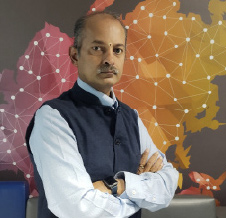


Sudharsan Aravamuthan
Head - Systems Engineering, India - Everpure
According to Sudharsan Aravamuthan of Everpure, cloud migration will increasingly become a data modernisation journey rather than simply an infrastructure migration exercise. “As organisations move from AI experimentation to production, they will require intelligent data platforms that securely manage data across hybrid and multi-cloud environments while supporting traditional, virtualized and cloud-native applications,” he says. “Another major shift will be the growing adoption of enterprise storage platforms running natively within hyperscale cloud environments. Rather than relying solely on cloud-native storage services, organisations will increasingly seek consistent enterprise storage, protection and disaster recovery capabilities across both on-premises infrastructure and public clouds.”
MIGRATING LEGACY WORKLOADS TO THE CLOUD POSES CHALLENGES
The biggest challenge isn't moving workloads - it's modernizing without disrupting the business, is what Sudharsan believes. “The most effective approach is to focus on the data rather than the destination. Today's enterprises operate traditional applications, virtual machines, containers and AI workloads across data centres, edge locations and multiple cloud environments. Success depends on having a common data platform that delivers consistent performance, resilience, security and mobility regardless of where applications run. Equally important is adopting a cloud operating model where infrastructure is automated, policy-driven and programmable, allowing applications and data to move seamlessly across private infrastructure and hyperscale cloud environments,” he says.
NO ‘ONE-SIZE-FITS-ALL’ CLOUD STRATEGY
Sudharsan says that the right cloud mix strategy depends on workload characteristics, data sensitivity, performance requirements, regulatory obligations and business priorities. “For most organisations, hybrid cloud offers the greatest flexibility. As a result of this approach, applications benefit from consistent performance, availability, data protection and disaster recovery regardless of where they run, while IT teams manage both environments through a common operating model,” he says.

See What’s Next in Tech With the Fast Forward Newsletter








Tweets From @varindiamag
Nothing to see here - yet
When they Tweet, their Tweets will show up here.