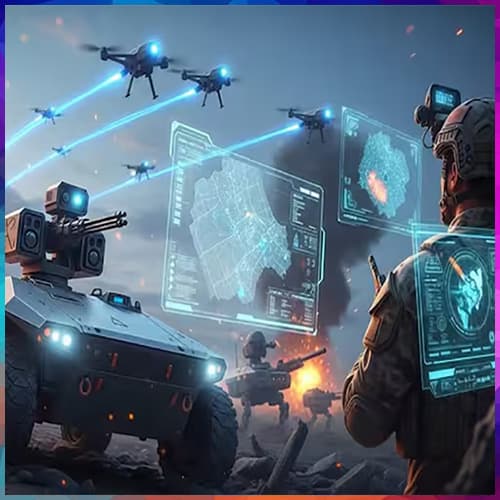

The move by Windsurf co-founder Varun Mohan and key engineers to Google DeepMind illustrates something larger than the battle for AI coding talent. It reflects how Google DeepMind is evolving AI from a software intelligence layer into an engine for DeepTech innovation across computing, science, robotics and the physical world.
The first transformation is happening in software engineering itself. AI coding agents are progressing from suggesting individual lines of code toward understanding repositories, planning tasks, using tools, debugging applications and completing multi-stage development workflows. Talent and technology from Windsurf could strengthen Gemini's capabilities in coding agents and tool use, potentially accelerating this shift toward agentic software development.
But DeepMind's DeepTech ambition extends considerably further. Its portfolio now spans Gemini, robotics, scientific discovery, mathematics, biology, weather forecasting and chip design. AlphaFold alone has predicted more than 200 million protein structures and is used by more than three million researchers across over 190 countries.
From Generative AI to Physical AI
One of the biggest revolutions is occurring in robotics. Gemini Robotics 2 combines vision, language and physical action through Vision-Language-Action models. DeepMind says the technology can control humanoid robots from feet to fingertips, perform dexterous tasks, adapt to unfamiliar environments and even coordinate multiple robots.
DeepMind is simultaneously pushing AI deeper into scientific R&D. Its Gemini-powered AlphaEvolve has developed and optimized algorithms used across Google's infrastructure, while its multi-agent AI Co-Scientist generates, debates and refines scientific hypotheses.
The convergence becomes even more significant in materials science. DeepMind is establishing an automated laboratory integrating Gemini with robotics to synthesize and characterize hundreds of materials per day, potentially shortening discovery cycles for new materials.
DeepTech Is Becoming AI-Native
This changes the economics of DeepTech. Industries that traditionally required years of experimentation could increasingly use AI to generate hypotheses, simulate possibilities, write software, optimize designs and direct physical experimentation.
The next frontier is therefore not simply a smarter chatbot. It is AI becoming part of the research, engineering and invention process itself.
For enterprises and countries, this has profound implications. Competitive advantage will increasingly depend on combining domain expertise, proprietary data, advanced AI models, compute infrastructure, robotics and trusted governance.