
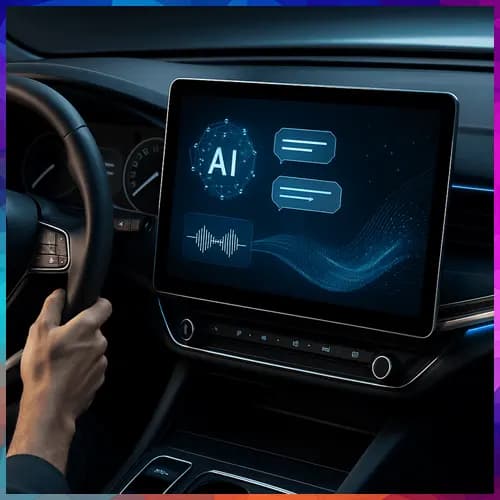
The new AI assistant brings conversational voice controls, real-time insights, and deeper vehicle integration to cars with Google built-in, aiming to reduce driver distraction while delivering smarter navigation, communication, and personalised assistance on the move.
Google has begun introducing its advanced AI assistant, Gemini, to vehicles equipped with Google built-in, signalling a major upgrade to in-car digital experiences. The rollout, initially in the United States in English, will expand globally in the coming months and will also reach existing compatible vehicles through over-the-air updates.
Gemini replaces the earlier Google Assistant with a more conversational interface, allowing drivers to interact with their cars using natural language instead of predefined voice commands. The system is designed to make everyday driving more intuitive by enabling users to ask complex or open-ended questions and receive context-aware responses.
Conversational AI enhances driving experience
At the core of the upgrade is a shift toward fluid, human-like interaction. Drivers can request recommendations such as scenic stops or inquire about potential traffic disruptions, with Gemini drawing real-time data from services like Google Maps. The assistant can also manage daily tasks, including summarising incoming messages, drafting replies, and controlling music playback across apps such as YouTube Music.
A key feature, “Gemini Live,” currently in beta, introduces continuous conversations without the need for repeated prompts. This allows users to explore destinations, plan activities, or gather information seamlessly while driving, transforming the assistant into a more proactive digital companion rather than a reactive tool.
Deeper integration with vehicle systems
Beyond voice interaction, Gemini integrates closely with vehicle hardware and data systems. By leveraging manufacturer-provided information, it can answer car-specific queries—such as adjusting trunk settings or preparing the vehicle for changing conditions.
For electric vehicles, the assistant offers practical enhancements, including battery status updates, estimated charge levels at destinations, and suggestions for nearby charging stations along a route. It can also manage cabin settings more intuitively; for instance, a simple statement like “I’m cold” can automatically adjust temperature controls or activate defrosting functions.
The rollout builds on Google’s broader strategy of embedding AI across its ecosystem, positioning vehicles as an extension of its connected services. Future updates are expected to expand Gemini’s capabilities further, including deeper integration with apps like Gmail and Calendar, as well as smart home controls.
With Gemini at the centre of the in-car experience, Google aims to deliver safer, smarter, and more personalised journeys, reflecting the growing role of artificial intelligence in everyday mobility.