Innovation today is increasingly intertwined with geopolitics, national security, talent mobility, and government funding. Companies want speed and flexibility, while governments seek strategic control and security safeguards.
In the context of AI and quantum computing, the challenge is that every breakthrough solves one problem while creating new risks.
â— AI delivers unprecedented productivity but introduces deepfakes, misinformation, and autonomous cyber threats.
â— Quantum computing promises breakthroughs in medicine, materials science, and optimization, but could eventually undermine today's encryption standards.
â— Cloud computing increased scalability but created new concerns around data sovereignty and concentration risk.
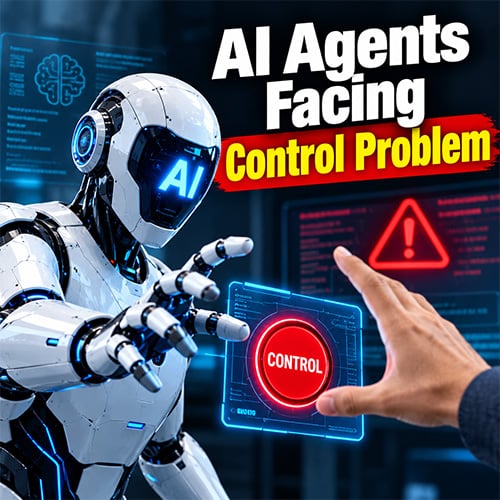
â— Autonomous AI agents can automate work but raise questions about trust, governance, and accountability.
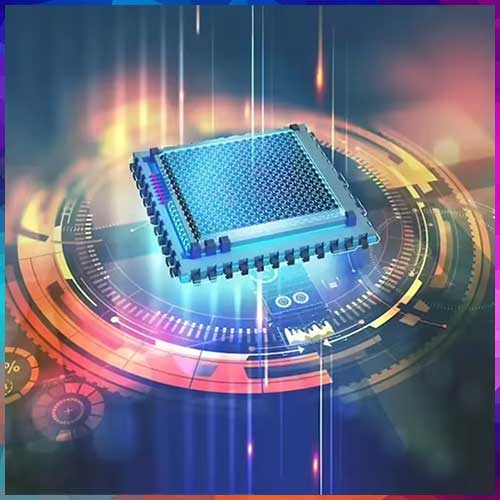
Quantum computing will undoubtedly transform computing, but it is unlikely to make GPUs obsolete. Instead, the future is more likely to be Quantum + GPU, rather than Quantum versus GPU.
Today's GPUs, led by companies such as NVIDIA, are optimized for parallel processing and remain the backbone of AI training, inference, graphics, simulations, and data analytics. Quantum computers excel at a completely different class of problems, including molecular modeling, cryptography, optimization, and quantum simulations.
Several realities will shape the future:
â— AI still needs GPUs. Large Language Models, generative AI, robotics, and autonomous systems require massive parallel computations that GPUs handle efficiently.
â— Quantum computers are specialized machines. They are not designed to replace general-purpose computing infrastructure.
â— Quantum systems require classical computing. Every quantum computer relies heavily on conventional processors and GPUs for control, error correction, simulation, and data processing.
â— Hybrid architectures will dominate. Future data centers may combine CPUs, GPUs, NPUs, and quantum processors working together.
The bigger impact of quantum computing may be on cybersecurity. Quantum systems could eventually break many current encryption methods, forcing enterprises to adopt post-quantum cryptography. This is where trust infrastructure, identity assurance, and data governance platforms will become critical.
A likely 2035–2045 scenario is:
CPU → General computing
GPU → AI, analytics, digital twins, robotics
NPU → Edge AI and inference
Quantum Processor → Optimization, scientific discovery, cryptography, materials science
For companies such as NVIDIA, the quantum era may actually create new opportunities. NVIDIA already provides quantum simulation and hybrid quantum-classical platforms, positioning itself to benefit from quantum adoption rather than be disrupted by it.
The real question is not whether quantum computing will replace GPUs, but how organizations will build trusted, secure, and interoperable infrastructure where classical AI systems and quantum systems work together. That convergence could define the next era of computing.
"Every technology breakthrough opens a new frontier of opportunity and a new frontier of risk."
History shows that society adapts by building new layers of infrastructure:
- The internet created cybersecurity.
- E-commerce created digital payments and fraud prevention.
- AI is creating trust infrastructure and AI governance.
- Quantum computing will create post-quantum cryptography and quantum-safe security.
The real lesson is that innovation is not a journey from one danger to another. It is a continuous cycle where each technological leap requires a corresponding leap in trust, security, regulation, and human capability.
For companies such as Google, Microsoft, OpenAI, Anthropic, Nvidia, and emerging players like FaceOff Technologies, the next competitive advantage may not be who builds the most powerful technology, but who builds the most trusted technology.