
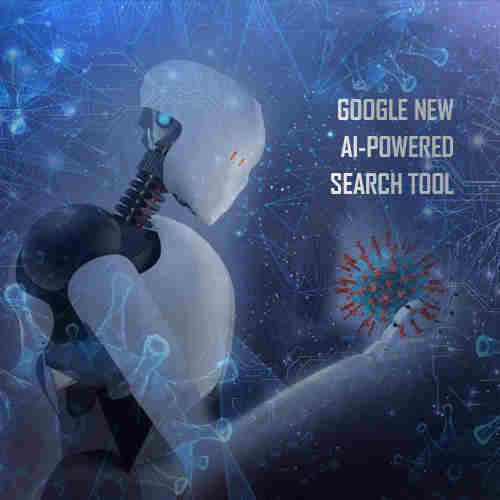
Google's AI team has announced a new tool to help researchers traverse through a trove of coronavirus papers, journals, and articles. The COVID-19 research explorer tool is a semantic search interface that sits on top of the COVID-19 Open Research Dataset (CORD-19).
The team says that traditional search engines are sufficient at answering queries such as “What are the symptoms of coronavirus?” or “Where can I get tested in my country?” However, when it comes to more pointed questions from researchers, these search engines and their keyword-based approach fails to deliver accurate results.
Google's new tool helps researchers solve that problem. The CORD-19 database has over 50,000 journal articles and research papers related to coronavirus. However, a simple keyword search wouldn’t yield reliable results. So, Google uses Natural Language Understanding (NLU) based semantic search to answer those queries. NLU is a subset of Natural Language Processing (NLP) that focuses on a smaller context while trying to derive the meaning of the question and draw distinct insights.
The COVID-19 research explorer tool not only returns related papers to the query, but it also highlights parts of papers that might provide relevant answers to the question. The semantic search is powered by Google’s popular BERT language model. In addition to that, the AI has been trained on BioASQ, a biomedical semantical search model to enhance results.

See What’s Next in Tech With the Fast Forward Newsletter






Tweets From @varindiamag
Nothing to see here - yet
When they Tweet, their Tweets will show up here.