

Hyderabad Cyber Crime Police have registered cases against the head of Meta India and several Facebook and Instagram account operators over the alleged circulation of morphed and objectionable videos targeting Prime Minister Narendra Modi. The action follows complaints that manipulated content was shared on Meta-owned platforms during recent public protests, raising questions about platform accountability and the spread of AI-generated misinformation.
According to reports, investigators are examining whether the social media platforms complied with legal obligations related to the removal of unlawful content and whether adequate moderation mechanisms were in place. The cases reportedly invoke provisions relating to the dissemination of false or misleading digital content, with authorities also investigating the origin of the manipulated videos and the role of account operators involved in their circulation.
The development comes just days after another controversy involving Meta, when a Facebook video posted by Prime Minister Modi was briefly removed or restricted before being restored. Meta said the removal occurred "in error," apologized for the incident, and agreed to provide explanations to Indian authorities regarding its content moderation processes.
AI Deepfakes Are Becoming a National Security Challenge
The case highlights how generative AI has transformed misinformation into a sophisticated cybersecurity and national security challenge. Modern AI tools can create highly convincing videos, clone voices, and manipulate facial expressions with minimal source material. Such content can spread rapidly across social media, influencing public opinion, damaging reputations, and undermining trust in democratic institutions before fact-checking can catch up.
For technology companies, the challenge is no longer limited to removing harmful content after it goes viral. Platforms are increasingly expected to detect AI-generated media proactively, authenticate original content, improve provenance tracking, and respond quickly to lawful government requests while maintaining transparency and protecting legitimate expression. Balancing content moderation, user rights, and legal compliance is becoming one of the most complex responsibilities facing global digital platforms.
For governments and enterprises, the incident reinforces the need for stronger digital trust infrastructure. AI-powered deepfake detection, behavioral biometrics, continuous identity verification, cryptographic content authentication, and real-time media provenance are emerging as critical technologies to combat synthetic media. As deepfake attacks become more realistic and accessible, cybersecurity strategies must evolve beyond protecting networks to verifying the authenticity of digital identities, voices, images, and videos. The Meta case underscores that in the AI era, trust has become a strategic security asset, and safeguarding information integrity will be as important as protecting critical infrastructure itself.
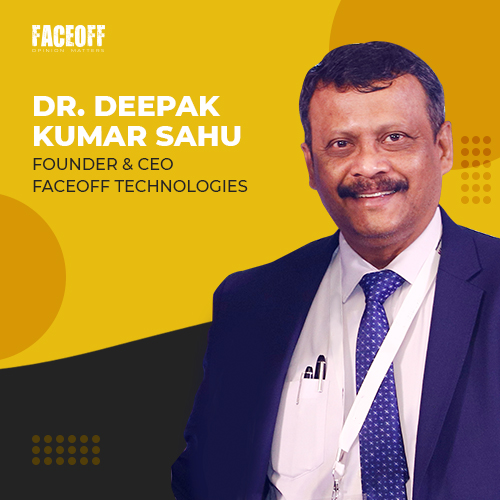
Dr. Deepak Kumar Sahu, Founder & CEO, FaceOff Technologies said, "AI-generated deepfakes have fundamentally changed the cybersecurity landscape. Organizations can no longer rely on passwords, OTPs, or voice authentication alone. At FaceOff Technologies, our homegrown Sovereign AI verifies the authenticity of the human in real time through Biological Behaviour Analysis, combining behavioral biometrics, facial micro-expressions, voice liveness, rPPG, and device trust. We don't just detect synthetic media—we establish digital trust, enabling governments, enterprises, and digital platforms to prevent identity fraud before it causes harm."

See What’s Next in Tech With the Fast Forward Newsletter








Tweets From @varindiamag
Nothing to see here - yet
When they Tweet, their Tweets will show up here.