Digital transformation is changing how we secure buildings and spaces. Mobile access control is leading this change, combining convenience with strong security. People already trust their smartphones for mobile payments—especially younger generations who grew up with apps. Now, that same trust extends to building access.
This guide explores mobile access control from every angle. We'll explain the core technologies, key benefits, and future trends. We'll also show how leading providers like Hikvision create solutions that deliver convenience, enhance security, boost efficiency, and support sustainability goals.
Whether you're a security manager evaluating new systems, a facility director looking to modernize your infrastructure, or simply curious about the latest security technology, this guide will provide the insights you need to understand mobile access control's transformative potential.
What are mobile access control and mobile credentials
The global access control market is growing fast, with mobile access control solutions driving innovation. According to MarketsandMarkets, the overall access control market is forecast to grow from USD 12.8 billion in 2025 to over USD 28.41 billion by 2035, at a CAGR of 8.3%. The mobile credential segment is expanding even more rapidly, with Dataintelo projecting it to reach over $750 million by 2028, growing at an impressive CAGR of about 17%.
This rapid adoption is driven by several factors: the universal presence of smartphones, increased demand for touchless solutions, and the superior security and convenience that mobile credentials offer compared to traditional access methods.
What are mobile access control and mobile credentials?
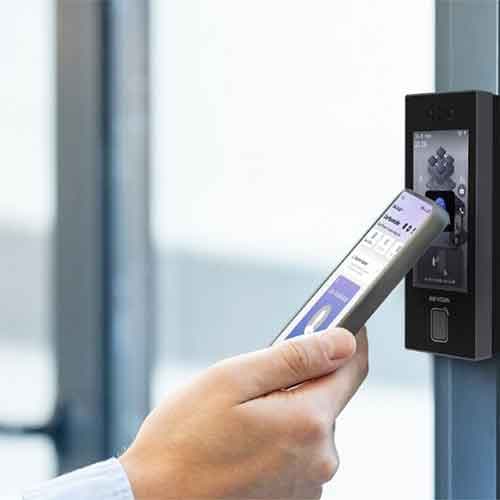
A mobile access control solution transforms a smartphone or wearable IoT device into a secure digital key. This technology streamlines access to buildings, rooms, and other secured areas by eliminating the need for traditional physical keys, fobs, or cards. It integrates with existing security systems, offering a more flexible and powerful way to manage access permissions.
At its core, a mobile access control system consists of three main components:
1. Mobile credentials stored securely on the user's smartphone or wearable device
2. Access readers installed at entry points that communicate with mobile devices
3. Management software that controls permissions, monitors access events, and manages users
Mobile credentials are digital access keys stored in a mobile app or a device's native wallet. Unlike physical cards that can be easily lost, stolen, or duplicated, mobile credentials leverage advanced smartphone security features and wireless technologies like Bluetooth Low Energy (BLE) and Near Field Communication (NFC) to provide superior protection.
Why are mobile credentials superior over traditional access methods?
Mobile credentials deliver superior security and convenience over traditional physical counterparts. By leveraging smartphone technology like advanced encryption, they vastly reduce risks associated with loss, theft, or duplication, while offering users seamless access experience with a device they carry every day.
This technology also allows administrators to manage access remotely and in real-time, instantly granting or revoking permissions as needed. This digital system provides significant cost savings and environmental benefits by eliminating the expenses and waste associated with producing, managing, and replacing physical cards.
Introducing Hikvision’s mobile access control solution
As a global leader in AIoT solutions, Hikvision is pioneering mobile access innovation. Our mobile access control solution meets modern security challenges head-on. It supports multiple credential technologies—Bluetooth, NFC, and QR codes—ensuring flexibility across different devices and environments.