

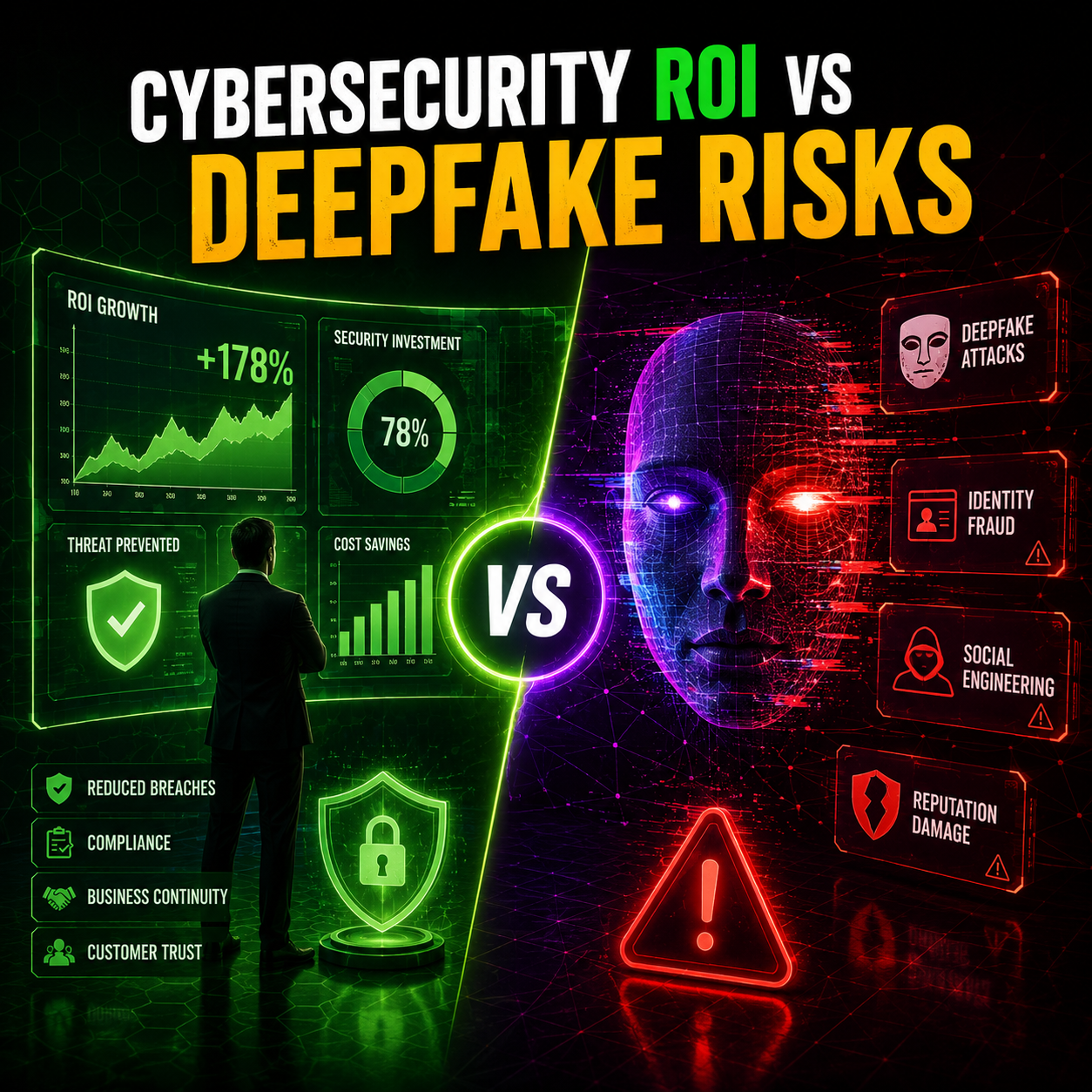
In the current cybersecurity landscape, the two interpretations of ROI is—Return on Investment and Reason of Interest—play pivotal roles in shaping strategic decisions, particularly in the face of emerging threats like deepfakes.
Return on Investment focuses on the financial efficiency of security expenditures.
Organizations assess potential savings from avoided breaches, reduced downtime, and lower regulatory penalties against the costs of cybersecurity measures such as AI-driven threat detection and employee training.
A strong financial ROI is crucial for justifying budget allocations.
Conversely, Reason of Interest emphasizes the motivations behind investment decisions.
With deepfake technology facilitating impersonation attacks and misinformation, companies must evaluate the non-financial impacts on reputation, customer trust, and brand integrity.
This understanding drives the proactive implementation of measures like biometric verification and deepfake detection AI.
Both perspectives are essential for effective cybersecurity.
Financial ROI ensures accountability, comprehending motivations safeguards against emerging threats.
Chief Information Security Officers (CISOs) must integrate these insights to develop strategies that balance financial returns with robust protection against sophisticated risks.

See What’s Next in Tech With the Fast Forward Newsletter









Tweets From @varindiamag
Nothing to see here - yet
When they Tweet, their Tweets will show up here.