


Techno Blogging
More than one in 10 enterprises will adopt an AI-first operating model by 2030, giving them a competitive edge through the use of AI agents, semantic technologies and integrated data and analytics platforms, according to Gartner.
The research firm said organizations are rapidly moving toward a model where artificial intelligence becomes central to business decisions, workflows and technology investments rather than being treated as a standalone capability.
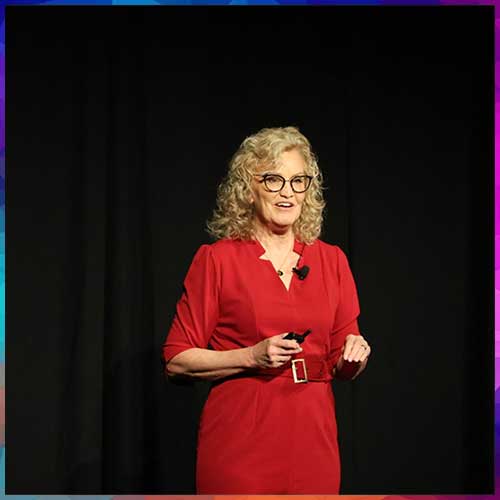
"Organizations are moving rapidly toward an AI-first operating model, where AI is now a core consideration in every business decision, workflow and investment," said Carlie Idoine, Vice President Analyst at Gartner. She added that companies without an enterprise-wide AI strategy will struggle to realize the technology's full business potential.
Gartner identified sovereign AI as one of the key trends shaping enterprise data and analytics strategies over the next two years. As governments increasingly seek greater control over AI capabilities and data infrastructure, organizations will need to align their AI roadmaps with evolving national priorities on data sovereignty, resilience and innovation.
The research firm also expects decision governance to become critical as AI agents take on more strategic, tactical and operational responsibilities. Gartner predicts that by 2029, business decisions that are explicitly modeled and governed through decision intelligence platforms will be five times more trusted and 80% faster than ungoverned decisions.
AI governance platforms are also expected to gain prominence as organizations navigate growing regulatory requirements and deploy more autonomous AI systems. Gartner recommends enterprises adopt centralized governance platforms to manage risks, enforce policies and ensure responsible AI practices across the organization.
Another emerging trend is agentic data streaming, which enables continuous, event-driven data flows instead of traditional batch processing. Gartner forecasts that adoption of data streaming technologies for agentic AI will rise to more than 60% by 2028, compared with less than 15% in 2025, as enterprises increasingly require real-time intelligence for autonomous operations, digital twins and decision-making.
The firm also highlighted agentic data management as a growing area of investment. AI agents are expected to automate core data management tasks, identify patterns and make recommendations in real time, helping organizations manage increasingly complex data environments while improving agility and operational efficiency.
GraphRAG, which combines knowledge graphs with large language models to improve context and factual accuracy, is another technology expected to see wider enterprise adoption. Gartner predicts that by 2029, 40% of enterprises will use GraphRAG techniques to enhance the reasoning capabilities and reliability of AI applications designed for complex business use cases.
According to Gartner, organizations that successfully integrate these technologies into a unified AI-first strategy will be better positioned to gain competitive advantage as AI becomes a foundational element of enterprise operations.
The research firm said organizations are rapidly moving toward a model where artificial intelligence becomes central to business decisions, workflows and technology investments rather than being treated as a standalone capability.
"Organizations are moving rapidly toward an AI-first operating model, where AI is now a core consideration in every business decision, workflow and investment," said Carlie Idoine, Vice President Analyst at Gartner. She added that companies without an enterprise-wide AI strategy will struggle to realize the technology's full business potential.
Gartner identified sovereign AI as one of the key trends shaping enterprise data and analytics strategies over the next two years. As governments increasingly seek greater control over AI capabilities and data infrastructure, organizations will need to align their AI roadmaps with evolving national priorities on data sovereignty, resilience and innovation.
The research firm also expects decision governance to become critical as AI agents take on more strategic, tactical and operational responsibilities. Gartner predicts that by 2029, business decisions that are explicitly modeled and governed through decision intelligence platforms will be five times more trusted and 80% faster than ungoverned decisions.
AI governance platforms are also expected to gain prominence as organizations navigate growing regulatory requirements and deploy more autonomous AI systems. Gartner recommends enterprises adopt centralized governance platforms to manage risks, enforce policies and ensure responsible AI practices across the organization.
Another emerging trend is agentic data streaming, which enables continuous, event-driven data flows instead of traditional batch processing. Gartner forecasts that adoption of data streaming technologies for agentic AI will rise to more than 60% by 2028, compared with less than 15% in 2025, as enterprises increasingly require real-time intelligence for autonomous operations, digital twins and decision-making.
The firm also highlighted agentic data management as a growing area of investment. AI agents are expected to automate core data management tasks, identify patterns and make recommendations in real time, helping organizations manage increasingly complex data environments while improving agility and operational efficiency.
GraphRAG, which combines knowledge graphs with large language models to improve context and factual accuracy, is another technology expected to see wider enterprise adoption. Gartner predicts that by 2029, 40% of enterprises will use GraphRAG techniques to enhance the reasoning capabilities and reliability of AI applications designed for complex business use cases.
According to Gartner, organizations that successfully integrate these technologies into a unified AI-first strategy will be better positioned to gain competitive advantage as AI becomes a foundational element of enterprise operations.

See What’s Next in Tech With the Fast Forward Newsletter





Tweets From @varindiamag
Nothing to see here - yet
When they Tweet, their Tweets will show up here.