

World, formerly known as Worldcoin, is accelerating its push to build a global “proof of human” infrastructure. At its “Lift Off” event in San Francisco in April 2026, the company unveiled major upgrades to its World ID protocol, a dedicated app, and new integrations aimed at embedding identity verification into everyday digital platforms.
The core idea addresses a growing problem: the internet is increasingly flooded with AI bots, deepfakes, and synthetic identities. World’s solution is to offer a way to verify that a user is a real, unique human—without revealing personal information such as name, location, or identity details.
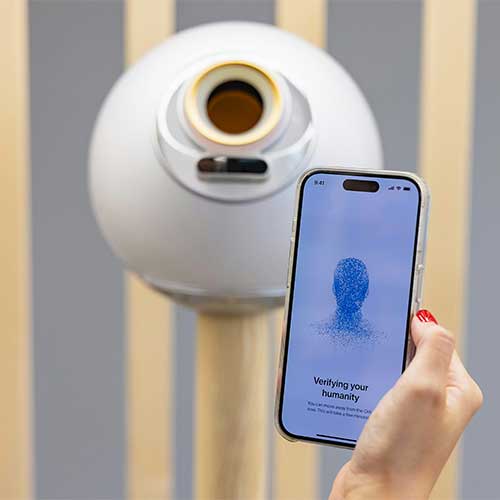
The system works through a device called the Orb, which performs an iris scan and facial verification. This process generates a cryptographic credential stored on the user’s device. Using zero-knowledge proofs, platforms can confirm a user’s “humanness” without accessing or storing sensitive biometric or personal data.
At the event, World announced multiple integrations to expand its ecosystem. Platforms like Tinder are introducing “Human Badges” to reduce fake profiles, while ticketing systems aim to prevent scalping by allowing access only to verified users. Enterprise tools such as Zoom and DocuSign are also exploring identity verification use cases.
The company positions World ID as a foundational layer for the AI-driven internet. With nearly 18 million users reportedly verified, it aims to create a “real human network” that benefits both consumers and enterprises by improving trust, reducing fraud, and enhancing user experiences.
World emphasizes a privacy-first model. Biometric data is processed locally on the Orb and stored on the user’s device, with no centralized database by default. The system is designed to ensure that verifications are unlinkable and reveal no personal data, focusing strictly on proof of human rather than proof of identity.
However, concerns around biometrics remain significant. Unlike passwords, biometric data such as iris patterns cannot be changed if compromised. Critics argue that even with decentralized claims, the large-scale collection of such data introduces long-term risks, especially if security or governance frameworks fail.
There are also fears of surveillance creep. As private platforms begin adopting World ID, it could normalize biometric-based access to services. Over time, this may create pressure for broader adoption, potentially allowing governments or institutions to leverage such systems indirectly for monitoring or control.
Another concern is the shift from voluntary use to implicit necessity. If major platforms require proof of human for participation, unverified users could face exclusion. This raises questions about digital equity, consent, and whether such systems could evolve into de facto identity infrastructure.
Despite these concerns, the underlying problem World aims to solve is real. As AI-generated content grows more sophisticated, distinguishing humans from machines is becoming critical. Whether World ID becomes a trusted solution or a controversial overreach will depend on its ability to balance innovation with transparency, governance, and user trust in the years ahead.

See What’s Next in Tech With the Fast Forward Newsletter






Tweets From @varindiamag
Nothing to see here - yet
When they Tweet, their Tweets will show up here.