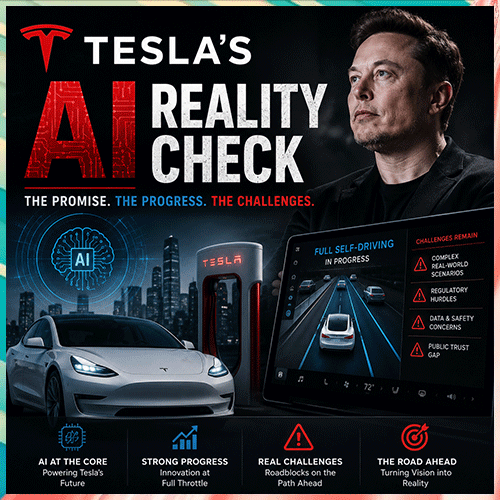
Tesla has introduced a $200 weekly cap on employee spending for third-party AI tools, marking a significant shift in its AI strategy. Effective July 6, employees exceeding the limit will require management approval. Interestingly, the policy excludes beta versions of xAI's products, giving Elon Musk's in-house AI platform a clear advantage over competing services.
The move comes after months of encouraging engineers to maximize AI usage. Tesla's internal platform, Bottle Rocket, gave employees access to leading AI models from OpenAI, Anthropic, xAI, and Cursor. Engineers were even ranked on leaderboards based on token consumption, driving rapid adoption—but also creating an unexpected surge in AI costs.
Tesla is not alone in facing this challenge. Companies including Uber, Meta, Amazon, and Walmart have also begun imposing AI spending limits after discovering that unrestricted token-based pricing can quickly inflate enterprise technology budgets. The industry's focus is now shifting from maximizing AI usage to optimizing AI spending and business value.
Beyond cost control, Tesla's policy also reflects an internal strategic shift. By exempting xAI products from spending restrictions, the company is encouraging employees to use its own AI ecosystem. This approach not only reduces external AI expenses but also strengthens adoption of Musk's growing portfolio of AI technologies.
The episode highlights a broader issue confronting enterprises worldwide. AI adoption has accelerated far faster than AI governance. Many organizations embraced generative AI without establishing clear policies for cost monitoring, workload optimization, or return-on-investment measurement. As token-based pricing becomes standard, every AI interaction directly impacts operational expenses.
Industry studies indicate that only a small percentage of enterprises have complete visibility into their AI spending. As AI agents, copilots, and autonomous workflows become mainstream, token consumption is expected to rise dramatically, making financial governance as important as technical governance.
Tesla's decision signals the next phase of enterprise AI maturity. Success will no longer be measured by how much AI employees use, but by how effectively AI delivers measurable business outcomes. The future belongs to organizations that combine innovation with disciplined governance, ensuring AI investments generate sustainable value rather than uncontrolled costs.