
Defeating Deepfakes: FaceOff Technologies and the Battle for Ironclad Identity Validation
The crisis surrounding the NEET-UG 2026 paper leak and subsequent re-test highlights a painful reality for lakhs of students: academic hard work is being undermined by systemic vulnerabilities. While the Prime Minister’s Office (PMO) is introducing multi-layered security and biometric checks for the June 21 re-test, the psychological toll on struggling students remains immense.
Integrating a multimodal AI trust platform like FaceOff Technologies’ Adaptive Cognito Engine (ACE) could offer a definitive technological solution, transforming examination security and restoring the peace of mind students desperately need.
Here is how FaceOff’s technology can bring relief to struggling students and secure the examination ecosystem:
Eradicating Impersonation and Proxy Testing
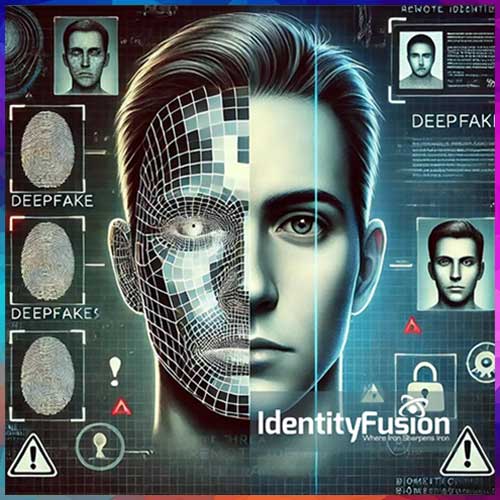
Traditional biometric verification can sometimes be bypassed or spoofed. FaceOff’s ACE uses liveness detection and facial dynamics to ensure that the person sitting for the exam is genuinely the registered candidate. By analyzing micro-expressions and gaze tracking in real time, it stops synthetic identity fraud, AI-generated faces, or lookalike proxies from ever entering the examination hall. Students can rest assured that they are only competing against legitimate peers.
Securing the Digital and Physical Chain of Custody
Paper leaks often occur during the transportation, printing, or storage phases due to unauthorized insider access. FaceOff's platform can be deployed to secure the governance and access control of examination logistics.
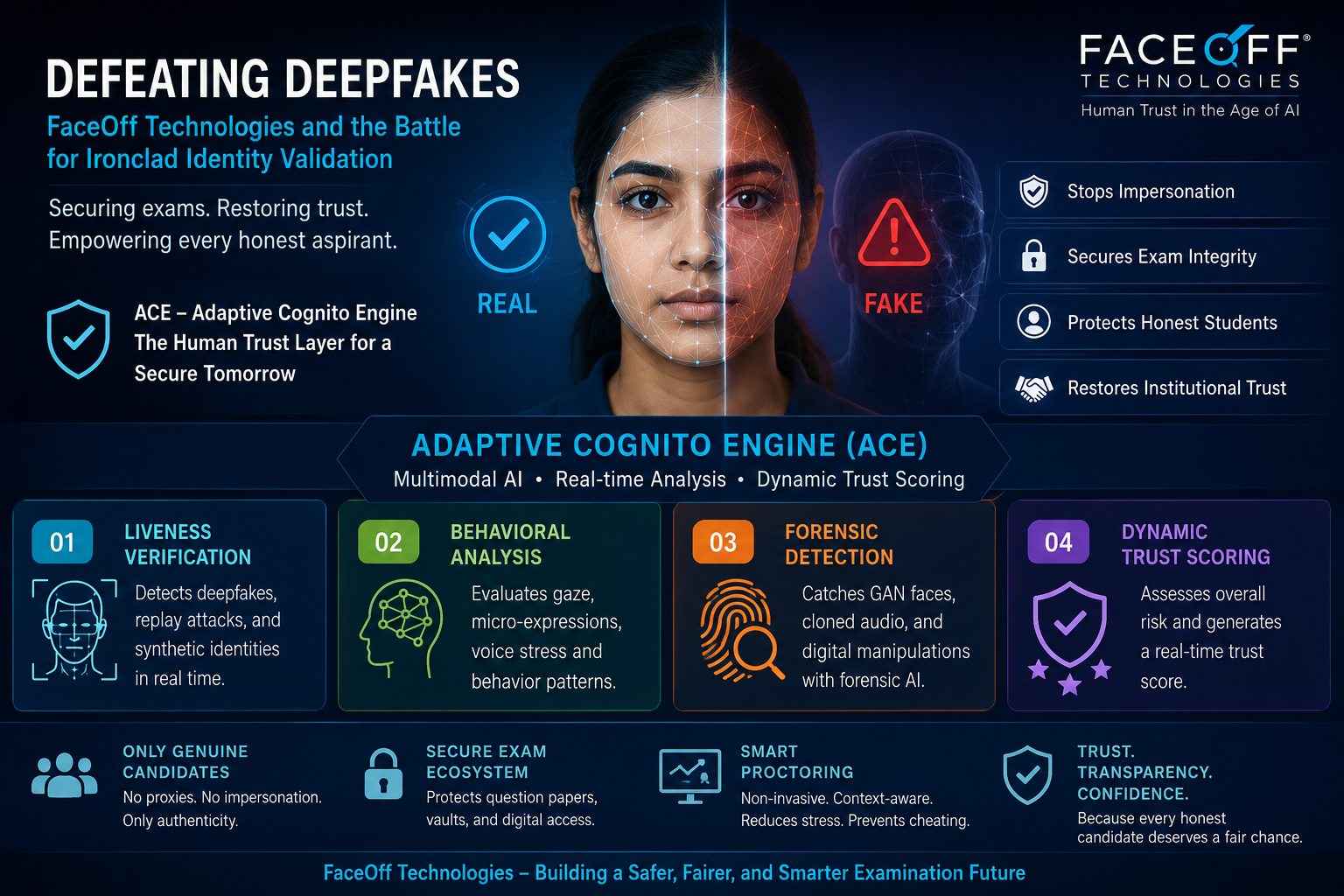
● Multimodal Forensics: Can ensure that only highly verified, authorized personnel can access digital question banks or physical vault rooms.
● Contextual Anomalies: The AI triggers immediate alerts if an unauthorized user attempts to bypass verification systems, locking down sensitive data before a leak can even happen.
Continuous, Non-Invasive Proctoring
For future computer-based testing (CBT) models, FaceOff provides an invisible layer of security that protects exam integrity without intimidating the student.
● Unlike rigid, error-prone proctoring software that falsely flags a student for blinking or turning their head, ACE uses behavioral biometrics and sentiment analysis to differentiate between normal test-taking anxiety and actual malicious intent (such as looking at a hidden device or communicating with an outsider).
● This prevents cheating while reducing exam-day stress for honest candidates.
Rebuilding Institutional Trust
The greatest emotional burden on students is the uncertainty of whether their test scores will matter or if another leak will force yet another cancellation. By introducing an independent "Human Trust Layer" that generates dynamic trust scores for every user session, educational authorities can provide transparent, un-tamperable proof that the examination’s integrity was maintained from start to finish.
Finally, while administrative oversight and police protection are vital immediate steps, long-term relief for students requires foolproof technology. By moving beyond static verification to a unified, multimodal AI defense system, FaceOff Technologies can help eliminate human error and corruption—ensuring that India’s medical aspirants are judged solely on their merit, not the vulnerabilities of a compromised system.

See What’s Next in Tech With the Fast Forward Newsletter









Tweets From @varindiamag
Nothing to see here - yet
When they Tweet, their Tweets will show up here.