

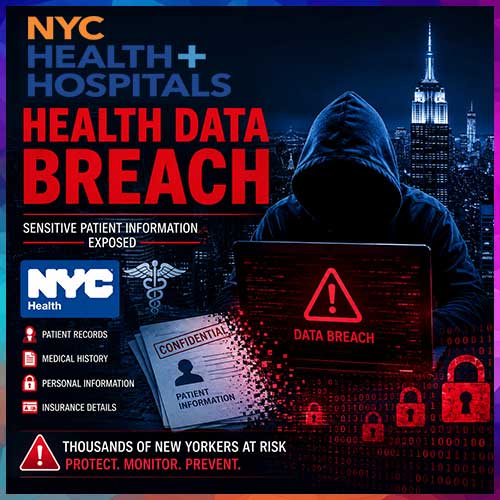
A major cybersecurity breach at NYC Health + Hospitals has exposed highly sensitive personal information belonging to at least 1.8 million patients and employees, making it one of the largest healthcare data breaches of 2026. The attack, linked to a compromised third-party vendor, reportedly gave unauthorized actors access to parts of the hospital network between late November 2025 and February 2026. Suspicious activity was first detected on February 2, 2026, and the incident was later reported to the U.S. Department of Health and Human Services (HHS) on March 24.
The stolen data includes personal identification details such as Social Security numbers, passport and driver’s license information, taxpayer IDs, banking and payment records, and insurance data. Even more concerning, attackers also accessed detailed medical records including diagnoses, medications, lab results, and biometric information such as fingerprints and palm prints. Unlike passwords, biometric data cannot easily be changed once exposed, creating long-term privacy and security risks for affected individuals.
Cybersecurity experts warn that healthcare breaches are becoming increasingly dangerous because medical data can be exploited for identity theft, financial fraud, blackmail, targeted scams, and unauthorized insurance claims. The incident also highlights the growing threat of supply-chain attacks, where cybercriminals breach a third-party vendor to gain access to larger organizations and sensitive systems.
The breach follows a wider trend of escalating cyberattacks on healthcare infrastructure. According to the FBI’s Internet Crime Complaint Center (IC3), healthcare was the most targeted critical infrastructure sector for ransomware attacks in 2025, with hundreds of reported incidents. The earlier Change Healthcare ransomware attack alone exposed data belonging to more than 190 million Americans, demonstrating how vulnerable interconnected healthcare systems have become.
NYC Health + Hospitals is offering free identity theft protection and credit monitoring services for 24 months through Kroll Information Assurance to affected individuals. Anyone who has been a patient or employee is advised to review the official breach notice and remain alert for suspicious activity.
Steps to Protect Yourself After a Data Breach
● Follow updates and recommendations from the affected organization.
● Change passwords immediately and avoid reusing passwords across accounts.
● Enable two-factor authentication (2FA), preferably using FIDO2 security keys.
● Be cautious of phishing emails, calls, or messages pretending to be from trusted organizations.
● Monitor bank accounts, insurance claims, and credit reports regularly.
● Avoid saving payment card information on websites when possible.
● Consider identity monitoring services to detect misuse of personal information early.

See What’s Next in Tech With the Fast Forward Newsletter







Tweets From @varindiamag
Nothing to see here - yet
When they Tweet, their Tweets will show up here.