

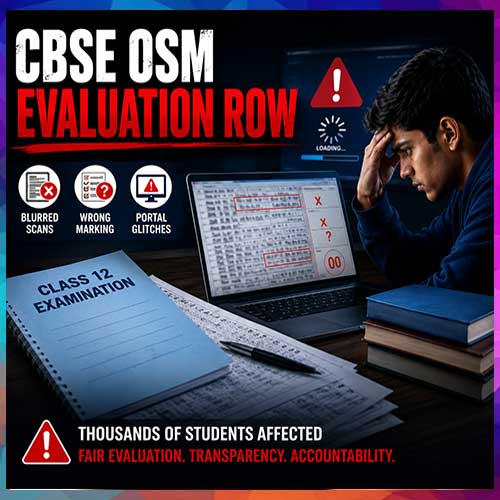
Union Education Minister Dharmendra Pradhan has directed CBSE to submit a detailed report on technical glitches plaguing the new On-Screen Marking (OSM) system and has roped in expert teams from IIT Madras and IIT Kanpur to resolve the issues. The move comes after widespread complaints from students and parents regarding difficulties in accessing scanned answer sheets, portal crashes, and errors during the re-evaluation process.
Key Issues Reported
The OSM system, introduced this year for digital evaluation of nearly 98 lakh Class 12 answer books, replaced traditional physical checking. However, students have faced multiple problems: the re-evaluation portal crashed shortly after opening on May 19 due to heavy traffic, payment deductions without confirmation, blurred or mismatched scanned sheets, and missing supplementary pages. Many students reported that the uploaded Physics or other subject answer sheets did not belong to them, raising serious concerns about tagging errors and data integrity.
Teachers had reportedly warned the board as early as February 2026 about inadequate training for evaluators and poor scan quality. Despite this, over 68,000 answer books had to be rescanned, and more than 13,500 required manual rechecking. The Class 12 pass percentage dropped to 85.20% this year, triggering a surge in re-evaluation applications and exposing the portal’s instability.
Political Fallout
Congress leader Jairam Ramesh sharply criticised the government, questioning why these issues were not anticipated before rollout. He accused Minister Pradhan of reacting late and demanded accountability, even calling for his resignation.
Key Takeaways
This episode highlights deeper systemic weaknesses in India’s education technology infrastructure. The rushed implementation of a large-scale digital system without sufficient stress testing, robust training, and fallback mechanisms has eroded trust in the board examination process. While digitisation aims to bring transparency, poor execution — including weak server capacity, inadequate image processing, and limited user load planning — has created the opposite effect.
The involvement of IITs is a welcome step for technical fixes, but it also reveals gaps in CBSE’s internal capabilities. Broader challenges like bureaucratic delays in addressing vulnerabilities, over-reliance on vendors, and insufficient focus on security-by-design continue to plague critical digital platforms in India. For students, whose academic futures are at stake, such glitches cause unnecessary anxiety and unfair disadvantages.
The government must treat this as a wake-up call to strengthen procurement standards, conduct rigorous pre-launch audits, and build resilient digital public infrastructure. Without these reforms, similar disruptions will recur as India pushes further into digital education.

See What’s Next in Tech With the Fast Forward Newsletter









Tweets From @varindiamag
Nothing to see here - yet
When they Tweet, their Tweets will show up here.